Veerle Dielen · Elementary teacher · December 12, 2025 · Per Times Table
How to Learn the 5 Times Table: The Fastest Pattern in Multiplication
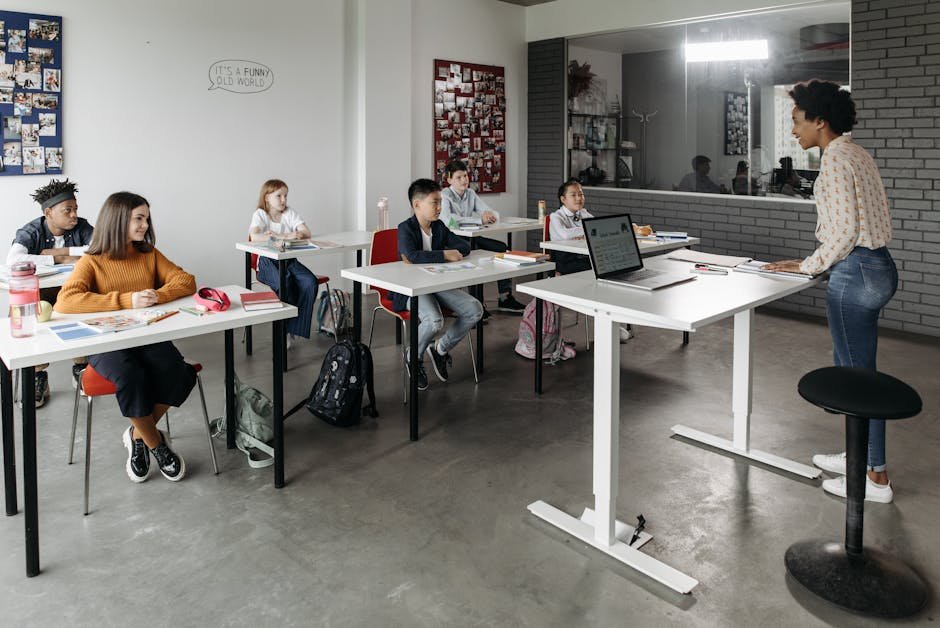
The 5 times table is a favorite for many children due to its simplicity and predictability. Its clean pattern enables even the most reluctant learners to grasp it quickly. If your child is beginning their journey into multiplication, mastering the 5 times table is a fantastic way to build early confidence and set the stage for more complex mathematical concepts.
The Importance of the 5 Times Table
A Gateway to Mental Math
The 5 times table serves as a crucial foundation for mental math, especially in contexts involving money, time, and measurement. The concept is deeply embedded in everyday life: five fingers per hand, five minutes between each number on the clock, and five cents in a nickel. By knowing their fives, children can more intuitively count change and read clock minutes, making these tasks nearly effortless. For instance, when a child sees a quarter, they can instantly calculate it as five nickels, reinforcing their understanding of multiplication in a real-world context.
Building Confidence in Multiplication
For children just starting with multiplication, the 5 times table is an ideal confidence builder. Its consistent pattern helps children experience success early on, encouraging them to tackle more challenging tables with enthusiasm. This boost in confidence can lead to a more positive attitude toward learning mathematics as a whole. Consider using a reward system: each time your child successfully completes a 5 times table exercise, celebrate with something small, like a sticker or a fun activity, to reinforce their success and enthusiasm.
The Pattern in the 5 Times Table
Understanding the Sequence
The beauty of the 5 times table lies in its straightforward pattern: the products always end in either 5 or 0. For example, 5, 10, 15, 20, 25, 30, 35, 40, 45, and 50 follow this rule. When multiplying an even number by five, the product ends in 0, while multiplying an odd number by five results in a product ending in 5. Understanding this pattern is the key to mastering the 5 times table. A fun way to practice this is to create a simple worksheet where children fill in the blanks for missing numbers in the sequence, reinforcing their pattern recognition skills.
Tips for Learning the 5 Times Table
Counting by Fives
Most children are already familiar with counting by fives due to its frequent application in handling money and telling time. Encourage your child to count nickels in a jar or minutes on a clock, reinforcing the pattern of the 5 times table in a practical context. For example, counting five fingers on each hand further solidifies this learning. You can turn this into a game by setting a timer and seeing how quickly they can count by fives to 100, making it both educational and exciting.
Using the Clock
A clock face is an excellent tool for practicing the 5 times table. Each hour mark on the clock corresponds to a multiple of five. For instance, 12 o'clock represents 60 minutes, which equals 5 x 12. By practicing telling time, children simultaneously reinforce their understanding of the 5 times table. Try asking your child to count by fives as they move the minute hand around the clock, or quiz them by asking what time it will be in 25 minutes from a given starting point.
Checking the Last Digit
One simple trick to check the accuracy of a product is to verify its last digit. If a child calculates 5 x 7 as 36, they'll recognize the mistake because the product does not end in 5 or 0. This method serves as a quick and effective error-checking tool. You can create a "last-digit check" game where children are given various multiplication problems and must quickly verify the correctness by checking the last digit.
Anchoring on 5 x 10 = 50
The midpoint of the 5 times table, 5 x 10 = 50, provides a solid anchor. From here, children can easily calculate other products. For example, to find 5 x 8, they can start from 5 x 10 = 50 and subtract two groups of five to arrive at 40. Encourage your child to use this anchor by practicing with other numbers, like using 5 x 12 = 60 as a base for finding 5 x 11 or 5 x 13.
Tying 5 to 10
Another useful strategy is to relate multiplication by five to multiplication by ten. Since multiplying by 5 is half of multiplying by 10, children can use this relationship to simplify calculations. For instance, 6 x 10 equals 60, so half of that is 30, making 5 x 6 equal to 30. This technique can be especially helpful when dealing with larger numbers, easing the path to mental math fluency.
Practical Applications of the 5 Times Table
Everyday Activities
Incorporate the 5 times table into daily activities to make learning more engaging. For example, when grocery shopping, ask your child to calculate the total cost of items priced in multiples of five. This practice not only reinforces their multiplication skills but also enhances their understanding of money management. You might also involve them in cooking by doubling or halving a recipe, asking them to calculate new quantities when the original measurements are multiples of five.
Games and Interactive Learning
Utilize games and interactive activities to make learning the 5 times table fun. Online quizzes, flashcards, or even board games that require counting by fives can transform learning into an enjoyable experience. By associating learning with play, children are more likely to engage and retain information. Consider setting up a "5 Times Table Challenge" at home, where each round involves a different game or activity focused on the 5 times table.
Case Studies: Real-Life Scenarios
A Day in the Life of a Second Grader
Consider a second grader named Lily, who is just beginning to learn multiplication. Her teacher introduces the 5 times table using a clock. Each day, Lily practices counting by fives during morning circle time. At home, her parents encourage her to count nickels while sorting change, reinforcing what she learned at school. This real-life application helps solidify her understanding, and she begins to see multiplication as a useful tool rather than just a classroom exercise.
Applying Math in Real Situations
Another example is Jake, a fourth grader who enjoys basketball. His coach uses the 5 times table to calculate points during practice. By associating multiplication with his favorite sport, Jake quickly grasps the concept and starts using it to keep score, further enhancing his math skills. Jake's parents also play a role by asking him to calculate the total points scored by his team, encouraging him to apply his math skills in a context he loves.
Age-Appropriate Tips for Mastering the 5 Times Table
Grades K-2
For younger children in kindergarten through second grade, use visual aids such as counting blocks or fingers to illustrate the concept of counting by fives. Songs or rhymes that involve counting can also be effective tools for making learning memorable and enjoyable. A simple song with a catchy tune can help solidify the pattern in their minds, making it easier for them to recall when needed.
Grades 3-4
Children in third and fourth grade can benefit from more complex activities, such as solving word problems that involve the 5 times table. Encourage them to explain their thought processes, which helps solidify their understanding and builds their confidence in using multiplication in practical scenarios. Challenge them with problems like, "If each of you gets 5 pieces of candy and there are 7 of you, how many pieces do we need?" This encourages them to apply multiplication to real-life situations.
Grades 5-6
By fifth and sixth grade, children should be comfortable with the 5 times table and ready to apply it to more advanced mathematical concepts. Introduce them to real-world applications such as calculating time intervals or measuring distances, which require a firm grasp of the 5 times table. For example, you could task them with planning a trip, calculating the total time needed if a leg of the journey takes 5 minutes per mile.
Common Mistakes to Avoid
Relying Solely on Memorization
While memorization is important, understanding the underlying pattern of the 5 times table is crucial. Encourage children to see the logic behind the pattern instead of just memorizing the sequence. This deeper understanding will aid them in mastering other multiplication tables as well. Reinforce this by asking them to explain why a particular product ends in 5 or 0, promoting critical thinking and comprehension.
Ignoring Practical Applications
Another common mistake is neglecting to apply the 5 times table in real-life situations. Without practical application, children may struggle to see the relevance of what they're learning. Incorporating everyday examples helps solidify their understanding and keeps them engaged. Try to make a habit of pointing out when the 5 times table is used in daily life, such as calculating the total minutes in a class period or estimating costs at a store.
Actionable Tips for Parents and Teachers
- Integrate learning into daily routines. Use opportunities like cooking or shopping to practice the 5 times table. Encourage your child to help with tasks that require counting or multiplying by 5, making it a natural part of their day.
- Encourage the use of visual aids. Tools such as number charts or multiplication grids can help visualize patterns. Create a colorful multiplication chart with your child and hang it in their room for easy reference.
- Make learning interactive. Engage children with games, songs, and activities that reinforce the 5 times table. Consider organizing a family game night focused on math games, making learning a fun group activity.
- Set achievable goals. Break down learning into smaller, manageable tasks to prevent overwhelm and build confidence. Set weekly goals and celebrate when they are achieved, providing motivation for continued progress.
- Provide positive reinforcement. Celebrate successes, no matter how small, to motivate continued learning and improvement. Positive feedback can boost their confidence and make them more eager to learn.
For unique situations
Addressing Test Anxiety
For children who experience test anxiety, practice and preparation are key. Encourage regular practice at home with low-pressure quizzes and emphasize the importance of understanding the process rather than focusing solely on the outcome. This approach can help alleviate stress and build confidence. Role-playing a test scenario at home can also help them become more comfortable with the testing environment.
Supporting Children with ADHD
Children with ADHD may benefit from shorter, more frequent practice sessions. Incorporate movement-based activities or hands-on learning tools to maintain their engagement. Break tasks into smaller steps and provide clear instructions to help them stay focused. Creating a calm, distraction-free study area can also promote better concentration.
Challenges for Gifted Learners
Gifted learners may become bored with repetitive practice. Challenge them by introducing more complex problems or exploring connections between the 5 times table and other mathematical concepts. Encourage them to teach others, reinforcing their own understanding while aiding their peers. You might also introduce them to advanced topics like patterns in numbers or the history of mathematics to keep them engaged.
Helping Children with Dyscalculia
For children with dyscalculia, use multisensory approaches to learning the 5 times table. Visual aids, tactile learning tools, and auditory reinforcement can help them grasp the concept. Patience and consistent practice are essential to support their progress. Incorporating storytelling with numbers or using apps designed for dyscalculia can make learning more accessible and enjoyable.
Cooperating with Schools
Communication between parents and teachers is vital for supporting children's learning. Attend parent-teacher conferences to discuss your child's progress and any challenges they may face. Collaborate on strategies to reinforce learning at home and ensure consistency between school and home environments. Don't hesitate to reach out to teachers for additional resources or advice on supporting your child's mathematical development. Regular check-ins with teachers can provide valuable insights into your child's learning style and areas for improvement.
Long-Term Perspective on Multiplication Mastery
Mastering the 5 times table is just the beginning of your child's mathematical journey. As they progress, encourage them to apply multiplication skills in various contexts, such as division or fractions. By building a strong foundation, children will be better equipped to tackle more advanced mathematical concepts in the future. Encourage curiosity by asking open-ended questions about how multiplication applies to different areas of life, promoting a deep and lasting understanding.Fostering a love for learning mathematics extends beyond the classroom; it involves nurturing curiosity and critical thinking skills. Encourage your child to explore math in their everyday lives, promoting a lifelong appreciation for the subject. Whether through puzzles, math-related books, or educational videos, keep them engaged and curious about the world of numbers.
A Weekly Routine for Mastering the 5 Times Table
Developing a consistent routine can help solidify your child's understanding of the 5 times table. Here's a sample weekly plan:
- Monday: Introduce or review the 5 times table using visual aids and counting blocks. Spend 15 minutes on a fun counting by fives song.
- Tuesday: Practice with a clock, counting the minutes in intervals of five. Play a time-telling game for reinforcement.
- Wednesday: Use a worksheet with missing numbers in the 5 times table sequence. End with a quick game of flashcards.
- Thursday: Apply the 5 times table in real-life scenarios, like calculating money or time intervals. Discuss how the 5 times table is used in everyday life.
- Friday: Play an interactive online quiz or board game focusing on the 5 times table. Celebrate the week's achievements with a small reward.
Adjust the routine based on your child's needs and progress, ensuring a balance between practice, application, and fun.
Common questions parents ask
What age should children start learning the 5 times table?
Children typically start learning the 5 times table in the second or third grade, around ages 7 to 9. However, younger children can be introduced to the concept through songs and counting activities.
How can I make learning the 5 times table fun for my child?
Incorporate games, songs, and interactive activities into your learning routine. Use everyday situations to apply the 5 times table, making it relevant and engaging for your child.
What should I do if my child struggles with the 5 times table?
Be patient and use a variety of learning methods, such as visual aids and real-life applications. Break down the table into smaller parts and provide positive reinforcement for progress.
How can I support a child with special learning needs?
Adapt your approach to suit their needs, using multisensory tools and shorter practice sessions. Collaborate with teachers for additional resources and strategies.
What if my child has already mastered the 5 times table?
Challenge them with more complex problems or encourage them to explore connections between multiplication and other mathematical concepts. Introduce them to advanced topics to keep them engaged.With these strategies and supports, your child can successfully master the 5 times table, building a solid foundation for future mathematical learning.
