Veerle Dielen · Elementary teacher · February 6, 2026 · Real-World Math
Math in Music: Beats, Notes, and Time Signatures
Understanding Music and Math: An Intricate Connection
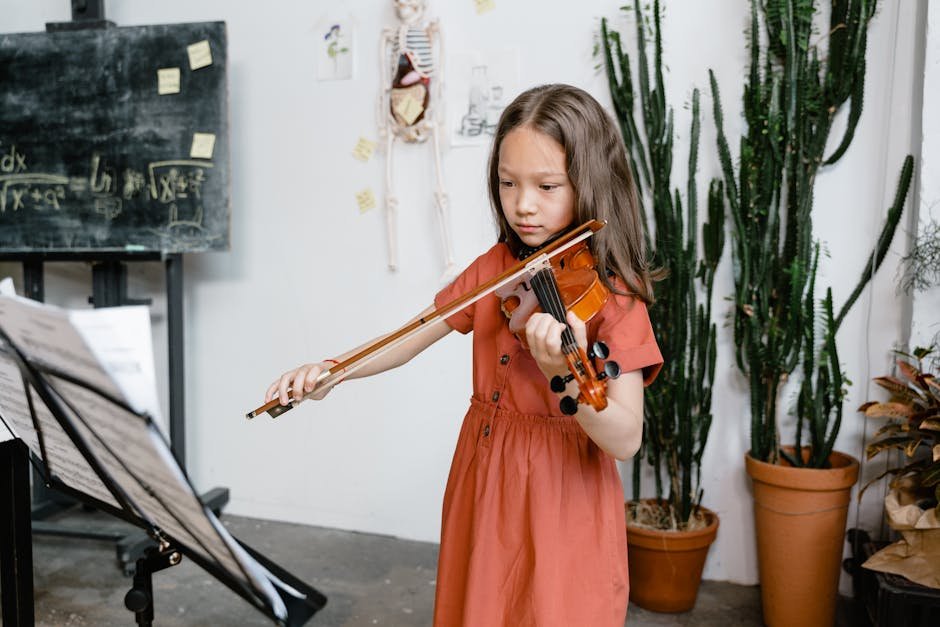
Have you ever noticed how closely related music and math are? If your child plays an instrument or sings in a choir, they are engaging in mathematical thinking without even realizing it. Music involves beats, time signatures, rhythm patterns, and note values, all of which require the understanding of multiplication, division, and fractions. Recognizing this connection can transform musical practice into an opportunity for accidental math practice.For example, consider a simple drumming exercise. Each beat might represent a different fraction of a measure, and understanding where each beat falls requires a grasp of fractions and division. When kids clap along to their favorite song, they are not only learning musical timing but also practicing math skills in a fun and engaging way.
Time Signatures: The Fractional Heartbeat of Music
Breaking Down Time Signatures
Every piece of music is built on the foundation of a time signature, such as 4/4, 3/4, or 6/8. The top number of a time signature signifies the number of beats in each measure, while the bottom number indicates which type of note receives one beat. For instance, in 4/4 time, there are four quarter notes per measure. In 3/4 time, there are three quarter notes per measure, often referred to as waltz time, and in 6/8 time, there are six eighth notes per measure.A comparison to everyday experiences can help solidify this understanding. Imagine a pizza cut into four equal parts; each slice represents a quarter note in 4/4 time. When kids relate musical measures to familiar objects, the concepts become more tangible and easier to grasp.
Applying Fractions in Real Time
Children who engage with time signatures are essentially working with fractions in real time, often without realizing it. By pointing out the math involved in reading and playing music, children can gain a deeper understanding of both their musical pieces and mathematical concepts. For example, when a child plays a piece in 3/4 time, they are actively working with fractions to understand the timing and rhythm of the music.Consider a dance routine that matches the beats of a song. Children must understand the division of time into parts and how those parts fit together in a cohesive sequence. This exercise not only enhances their musical performance but also reinforces their comprehension of fractions.
Note Values: A Lesson in Multiplication
Exploring the Doubling and Halving Structure
Music employs a system of note durations based on doubling and halving. A whole note equals four beats, a half note equals two beats (or half of a whole note), a quarter note equals one beat (or half of a half note), an eighth note equals half a beat, and a sixteenth note equals one-fourth of a beat. This structure mirrors the 2 times table, and children who play music often absorb this concept without even thinking of it as math.For instance, a child learning to play "Twinkle, Twinkle, Little Star" will instinctively understand that two half notes hold the same duration as one whole note. This practical experience reinforces the concept of multiplication and division in a way that is both intuitive and enjoyable.
Practical Application: Playing and Understanding
Take, for example, a child playing a simple song. As they progress through the different note values, they are engaging in multiplication and division. By understanding that two half notes equal one whole note, they are unconsciously practicing multiplication. Similarly, recognizing that four quarter notes are equivalent to one whole note reinforces these math concepts in a practical and enjoyable way.Encourage your child to think about their favorite songs and how the different notes come together to create the melody. This reflection can deepen their understanding of both music and math, making the learning process both holistic and integrated.
Counting Beats: The Continuous Multiplication Exercise
Real-Life Multiplication Through Music
Consider the question: "How long is four measures of 4/4 time?" Each measure contains four beats, so the calculation is 4 x 4 = 16 beats. As children count through their music, they engage in multiplication continuously, often without realizing it. This exercise not only reinforces their math skills but also enhances their musical performance.For a more challenging exercise, ask them to compute the number of beats in a song with varying time signatures. This will require them to switch between different multiplication problems, sharpening their mathematical agility.
Practice Opportunities to Enhance Skills
- In a song with 32 measures of 4/4, how many beats are there? The answer is 128 beats.
- If a piece is set at 60 beats per minute, how many beats occur in five minutes? There are 300 beats.
- When practicing for 15 minutes each day over seven days, how many total minutes of practice is this? It's 105 minutes.
- Challenge: If the tempo changes to 80 beats per minute for the last section of a piece, how many beats are there in a 3-minute section?
Rhythm Patterns: Developing Sequence Recognition
The Role of Patterns in Music
Reading and playing rhythm involves recognizing and reproducing patterns, such as four quarter notes followed by two half notes and a whole rest. The brain processes these musical patterns similarly to how it processes multiplication tables. Children who develop strong rhythm skills also enhance their pattern recognition abilities, which are crucial in mastering multiplication tables.Consider a drumming circle where each participant plays a specific pattern. Recognizing and predicting the next sequence hones their skills in math and music simultaneously, making learning both interactive and social.
Connecting Rhythm and Math Learning
When children learn to identify and replicate rhythm patterns, they simultaneously build their math skills. This connection is especially beneficial for developing quick mental calculations and fostering an intuitive understanding of mathematical sequences. For example, a child who can predict the next note in a rhythm sequence is also practicing the kind of pattern recognition needed for math problem-solving.Encourage kids to create their rhythm patterns and compare them to math puzzles. This activity not only makes math fun but also encourages creativity and critical thinking.
Practical Math-in-Music Activities
The Counting Game
While your child plays a song, count along together: "1, 2, 3, 4, 1, 2, 3, 4..." Afterward, ask them, "How many beats did we just count?" This simple game provides an opportunity for real-time multiplication practice in a fun and engaging way.For an added challenge, switch to a different time signature and repeat the counting game. This variation helps children adapt to new mathematical concepts within the same musical framework.
Practice Time Math
Pose questions such as: "If you practice for 20 minutes a day, how many minutes will you have practiced in a week?" The answer is 140 minutes. "What about in a month?" Approximately 600 minutes. "If your recital is in 8 weeks, how much practice time will you have accumulated?" The answer is 1,120 minutes, or about 18.5 hours.Consider setting a goal for practice time and use a chart to track progress. This visual representation of time encourages consistency and helps students see the tangible results of their efforts.
Tempo Math
Set the metronome to a tempo, such as 120 beats per minute, and challenge your child with questions like: "How many beats occur in 30 seconds?" The answer is 60 beats. "How about in a four-minute song?" There are 480 beats. These exercises help children connect tempo with time and number, reinforcing their math skills in the process.Invite them to experiment with different tempos and observe how it changes the feel of a song. This exploration enhances their understanding of rhythm and math simultaneously.
Recital Pacing
Use recital preparation as a math exercise: "Your piece is 5 minutes long, and the recital includes six students. What is the total time for all performances?" The answer is 30 minutes. "With 2-minute breaks between pieces, how long is the entire recital?" The answer is 40 minutes, calculated as 30 + (5 x 2) = 40 minutes.Discuss the logistics of a recital, such as arrival times and intermissions, to further involve children in planning and time management, enhancing their practical math skills.
Tips by Age Group
Grades K-2: Building Foundations
For younger children, focus on simple counting and pattern recognition games. Use clapping and tapping to reinforce counting skills, and introduce basic rhythm patterns using familiar songs. Encourage them to count out loud while playing short musical pieces, which can help solidify their understanding of numbers and sequences.Incorporate playful activities like musical chairs or simple rhythm games that involve movement and counting. These engaging exercises help young children grasp foundational concepts in a joyful setting.
Grades 3-4: Developing Multiplication Skills
During these grades, children can start working with more complex rhythms and time signatures. Encourage them to break down songs into measures and beats, and use multiplication to calculate total beats in a piece. Incorporate math-related games into their practice routine, such as calculating practice times and recognizing patterns in their music.Introduce them to percussion instruments or keyboard percussion, which require understanding of timing and division, further strengthening their multiplication skills through hands-on learning.
Grades 5-6: Enhancing Mathematical Thinking
Older children can handle more advanced rhythm patterns and time signature changes. Challenge them with exercises that involve calculating tempos and practice times over longer periods. Encourage them to compose short pieces of music, which requires understanding how different note values and time signatures work together mathematically.Consider introducing software that allows them to compose and arrange music. These tools can help them visualize and manipulate musical elements, deepening their comprehension of the math-music relationship.
What to Avoid: Common Mistakes
One common mistake is turning music practice into a dry math lesson, which can make children lose interest in both subjects. Avoid overwhelming your child with too many math concepts at once; instead, integrate math naturally and gradually into their music practice. A bonus, be cautious not to focus solely on correctness and speed; understanding and enjoyment should be the primary goals.Another pitfall is neglecting the expressive and creative aspects of music. Balance technical practice with opportunities for improvisation and emotional expression to keep music engaging and fulfilling.
Actionable Tips for Parents
- Introduce math concepts during music practice in a fun and engaging manner.
- Encourage your child to verbalize their counting and calculations while playing.
- Use real-life examples to connect music practice with math learning.
- Set achievable goals for both music and math skills to maintain motivation.
- Celebrate their progress in both areas to boost confidence and interest.
- Incorporate technology, such as music apps, that blend math and music in interactive ways.
- Create a supportive environment that values exploration and creativity alongside structured learning.
For Special Situations: Tailoring Approaches
Test Anxiety
For children who experience test anxiety, use music as a calming and familiar context to explore math concepts. Encourage them to focus on the rhythmic and repetitive nature of music, which can help reduce stress and build confidence in their math abilities.Integrate relaxation techniques into their practice routine, such as deep breathing or visualization, to create a soothing atmosphere that mitigates anxiety.
ADHD
Children with ADHD may benefit from the structured yet flexible nature of music practice. Use short, varied activities to maintain their interest, and incorporate movement, such as clapping or dancing, to help them focus on counting and rhythm patterns.Consider using visual aids, like charts or diagrams, to help them see the structure of music and math, making abstract concepts more concrete and manageable.
Gifted Students
Gifted children often enjoy challenges, so provide them with opportunities to compose their music or explore more complex pieces. Encourage them to analyze and create patterns, and connect these activities to higher-level math concepts, such as fractions and multipliers.Offer them resources such as advanced music theory books or online courses that delve deeper into the intersection of music and mathematics, catering to their intellectual curiosity.
Dyscalculia
For children with dyscalculia, focus on multisensory approaches that combine auditory, visual, and kinesthetic learning. Use visual aids, such as colored notes and rhythm cards, to make abstract concepts more concrete, and reinforce understanding through consistent practice and review.Incorporate tactile activities, such as using physical objects to represent notes or beats, to provide hands-on learning experiences that facilitate comprehension.
Collaborating with Schools
Communication with your child's school is essential for reinforcing the connection between music and math. Discuss with teachers how music is integrated into the curriculum and share strategies that work at home. This collaboration can ensure a consistent and supportive learning environment, both in school and at home, helping your child thrive in both subjects.Attend school concerts and music events to show support for your child's musical endeavors, and use these opportunities to engage with educators and other parents about the benefits of integrating music and math.
Looking Ahead: The Long-Term Perspective
Understanding the relationship between music and math provides a long-term benefit for children. As they grow, the skills they develop in music, such as pattern recognition and fractional understanding, will serve them well in advanced math topics. Encouraging this connection fosters a lifelong appreciation for both subjects, opening doors to a variety of academic and creative pursuits.Encourage your child to participate in music competitions or math Olympiads to further develop their talents and gain recognition for their achievements in these intertwined fields.
Final Thoughts on Music and Math
The intersection of music and math is a fascinating and enriching area for children to explore. By recognizing and nurturing this connection, parents can help their children develop strong mathematical skills while enjoying the beauty and creativity of music. With thoughtful guidance and support, children can become confident mathematicians and musicians, ready to take on the world of numbers and notes.
Reader questions
How can I help my child who struggles with both music and math?
Start with simple exercises that combine both subjects, such as clapping to a beat while counting aloud. Gradually increase complexity as your child becomes more comfortable. Celebrate small successes to build confidence and create a positive association with both music and math.
What if my child doesn't enjoy music, but I want to improve their math skills?
Explore different musical genres and instruments to find something that resonates with your child. Sometimes, a new approach or instrument can spark interest. Focus on the fun aspects of music, like creating rhythms or improvising, to engage them in a way that feels less like traditional math practice.
Should I consider enrolling my child in music lessons to improve their math abilities?
Music lessons can be a valuable tool in enhancing math skills, but they should align with your child's interests. If your child shows an interest in music, lessons can provide structured learning that reinforces math concepts. Keep the experience enjoyable and pressure-free to maintain their enthusiasm.
How do I know if music is helping with my child's math skills?
Observe improvements in areas such as pattern recognition, sequencing, and problem-solving. If your child demonstrates increased confidence and enjoyment in both music and math activities, it's a positive sign that the integration is beneficial.
When should I seek additional help if my child struggles with math despite music practice?
If you notice persistent difficulties or a lack of progress, consider consulting with a math specialist or tutor. They can provide targeted strategies and support to address specific challenges, ensuring your child receives the help they need to succeed in math.
