Veerle Dielen · Elementary teacher · December 15, 2025 · Per Times Table
Why the 1 Times Table Matters More Than You Think
Understanding the Basics
When parents and teachers introduce multiplication to children, the 1 times table often seems like the simplest and least significant of all. After all, multiplying any number by one returns the original number. This concept is straightforward and easily grasped, allowing kids to master it in a single session. Most educators and parents quickly move on to what they perceive as more challenging multiplication tables, such as the 2s, 3s, and beyond.However, the 1 times table offers foundational insights that are crucial for a child's mathematical development. The identity property of multiplication, represented by this simple table, is a key concept that underpins much of algebra and advanced math topics. By emphasizing the importance of the 1 times table, parents and teachers can set the stage for deeper understanding and success in future mathematical endeavors.
The Identity Property
The 1 times table is a concrete example of the identity property of multiplication. This property states that multiplying any number by one leaves it unchanged. For instance, 1 × 7 equals 7, 1 × 24 equals 24, and 1 × 1,000 equals 1,000. Here, the number one is known as the "multiplicative identity" because it maintains the identity of the number it multiplies.Though this may sound abstract, it forms the basis of how children will eventually manipulate equations in algebra and other areas of mathematics. The ability to multiply both sides of an equation by one in different forms is a fundamental algebraic technique that students will encounter repeatedly as they progress in their studies.
Real-World Examples
Consider a simple real-world example: when you buy one pack of pencils, you get exactly one pack. If each pack contains 10 pencils, then you have 1 × 10 pencils, which equals 10. This concept is intuitive and helps children understand that multiplication by one results in no change to the quantity, which is crucial when they move on to more complex problems.Another everyday example is if a child gets one scoop of ice cream, they have one serving of ice cream. If the scoop size is doubled, they have two servings, but if multiplied by one, it remains the same single serving. These simple scenarios help reinforce the concept of the identity property in real life.
Building Toward Fractions
Understanding the identity property is not only foundational for algebra, but it also plays a critical role in learning about fractions. A fraction equal to one, such as 3/3 or 5/5, does not change a value when multiplied. This concept is essential for learning how to find equivalent fractions, an important skill in elementary school math.For example, to convert 1/2 to an equivalent fraction with a denominator of 4, children multiply by 2/2 (which equals one) to get 2/4. The insight that 2/2 equals one relies on an understanding of the identity property that begins with the 1 times table.
Practical Applications in Fractions
Imagine a child is helping to bake cookies and needs to double a recipe. If the original recipe calls for 1/2 cup of sugar, understanding that multiplying by 2/2 to get 2/4 helps them see the equivalent measures. This concept makes handling fractions in recipes, measurements, and even in dividing items among friends much more intuitive.In school, visual aids like fraction strips or pie charts can help children see how multiplying fractions by forms of one maintains equality. For instance, showing that multiplying 1/3 by 3/3 yields 3/9, which is still one-third of a whole, reinforces this concept in a tangible way.
Connecting to Division
The 1 times table also provides a straightforward introduction to the relationship between multiplication and division, demonstrating their inverse nature. If 1 × 7 equals 7, then logically, 7 ÷ 1 must equal 7, and 7 ÷ 7 must equal 1. This connection lays the groundwork for understanding fact families in math.Fact families are sets of related multiplication and division equations that help children see the relationships between numbers. The simplest example is the family involving the number one, which helps kids grasp the concept that multiplication and division are interconnected operations.
Everyday Division Scenarios
Consider when a child splits a group of seven toys into one group, they still have seven toys (7 ÷ 1 = 7). Alternatively, if they divide the toys into seven groups, each group contains one toy (7 ÷ 7 = 1). These everyday scenarios reinforce the understanding of division as the inverse of multiplication, beginning with the most straightforward cases.Another example is if a child has a single pie and shares it with one friend, they each get half a pie. If they share it with seven friends, each gets one-seventh. These simple calculations help illustrate the link between division and multiplication through practical, relatable experiences.
Use the 1 Times Table as a Warm-Up
Even after children have mastered the 1 times table, revisiting it during warm-up exercises can be beneficial. Starting a math session with quick and easy wins builds confidence and sets a positive tone. It also provides an opportunity for sanity checks during more complex multi-step problems.What's more, revisiting the identity property when introducing new concepts in math ensures that students can apply this fundamental principle across various topics. This practice can support deeper understanding and retention of mathematical concepts.
Warm-Up Activities
- Begin a math session with a quick round of 1 times table questions to build momentum.
- Incorporate the 1 times table into math games, such as a rapid-fire quiz or flashcard race.
- Use the 1 times table to review the identity property when introducing new topics like algebra or geometry.
- Include a quick storytelling session where students share how they used multiplication by one in their daily life.
- Encourage students to find examples in their environment where multiplication by one applies, like reading a clock (1 minute per tick) or counting steps.
Tips for Different Age Groups
As children progress through elementary school, their understanding of multiplication and its applications will deepen. Here are some tips for how parents and teachers can tailor their approach to teaching the 1 times table for different age groups.
Grades K-2
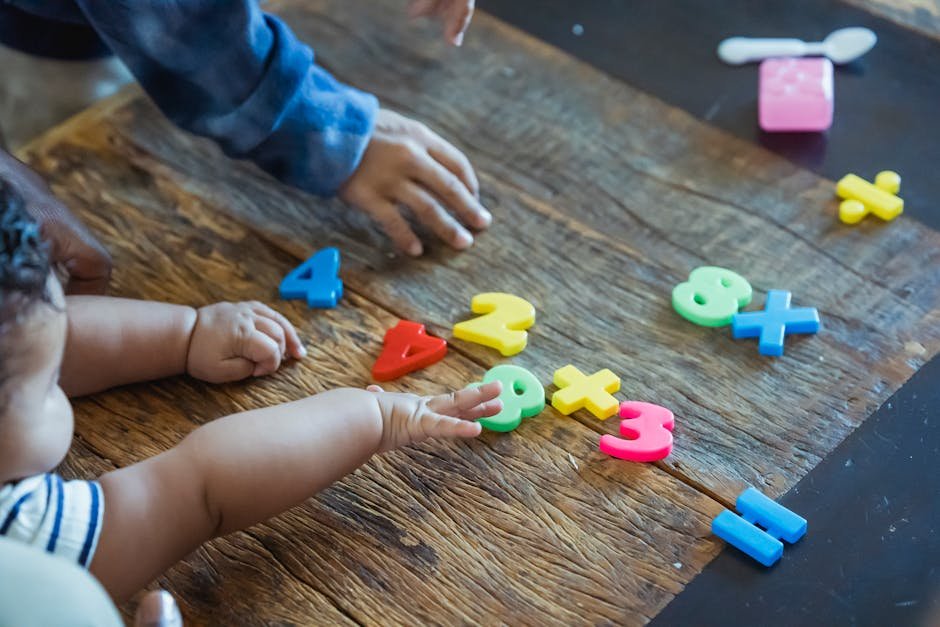
For younger children in kindergarten through second grade, the focus should be on making math fun and engaging. Use visual aids, such as colorful number charts or physical objects like blocks, to illustrate the concept of multiplying by one. Games and songs can make the learning process enjoyable and memorable.Incorporate songs that include the 1 times table, allowing children to sing along and internalize the concept. Use storybooks that emphasize numbers and counting to subtly reinforce mathematical principles, including the idea of the multiplicative identity.
Grades 3-4
At this stage, children should begin to see the connections between the 1 times table and other mathematical concepts, such as fractions and division. Encourage them to explore these relationships through hands-on activities, like cooking or playing with measuring cups. Reinforce the identity property by showing how it applies in different contexts.Introduce small projects or experiments where children can apply the 1 times table, like measuring ingredients for a simple recipe or dividing snacks among friends. These activities help them see the practical applications of mathematical concepts in everyday situations.
Grades 5-6
Older elementary students should focus on applying their understanding of the 1 times table to solve more complex problems. Introduce algebraic concepts using the identity property as a foundation. Encourage students to explain their reasoning and how they use the identity property to solve equations or simplify expressions.Provide challenges that involve multi-step problems where the identity property simplifies the process. Encourage the use of the 1 times table in solving real-world problems, like budgeting a small allowance or planning a simple event, to show its continued relevance and utility.
Common Mistakes to Avoid
When teaching the 1 times table, certain pitfalls can hinder a child's understanding and enthusiasm for math. Avoid these common mistakes to ensure a positive learning experience.
Skipping the Basics
Don't overlook the importance of the 1 times table. Skipping over this foundational concept can lead to gaps in understanding that may affect a child's ability to grasp more complex mathematical ideas later on.Reinforce the basics through regular review sessions, ensuring that the concept is firmly rooted before moving on to more advanced multiplication tables. This approach helps prevent misconceptions and builds a strong mathematical foundation.
Assuming Mastery
Even if a child seems to have mastered the 1 times table, continue to incorporate it into practice sessions. This reinforcement solidifies their understanding and prepares them for more advanced topics.Children might appear confident, but regular practice prevents overconfidence and ensures that they can apply the concept flexibly and accurately across various scenarios. Encourage them to articulate their reasoning to assess understanding.
Actionable Tips for Parents and Teachers
Here are some practical steps you can take to help children master the 1 times table and appreciate its significance.
- Integrate the 1 times table into daily activities, such as counting steps or items during household chores.
- Use storytelling to illustrate the concept, creating narratives where characters use the 1 times table to solve problems.
- Set aside regular practice time that includes reviewing the 1 times table alongside other tables.
- Encourage children to explain their thought process when solving problems involving the 1 times table.
- Celebrate small victories to boost confidence and motivation.
- Create math journals where children can record instances they used the 1 times table in real life, fostering a deeper connection with the concept.
- Use technology, such as educational apps or online games, that reinforce the 1 times table in fun and interactive ways.
Special cases to consider
Different children have different learning needs, and the approach to teaching the 1 times table may need to be adjusted accordingly. Here are some considerations for special situations.
Test Anxiety
For children who experience anxiety during tests, practicing the 1 times table as a warm-up can help reduce stress. The familiarity and simplicity of this table provide a confidence boost before tackling more challenging questions.Introduce breathing exercises or positive affirmations before math tests, focusing on the ease and familiarity of the 1 times table to create a calming effect.
ADHD
Children with ADHD may benefit from engaging, hands-on activities when learning the 1 times table. Incorporate movement and interactive games to maintain focus and interest.Use activities that involve physical movement, like jumping or clapping, to represent multiplication facts. This kinetic approach can help these students maintain focus and engagement.
Gifted Students
Gifted students may quickly grasp the 1 times table and seek additional challenges. Encourage them to explore its applications in higher-level math, such as algebra or geometry, to keep them engaged and motivated.Challenge them with puzzles and problems that require creative applications of the identity property, stretching their understanding and keeping them interested in the subject.
Dyscalculia
For students with dyscalculia, visual aids and repetition are key. Use visual representations of the 1 times table, such as charts or diagrams, and provide plenty of practice opportunities to reinforce understanding.Incorporate multi-sensory approaches, like tactile learning tools or auditory reinforcement, to support various learning styles and help these students grasp mathematical concepts more effectively.
Cooperation with Schools
Parents can support their child's learning by maintaining open communication with teachers and staying informed about math curriculum and strategies. Attend parent-teacher conferences and ask about how the 1 times table is being taught in the classroom.Share any concerns or observations about your child's progress, and collaborate with teachers to identify additional resources or strategies that might be beneficial. A strong partnership between home and school can enhance a child's learning experience.Consider volunteering in the classroom or participating in math-related school events to gain insights into teaching methods and strategies, providing you with tools to support your child's learning at home.
Long-Term Perspective
The 1 times table might seem like a small piece of the mathematical puzzle, but its implications are far-reaching. By understanding the identity property of multiplication, children build a foundation that will support their learning in algebra, fractions, division, and beyond.Encouraging a deep understanding of this concept at an early age can lead to greater mathematical confidence and success in later years. As students progress through their education, they will encounter increasingly complex problems that rely on the fundamental principles introduced in the 1 times table.Wrapping up, the 1 times table is more than just a simple math fact. It represents a crucial building block for a child's mathematical education. By emphasizing its importance and integrating it into daily practice, parents and teachers can help children develop a strong foundation for future success in math. Don't underestimate the power of the 1 times table; it's a key to unlocking mathematical understanding and confidence.
Parents often ask
Why is the 1 times table important if it's so simple?
The 1 times table is crucial because it introduces the identity property of multiplication, a foundational concept in mathematics. This principle is applied across various areas of math, including algebra and fractions, making it essential for understanding more complex topics.
How can I make learning the 1 times table fun for my child?
Incorporate games, songs, and storytelling into learning sessions. Use everyday activities, like cooking or shopping, to demonstrate the 1 times table in action. These methods make learning interactive and enjoyable, helping children retain the information more effectively.
What should I do if my child struggles with basic multiplication?
If your child struggles with basic multiplication, revisit the 1 times table and related concepts to reinforce understanding. Use visual aids, hands-on activities, and consistent practice to build confidence. Consider speaking with their teacher for additional resources or strategies.
Can older students still benefit from reviewing the 1 times table?
Absolutely. Older students can benefit from reviewing the 1 times table as it reinforces the identity property, which is applicable to more advanced mathematical concepts. It serves as a useful refresher, especially when tackling algebra or complex equations.
How can I support my child's math learning at home?
Encourage regular practice and integrate math into daily activities. Maintain communication with your child's teacher to stay informed about curriculum and strategies. Use educational apps and resources to supplement learning and provide diverse ways to engage with math concepts.
