
The Youngest in the Class: Times Tables With a Late Birthday
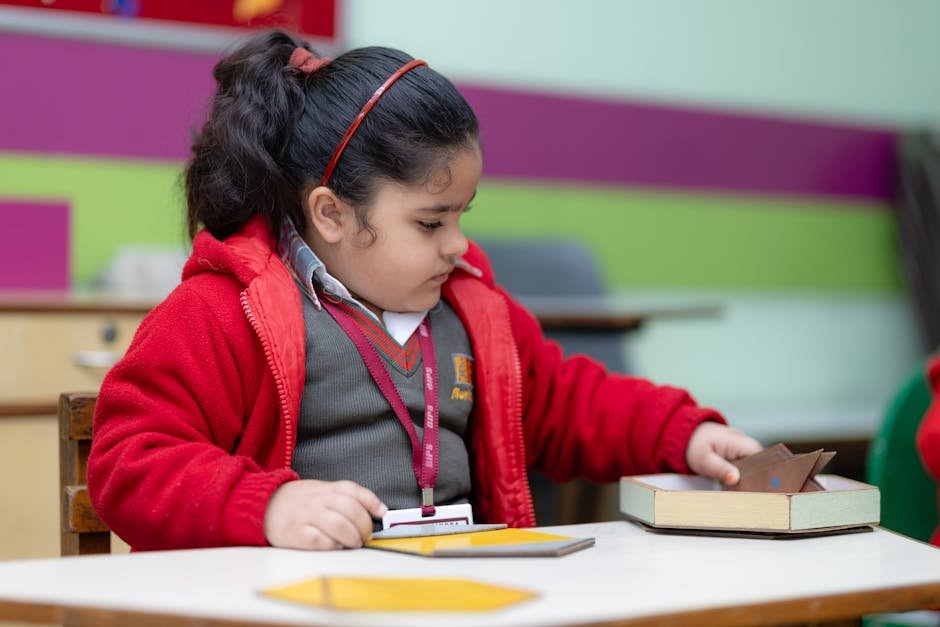
If your child's birthday falls in late summer, they may be close to a full year younger than some classmates. In 3rd grade, when multiplication arrives, that gap can show up as slower facts and a few more tears over homework.
Parents of a summer-birthday kid, and teachers with a few of them in the room, can use this to see what age really changes and how to practice with patience.
Why One Class Can Span a Whole Year
American schools group children by a birthday cutoff. A child has to turn 5 by a certain date to start kindergarten, and everyone born in the following twelve months lands in the same grade.
The child born the day after the cutoff becomes the oldest. The child born on the cutoff day becomes the youngest. Same class, same worksheets, same expectations, and almost a year between them.
The date depends on where you live. In a 2018 table from the National Center for Education Statistics, 21 states used September 1. Others used dates from July 31 in Hawaii and Nebraska to January 1 in Connecticut, and five states, including New York and Pennsylvania, left the decision to local districts.
So "youngest in the class" means different birthdays in different places. In a September 1 state, a child born in late August is one of the youngest. In Connecticut, at the time of that table, the youngest children had birthdays in the last weeks of the year.
What Research Says About Relative Age
Two economists looked at international math and science test data from many developed countries. They found that the youngest children in a grade scored between 4 and 12 percentiles lower than the oldest in 4th grade. By 8th grade the gap was smaller, between 2 and 9 percentiles, but it had not disappeared.
Their explanation is simple. With a single cutoff date, the oldest children in a class are about 20 percent older than the youngest when school starts. At age 5, a year is a fifth of a lifetime, so it is not surprising that it can show up in schoolwork.
Two points matter for parents.
First, these are averages across thousands of students, and plenty of young kids do very well in math. Second, the gap shrinks with time, which suggests that much of what you see in 3rd grade is maturity rather than ability. A late birthday explains a slower start. It is not a ceiling for your child.
What Changes for the Times Tables
Memorizing multiplication facts leans on skills that are still growing at 8: holding a number in mind while working out another, sitting with a worksheet, and coping with a timed quiz. A younger third grader may understand that 6 × 4 means six groups of four and still need longer to recall 24 without counting.
That is a pacing difference, and it calls for the same practice every child needs, just with more patience.
Keep sessions short, so the work ends before attention runs out. Spend extra time on drawings and objects, since they help a fact make sense before it has to be memorized. Practice a few facts often instead of many facts at once.
Timed tests deserve a little care. On the 3 times table page, the last quiz is the only timed one, with 20 questions in 3 minutes. Let a younger child earn the earlier stars first and try the timed round when they feel ready, not because a classmate already has it.
Comparison is often the hardest part. Kids notice who finishes first, and a younger child may conclude that math is not their thing, when the real difference is a birthday. Talk about progress against their own record: last week they needed to count up to 7 × 5, this week it came right away.
Working With the Teacher
Your child's teacher sees the whole range of ages every year and may already have a sense of where your child stands. A short note or conversation early in the year helps. Ask which facts the class is working on and how you can support that at home without adding pressure.
If your child is still well behind classmates in the spring, or seems stuck rather than slow, that is worth a closer look, and age alone may not explain it. This guide to falling behind in math covers how to tell the difference and what to do next.
Most of the time, though, the youngest kids in the class simply need a little more time with each table. Steady, friendly practice at home gives them that time, and it keeps a slower start from turning into a belief that math is not for them.