
Active Learning for Times Tables: An Approach for Energetic Kids
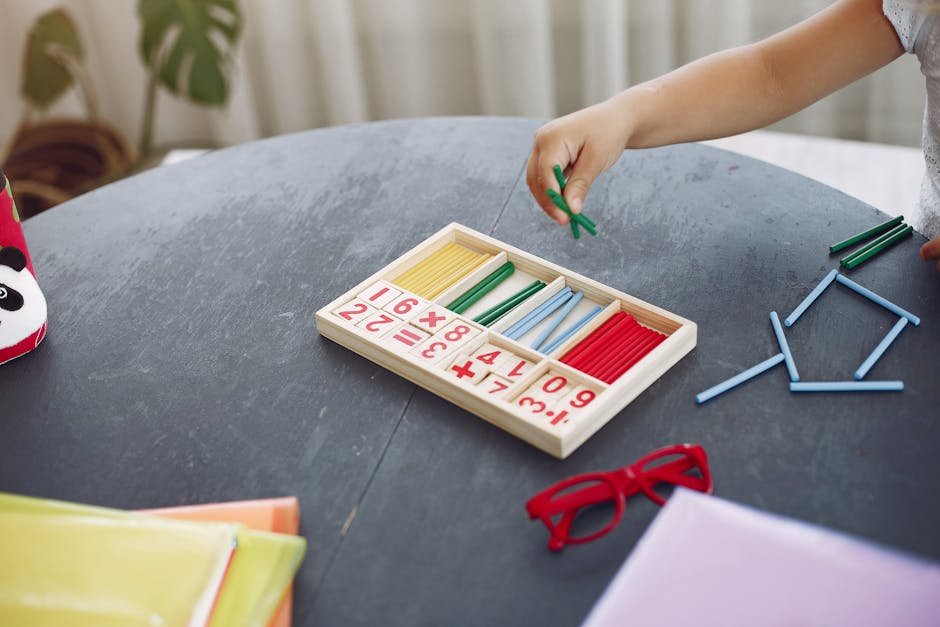
Some kids can answer 6 × 4 while bouncing a ball but lose the thread after two minutes in a chair. For them, ten minutes of flash cards at a desk turns into an argument about sitting still.
If that sounds like your child or a few students in your class, movement can become part of the practice instead of something you fight. Studies of active lessons come first, then a set of ways to move while working on the facts.
What Studies of Active Lessons Found
Researchers call them physically active lessons: math or reading lessons in which children stand, jump, walk, or act things out instead of sitting.
A 2020 review combined 42 of these studies, almost all from preschool and elementary school, with more than 12,000 children in total.
The results were encouraging but modest. On what was measured during the active lesson itself, the effect was large. On learning outcomes more broadly, it was small. The authors also noted that 25 of the 42 studies had a high risk of bias, so the numbers come with a caution.
A 2019 review looked only at math, with children from 4 to 16 years old. In 13 of its 29 studies, children who moved did better in math than children who did not. In 15 studies there was no difference. Pooled together, the effect was small and positive.
One long American trial ran for three years in 17 elementary schools in eastern Kansas, following children who started in 2nd and 3rd grade. Teachers added active lessons across subjects. Achievement scores did not go up, and they did not go down either, even with the extra time spent moving.
Put together, the picture is mixed but reassuring: moving while learning rarely costs anything, and it sometimes helps a little. It is not a shortcut to memorizing the tables. Those reviews did not single out the times tables, and almost all of the studies took place in classrooms, not at home.
Attention May Be the Real Payoff
Where movement shows up more clearly is in behavior. In a North Carolina study of a program called Energizers, 3rd and 4th graders did short activity breaks in class. Afterward, they spent 8 percent more of the lesson on task, and the students who had been least focused improved by 20 percent.
A 2017 review of classroom activity programs for elementary-age children also found more on-task behavior after movement. The studies differed so much from one another that the authors would not draw firm conclusions, but the pooled result was positive.
For an energetic child, that is the useful part. If moving keeps them with you for eight minutes instead of three, they simply get more practice. The facts still have to be practiced; movement just makes it easier to stay in the game long enough to practice them.
You may have heard such kids called kinesthetic learners. A well-known 2008 review of learning styles found no good evidence that teaching to a child's preferred style improves learning. Movement may help through attention and enjoyment, which can matter for any child, and not because some children learn only through their bodies.
Movement That Carries the Math
A 2021 study with 560 4th and 5th graders compared two kinds of movement over eight weeks. In one group, the physical activity was built into the math tasks. In another, children took activity breaks that had nothing to do with math. On a standardized math test, the integrated group came out ahead, though only in 4th grade.
That fits a simple rule for home and class: let the movement do something with the numbers. The six ideas below do that, and each works with any table your child is learning.
Jump While You Say It
Your child jumps once for each fact while saying it out loud: "One times six is six," jump, "two times six is twelve," jump. Saying the whole fact, not only the answer, keeps both numbers attached to the product. Start in order, then call out facts in a mixed order.
Stand for the Product
Call out a fact such as 7 × 3. Your child crouches, thinks, and stands up tall to say 21. For a missed fact, they stay crouched while you give the answer, then say the full fact back to you before trying the next one. Six or eight facts make one round.
Toss and Answer
Toss a soft ball or a pair of rolled socks back and forth. Whoever throws says a fact, and whoever catches gives the product before throwing back with a new fact. Many kids enjoy asking you questions, and choosing the facts makes them think about the table too. For a child who dislikes being quizzed, taking turns can take some of the sting out of it.
Walk the Array
Lay out a grid with tape, chalk, or sheets of paper on the floor, such as 4 rows of 6. Your child walks along each row, counting its squares, and then says the fact: 4 rows of 6 is 24. In the American order, the first number counts the groups, so 4 × 6 means four rows of six.
Climb the Stairs
If you have stairs, tape a fact to each step, or simply call one out from the bottom. Your child answers, then climbs one step. A wrong answer means staying put while you talk it through. Eight or ten steps make a natural round, and the walk back down can be the same facts in reverse order.
Follow the Line
Put a strip of tape along the floor and have your child walk it heel to toe, saying one whole fact with each step. Balancing takes just enough attention to keep restless feet busy, while the voice does the math. For a harder round, you call out the first number at each step, and your child finishes the fact.
Setting Up a Moving Session at Home
Active practice needs a little planning, or it slides into plain playing. A few choices before you start make the difference between a game with math in it and math with a game around it.
- Clear a small space, a hallway or a patch of living room floor, so nobody has to dodge furniture.
- Pick one table and a short list of facts, such as the six facts your child still misses.
- Decide on a short length, such as two rounds or ten minutes, and stop on time.
- Keep a pencil nearby to write down any fact that stalled, so it comes back tomorrow.
- Let your child choose the movement for the last round.
Stop before your child is out of breath, because a game that gets too wild has stopped being practice.
Vary the movements from day to day, but keep the facts. It is the repeated, spread-out practice of the same facts that makes them stick, and new movements keep that repetition from feeling stale.
For a child who gets wound up easily, end with something calm and quiet. A slow walk around the room while saying the table, or a stretch between facts, brings the energy down before homework or dinner, which makes the next part of the evening easier for everyone.
The ideas also change with age. A 2nd grader can walk rows and count equal groups, which fits the array work of that grade, while a 3rd grader is ready to say the facts while moving. By 4th and 5th grade, try asking for multiples of ten during a toss, such as 6 × 40, or have your child jump once for each step of a bigger problem.
Ideas for a Busy Classroom
Teachers do not need a gym to add movement. In the Kansas and North Carolina programs, the activities happened right in the classroom. Short bursts of a few minutes fit between other parts of a math lesson.
Stand Up, Sit Down
Write a fact with an answer on the board, such as 8 × 4 = 32 or 8 × 4 = 36. Students stand if it is true and stay seated if it is false. Ten statements take two minutes, and you can see at a glance who is still unsure.
Four Corners
Label the corners of the room with four products, such as 24, 28, 32, and 36. Read a fact aloud, and students walk to the corner with the answer. Anyone who hesitates and follows the crowd is telling you something, so note it for later.
Hallway Line-Up
While students wait in line, give each one a fact as they pass through the door, and they answer before stepping out. Keep it fast and friendly. Over a week, every student gets a few extra facts a day without any time taken from lessons.
When to Sit Back Down
Movement is a way to get practice done, not a replacement for it. Some practice is still easier in a chair: writing the facts out, drawing them as groups or rows, and answering a mixed set where nobody is watching.
A good pattern is to move first and sit second. Five minutes of jumping through the 6s, then a few minutes on the 6 times table page. Its second star puts that table's facts in random order and offers no help, with no clock to beat, so it shows quickly whether the moving practice carried over.
When a child still cannot settle for even a few minutes, short sessions spread through the day often go better than one long one. For more ideas on focus, see our piece on easily distracted kids, which looks at the setting and the length of a session.