
Quick Formative Math Assessments for Teachers
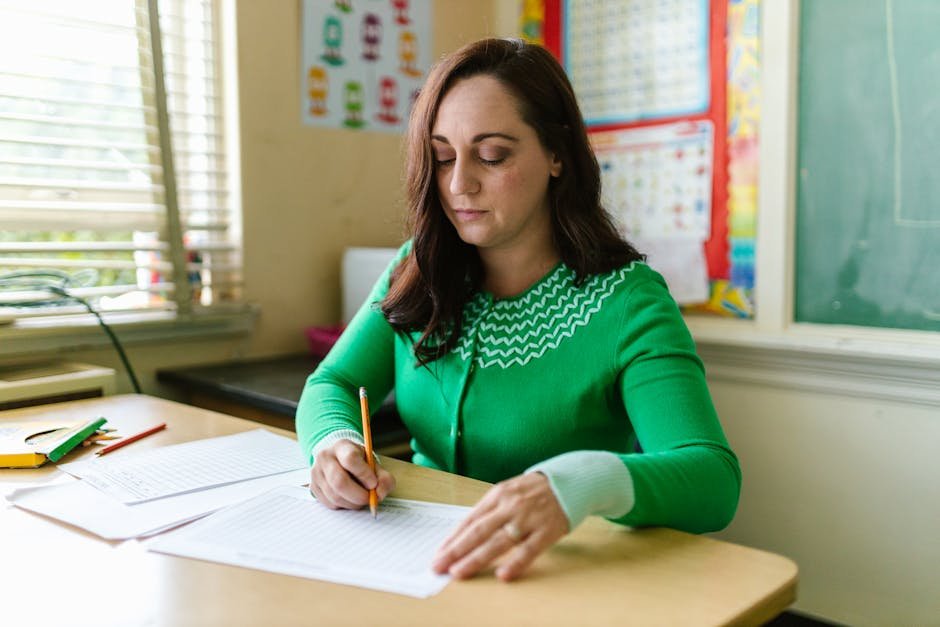
By the time a unit test shows that half the class never understood 6 × 7 as six groups of seven, the unit is over. Quick formative checks catch that much earlier, in the middle of a lesson, while there is still time to do something about it.
What follows covers the research on these checks, five that take about thirty seconds of class time, and ways to act on the answers without drowning in data.
What Makes a Check Formative
A check is formative when its purpose is to change what happens next. The question is not "What grade does this student get?" but "Should I move on, explain this again, or split the class?" The same question can be formative or summative depending on how the answers are used.
That distinction matters for planning. A formative check does not need to be long, scored, or recorded. It needs to give you a clear picture of the whole room, fast enough that you can still use it before the bell.
The quickest checks share three features. Every student answers, not just the volunteers. Everyone answers at the same moment, so nobody copies a neighbor. And the question is narrow enough that a wrong answer tells you something specific.
What the Research Says
Formative assessment has a reputation for huge effects, and the research supports something more modest.
A 2017 review from one of the federal Regional Educational Laboratories looked at studies of formative assessment in elementary schools. Across the studies that reported an effect size, the average was 0.26 standard deviations, with results ranging from negative to large. For math, the average was 0.36. Both checks led by the teacher and checks in which students assessed their own work were effective in math.
An earlier meta-analysis from 2011 was more cautious still. Its authors noted that effect sizes of about 0.70 are often claimed for formative assessment but are not supported by the research. They found a weighted average of about 0.20, and a smaller number for math.
So the fair summary is this: frequent checking that leads to changes in teaching does help, by a meaningful but not dramatic amount. The review also did not study how often checks should happen, so no research answers that question for you.
One specific tool has particularly good support. Response cards, small cards or boards that every student holds up at once, have been studied in many classrooms. In one study in two urban 4th grade classrooms, students wrote answers to every question on white laminated boards during math lessons. Compared with calling on one student at a time, disruptive behavior dropped and students answered far more questions.
Five Thirty-Second Checks
Each of these takes about thirty seconds to ask and collect. Reading the results and deciding what to do takes a little longer, but you can do that while students work on the next task.
1. Boards up
Ask one question, such as 8 × 6, and give students a few seconds to write the answer on a mini whiteboard. On your signal, every board goes up. You can scan 25 answers in a few seconds and see exactly who wrote 48 and who wrote 42 or 54.
Look at the wrong answers, not just the count of right ones. A board that says 42 for 8 × 6 points to a different fact than a board that says 14, which suggests the student added instead of multiplied. Those two students need different help, and the board has just told you which is which.
2. Fingers for A, B, C, or D
Put a multiple-choice question on the board and have students hold up one to four fingers against their chest, so only you can see. This works well when the wrong options are common mistakes, because each wrong choice tells you what a student was thinking. More on writing those options below.
3. One-question exit ticket
Before students leave, each one writes the answer to a single question on a scrap of paper or an index card and hands it over at the door. Keep it to one question. "Draw 3 × 5 as an array" or "What is 7 × 4, and how do you know?" is plenty. Sort the answers into "got it" and "not yet" piles before the next lesson.
Over a week, the piles add up to a useful record. A student who lands in "not yet" on Monday and Wednesday but "got it" on Friday is on track. A student who stays in "not yet" all week needs a closer look, ideally a short conversation rather than another worksheet.
4. Confidence check
Ask students to rate how sure they feel about today's skill on a scale they show with their hand: a fist for "lost," one finger for "shaky," up to five for "I could teach this." Self-ratings are not perfect, but they help students think about their own learning, and they can flag students who got the right answer by luck.
5. Turn and explain
Give a problem, such as "Why is 4 × 6 the same as 6 × 4?", and have partners take turns explaining it to each other. Walk past three or four pairs and listen. Students' explanations reveal misunderstandings that a correct number never would.
Writing a Good Check Question
The best quick checks use one carefully written question. For multiple choice, each wrong option should match a mistake real students make, so that a wrong answer points straight to the problem.
Take 7 × 8. A strong set of options is 48, 54, 56, and 63. None of them is silly, and each one tells you something:
- 56 is correct.
- 48 is the answer to 6 × 8, so the student pulled a neighboring fact.
- 54 is 6 × 9, another neighbor that often gets swapped with 56.
- 63 is 7 × 9: seven groups of nine instead of eight, so seven too many.
The same idea works for concepts. Ask "Which picture shows 3 × 5?" and offer three groups of five, five groups of three, and a picture of 3 + 5. If you teach the convention that the first number is the number of groups, the first choice is the one you want, and the 3 + 5 picture reveals students who still confuse multiplication with addition.
Keep each question to one step. A question that needs two facts and an addition can go wrong in three places, and a wrong answer no longer tells you which part caused it. Save the multi-step problems for the lesson itself and use the check to test one idea.
The researcher who popularized this kind of mid-lesson "hinge" question has described it in interviews as a way to get some response from every single student, for example through finger voting, letter cards, or mini whiteboards. That is the whole point: one question, every student, one decision.
Acting on What You See
A check is only formative if something changes. Decide ahead of time what you will do with each kind of result.
If almost everyone is right, move on. Note the few who were not and check them again during independent work.
If many are wrong, teach it again, differently. If the error was 3 + 5 instead of 3 × 5, go back to drawing equal groups. Repeating the same explanation louder rarely helps.
If the room is split, pair students who got it right with students who did not, and give the pairs one or two problems to solve together. The students who understood get practice explaining, and the others hear the idea in a classmate's words.
Whatever you decide, check again soon. A quick question at the start of the next lesson shows whether the reteaching worked or whether the misunderstanding is still there. Some misconceptions need more than one round to clear up.
Keep the record light. A class list with a check mark or a dot next to each name is enough. You are looking for patterns across several checks, not grades for single answers.
For multiplication facts, online practice can carry some of the load. Once you set up a class password on the site, students practice the tables and you can see which stars each student has earned. A student who has the first star on the 6 times table but not the second, mixed one is a good candidate for a quick check on those facts.
Questions Teachers Ask About Quick Checks
How often should I check?
There is no research-based number. The 2017 review did not look at frequency. A practical rule is at least once in the middle of a lesson, when there is still time to adjust, and once at the end, so you know where to start tomorrow.
More is not always better. If checks start to eat into teaching time, or students begin to treat them as a routine to get through, cut back to the one or two moments in a lesson where the answer would actually change your plan.
Do exit tickets actually work?
We did not find studies that measured exit tickets on their own. They are useful for the same reason as other formative checks: they give you information about every student in a form you can act on. Their value depends on whether you use the information the next day.
Should these checks be graded?
No. Grading changes the purpose. Students who know a quick check counts toward a grade may copy, guess, or freeze, and you lose the clear picture you were looking for. Keep the checks low-stakes and use them to plan.
What if students copy each other's boards?
Have everyone hold up their answer at the same moment, on a signal. Board, fingers, or cards: when nobody can see a neighbor's answer before showing their own, copying stops being an option, and you see what each student really thinks.