Veerle Dielen · Elementary teacher · March 11, 2026 · Per Times Table
Square Numbers: A Hidden Pattern in the Times Tables
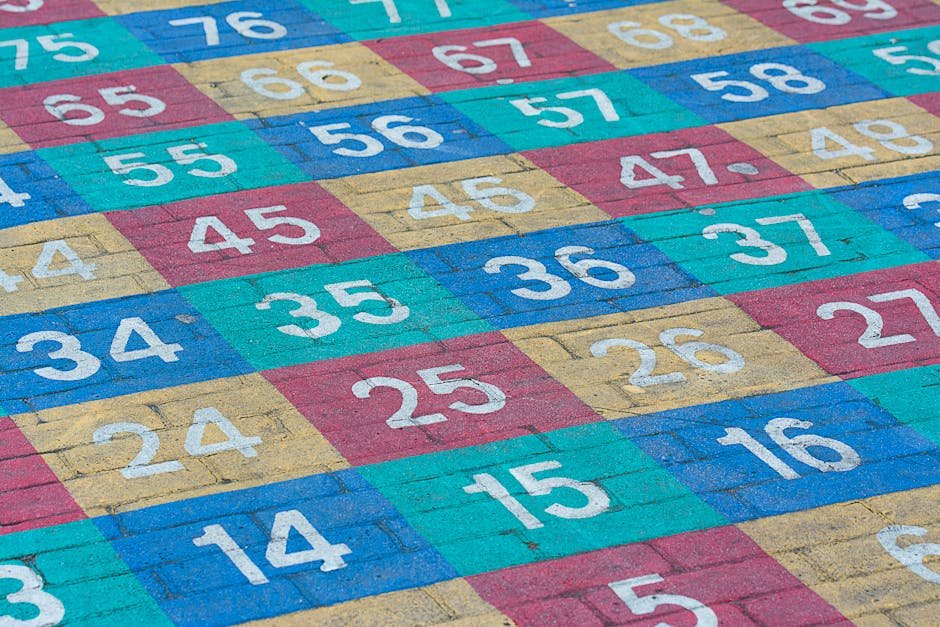
When you explore a multiplication chart, drawing a line from the top-left corner to the bottom-right reveals a captivating sequence of numbers: 1, 4, 9, 16, 25, 36, 49, 64, 81, 100. Known as square numbers, these values are crucial in elementary math, offering children a significant edge when mastering multiplication tables. Understanding square numbers not only aids in arithmetic but lays the groundwork for more advanced math concepts. In this comprehensive guide, we'll delve into what square numbers are, why they matter, and effective ways to teach them to your child.
Understanding Square Numbers
Basic Definition
A square number results from multiplying a number by itself. They are termed "square" because they can be visualized as forming a perfect square. For instance:
- 1 × 1 = 1 (a single dot representing the smallest square unit)
- 2 × 2 = 4 (a 2x2 square)
- 3 × 3 = 9 (a 3x3 square)
- 4 × 4 = 16 (a 4x4 square)
- 5 × 5 = 25
- 6 × 6 = 36
- 7 × 7 = 49
- 8 × 8 = 64
- 9 × 9 = 81
- 10 × 10 = 100
- 11 × 11 = 121
- 12 × 12 = 144
The first ten square numbers (1 through 100) form the diagonal of the standard multiplication chart and are key to numerous multiplication and division problems encountered by children.
The Importance of Square Numbers
Multiplication Anchors
Square numbers serve as natural anchors within the multiplication chart. Mastering these squares allows kids to derive adjacent facts with ease. For example:
- Knowing 7 × 7 = 49 helps calculate 7 × 8 (49 + 7 = 56) or 7 × 6 (49 - 7 = 42).
- Similarly, 8 × 8 = 64 assists with 8 × 9 (64 + 8 = 72) or 9 × 8 (81 - 9 = 72).
Children who confidently know square numbers can mentally calculate many challenging multiplication facts using basic addition or subtraction.
Geometry Connections
Square numbers directly relate to geometry, representing the areas of squares with integer sides. For example, a 7x7 garden bed covers 49 square feet, while a chessboard features 64 squares (8x8). These examples connect multiplication to tangible shapes, making abstract numbers more concrete for children.
Foundation for Algebra
In algebra, squaring is a fundamental operation. The expression x² (read as "x squared") signifies multiplying x by itself. The values of x² for small integers correspond to the square numbers learned in elementary school. A child who remembers 6×6=36 has already memorized the algebraic equivalent of 6², providing a seamless transition to algebraic concepts.
Beautiful Patterns
Examining the differences between consecutive square numbers reveals a fascinating pattern:
- 4 - 1 = 3
- 9 - 4 = 5
- 16 - 9 = 7
- 25 - 16 = 9
- 36 - 25 = 11
These differences are consecutive odd numbers (3, 5, 7, 9, 11), a result of each new square number adding an L-shaped border of new dots to the previous square. Discovering this pattern can inspire a child’s love for mathematics and pattern recognition, building their number sense for the future.
Teaching Square Numbers to Children
Starting with Physical Squares
Begin with tangible objects like cubes, blocks, or tiles. Construct a 2x2 square with your child, counting the units to reach 4. Proceed to a 3x3 square, counting 9 units, and then a 4x4 square totaling 16. This hands-on approach solidifies the concept visually, linking the term "square" to a shape they can physically see and remember.
Creating a Squares Chart
Write square numbers on paper, listing each on a separate line:
- 1, 4, 9, 16, 25, 36, 49, 64, 81, 100
Practice recalling them out of sequence. Ask questions like, "What’s the square of 6?" or "What’s the square of 8?" This random-order practice helps cement their understanding, akin to memorizing multiplication tables.
Using Square Numbers as Reference Points
If your child struggles with a multiplication fact, guide them by referencing the nearest square: "Having trouble with 7×8? What’s 7×7? That's 49. So, 7×8 is 49 plus another 7, which is 56." This technique simplifies complex multiplication into straightforward addition or subtraction from a known square, mirroring strategies used by proficient math students.
Highlighting the Diagonal on a Multiplication Chart
Print a multiplication chart and color the diagonal squares representing square numbers (1, 4, 9, 16, 25, 36, 49, 64, 81, 100). Display the chart where your child can view it daily, reinforcing the squares through constant visual exposure.
Advanced Square Numbers: Beyond Ten
While the first ten squares (1 to 100) are most practical, learning additional squares can be beneficial:
- 11 × 11 = 121
- 12 × 12 = 144
- 13 × 13 = 169
- 15 × 15 = 225
- 20 × 20 = 400
- 25 × 25 = 625
These numbers appear in various contexts, such as measurements (a square foot has 144 square inches), calculations (25% of 100 is 25, yet 25 × 25 = 625 has its own significance), and algebra. Familiarity with these squares enhances a child’s confidence and competence in mathematics.
Practical Activities with Square Numbers
Activity 1: Designing a Square Garden
Imagine the layout of a garden as a square. "If we have a garden measuring 4 feet by 4 feet, how many square feet is that?" The answer is 16. "If we expand it to 8x8 feet, what’s the area?" The area becomes 64. This exercise illustrates the unexpected yet memorable fact that doubling the side length quadruples the area.
Activity 2: Chess Board Calculations
Consider a chessboard consisting of 8x8 squares, totaling 64. "If each square can hold one penny, how many pennies cover the board?" The answer is 64. "What if we enlarge the board to 16x16?" Then, 256 pennies are needed. This activity helps reinforce square numbers through relatable examples.
Activity 3: Counting Floor Tiles
Examine a tiled floor. How many tiles are there? Often, floors are laid out in a rectangular pattern, which can be divided into square sections. Practice estimating the number of tiles before counting to strengthen spatial awareness and estimation skills.
Activity 4: Building Squares with Lego
Utilize Lego baseplates to create squares. Build a 5x5 square of bricks, counting 25. Then, construct a 6x6 square, counting 36. Adding one to the side length results in an L-shaped border, visually demonstrating the pattern of differences (5+5+1 = 11 new bricks from 25 to 36).
Common Mistakes in Teaching Square Numbers
While teaching square numbers, certain pitfalls can hinder a child’s learning. Avoid these common mistakes:
- Rushing Through Basics: Ensure your child comprehends the concept of multiplication before delving into square numbers.
- Overloading with Information: Introduce square numbers gradually, focusing on understanding rather than memorization alone.
- Ignoring Patterns: Encourage recognition of patterns in square numbers, as this enhances comprehension and retention.
- Lack of Visual Aids: Utilize charts, blocks, and other visual tools to reinforce learning and make abstract concepts tangible.
Actionable Tips for Parents and Teachers
- Incorporate Daily Practice: Regularly integrate square number exercises into your child’s routine, ensuring consistent exposure and practice.
- Utilize Real-World Examples: Relate square numbers to everyday situations, such as measuring room areas or arranging items in squares.
- Encourage Group Learning: Facilitate group activities or games involving square numbers, fostering a collaborative learning environment.
- Celebrate Milestones: Acknowledge progress and achievements to motivate continued effort and enthusiasm for learning.
- Communicate with Educators: Maintain open communication with teachers to align home activities with school curricula and address any learning challenges.
Special Situations: Tailoring Learning
Test Anxiety
For children experiencing test anxiety, emphasize understanding over rote memorization. Practice square numbers in a stress-free environment, using games and creative activities to build confidence.
ADHD
Children with ADHD may benefit from short, engaging exercises focusing on square numbers. Incorporate movement, such as building physical squares with blocks, to channel their energy into learning.
Gifted Students
Gifted learners may quickly master square numbers and seek additional challenges. Introduce advanced concepts, like discovering patterns in differences or exploring squares beyond 12, to stimulate their curiosity.
Dyscalculia
For children with dyscalculia, use tangible, multisensory approaches to teach square numbers. Visual aids, repetitive practice, and breaking down concepts into smaller steps can enhance understanding and retention.
A Weekly Routine for Mastering Square Numbers
A structured weekly routine can help reinforce square number learning:
- Monday: Introduce a new square number. Use blocks to build physical representations.
- Tuesday: Create and fill in a squares chart. Practice recalling squares in random order.
- Wednesday: Apply square numbers to real-world scenarios, like garden design or floor planning.
- Thursday: Play a square numbers memory game with friends or family.
- Friday: Review the week's learning, focusing on identifying patterns in square numbers.
- Saturday: Engage in a fun, hands-on project, like building squares with Lego or drawing geometric patterns.
- Sunday: Rest and reflect on the week's learning, preparing mentally for the next set of square numbers.
Long-Term Perspective on Square Numbers
Square numbers are more than just arithmetic facts; they are foundational elements of mathematics. Mastering them aids in developing critical thinking, problem-solving skills, and a deeper understanding of mathematical principles. As children progress through school, this knowledge supports their success in algebra, geometry, and beyond.By instilling a strong grasp of square numbers early on, you're giving your child the tools they need to excel in math and approach complex concepts with confidence. The benefits of learning square numbers extend far beyond elementary school, influencing their academic journey and lifelong appreciation of mathematics.
Talking to Your Child's Teacher
Regular communication with your child's teacher can be immensely helpful in reinforcing their understanding of square numbers. Here are some tips for effective dialogue:
- Ask for Feedback: Inquire about your child's progress and understanding of square numbers in class.
- Share Strategies: Discuss successful home activities with the teacher to align methods.
- Request Resources: Teachers may provide additional materials or suggest helpful tools for learning square numbers.
- Collaborate on Challenges: If your child struggles, work with the teacher to develop a targeted plan to address specific difficulties.
- Celebrate Success: Share your child's achievements with their teacher to foster a positive learning environment.
Reader questions
What are square numbers?
Square numbers are the result of multiplying a number by itself. For example, 3 × 3 = 9, so 9 is a square number.
Why are square numbers important?
Square numbers are crucial because they serve as anchors in multiplication, relate to geometry, and lay the foundation for algebraic concepts.
How can I help my child learn square numbers?
Use visual aids, hands-on activities, and real-world examples to make learning square numbers engaging and memorable for your child.
What are common mistakes to avoid?
Avoid rushing through concepts, overloading information, ignoring patterns, and neglecting visual aids. Focus on gradual understanding and engagement.
How do square numbers connect to higher math?
Square numbers introduce concepts used in algebra and geometry, providing a stepping stone to more advanced mathematical learning.
Wrap-Up: The Value of Square Numbers
Square numbers represent a hidden yet vital pattern within the multiplication tables. Understanding them not only strengthens a child's arithmetic skills but also ties into geometric visualization and algebraic thinking. By incorporating square numbers into daily learning, parents and teachers can provide children with a powerful mathematical foundation.Whether through visual aids, interactive activities, or relatable examples, teaching square numbers enriches a child's math education. As they uncover the beauty and utility of these numbers, children gain confidence and enthusiasm for exploring the broader world of mathematics. Encourage your child to embrace these patterns, and watch as they unlock a lifelong love for learning.
