
Flashcards With Drawings: Kids Draw Their Own Multiplication Cards
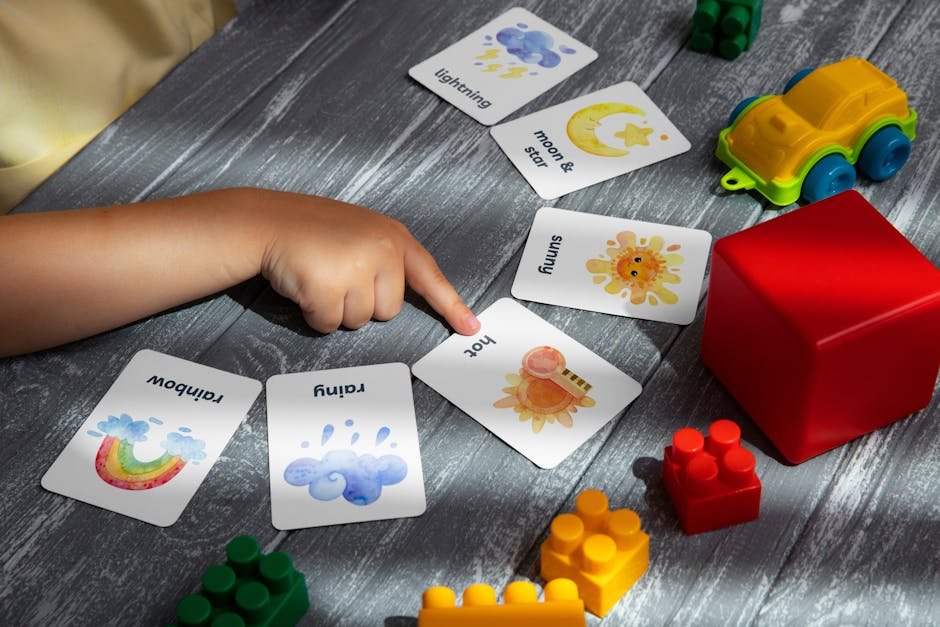
Store-bought flashcards show a fact and an answer, and nothing in between. When kids make their own cards and draw each fact as groups or rows, every card also shows what the multiplication means, in their own hand.
This idea suits parents and teachers of 2nd to 4th graders who want a hands-on project: how to make the cards, which drawings fit which facts, and what research on drawing and on making cards does and does not show.
Why a Drawing Belongs on the Card
A plain card that says 6 × 4 asks a child to remember 24. A card with six circles and four dots in each also shows why the answer is 24. For a fact that is still new, that picture is the bridge between knowing what multiplication is and knowing the answer by heart.
The drawing also matches how 3rd grade math explains multiplication. In the Common Core, standard 3.OA.A.1 describes a product such as 5 × 7 as the total number of objects in 5 groups of 7 objects each.
Standard 3.OA.A.3 asks students to solve problems with equal groups and arrays, using drawings and equations.
So a card with a drawing is not a detour from school math. It is the same picture your child's class uses, made small enough to fit in a pocket. Outside the Common Core, drawing equal groups and arrays is a common way to show multiplication in many classrooms.
Making the cards takes time, and that is part of the point. Drawing seven groups of eight dots means thinking about every group. The finished deck is also something they made, which some kids treat with more care than a printed one.
Who Was Studied, and What They Found
Researchers have studied drawing as a way to remember, but mostly with adults and with words, not with children and math facts. In lab studies at a Canadian university, students drew simple words like "apple" or wrote them out again and again. They later recalled the drawn words much better, often more than twice as many.
Later studies with college students found similar gains for recognizing drawn words, though drawing made it harder to remember the order of a list. Children were not tested in any of them, and none used multiplication.
A study with young children points the other way, at least for one kind of task. In a set of experiments, children were asked to recall objects from an event they had seen. Drawing lowered recall for 5- and 6-year-olds and did not help older children.
That task was very different from learning a math fact, but it is a reminder not to assume adult results carry over.
Making your own flashcards has also been studied mainly with college students. In a series of six studies, undergraduates who made their own digital cards in their own words, or added their own examples, scored about 10 percentage points higher on a test two days later than with premade cards. Students who only copied the text word for word got no benefit.
Put together, the research suggests one useful lesson: the benefit, where there is one, comes from doing something of your own with the material, not from copying. A drawing your child plans and makes fits that idea.
Whether it helps children learn multiplication facts faster has not been tested, so treat it as a sensible practice idea, not a proven method.
Making a Drawn Deck in Six Steps
A first deck of ten cards from a single table is plenty. These steps suit kids from 2nd grade on, with more help from an adult for the youngest.
- Gather index cards, a pencil, and two colors of marker or crayon. Plain cards with no lines leave more room for drawings.
- Choose the table your child is learning in class and write each fact on the front of its own card in large numbers, such as 4 × 6.
- On the back, have your child draw the fact first, before writing the answer, choosing one of the kinds of drawings below.
- Count the drawing together to find the answer, then write it under the picture with the full fact: 4 × 6 = 24.
- Check every card with your child before it joins the deck, since a drawing with one group too many teaches the wrong fact.
- Keep the deck in an envelope with the table written on it, and add new cards only when the old ones come back quickly.
Drawings do not need to be neat. Circles, dots, and simple shapes work fine. What matters is that every group holds the same number, so the picture tells the truth about the fact.
Four Kinds of Drawings for a Multiplication Fact
Different facts suit different pictures. Let your child try each kind and pick favorites, or vary the drawings so the deck does not look the same card after card.
Equal Groups in Circles
Draw one circle for each group and the same number of dots inside each circle. For 3 × 4, that is three circles with four dots in each, twelve dots in all. No picture shows "3 groups of 4" more directly, and it works well for kids who are new to multiplication.
Arrays of Dots in Rows
Draw the fact as rows and columns. For 4 × 6, draw four rows of six dots.
Arrays are tidier than circles for larger facts, and turning the card sideways shows six rows of four, the same 24 dots read as 6 × 4. That makes arrays handy for showing that switching the two numbers leaves the total the same.
Everyday Things in Groups
Some kids like a little story on the card. For 5 × 2, draw five bikes with two wheels each and count ten wheels. For 3 × 8, draw three spiders with eight legs each.
Keep the picture simple enough to finish in a minute, and make sure every bike or spider has the same number of parts.
Equal Jumps Along a Line
Draw a line, mark 0 at the left, and draw equal jumps. For 6 × 3, draw six jumps of three, landing on 3, 6, 9, 12, 15, and 18.
This picture links multiplication to skip counting and to the number lines kids use in class. It works best for smaller facts, since long lines get crowded fast.
Practicing Once the Deck Is Done
A finished deck works like any other set of flashcards: show the front, say the answer, then turn the card to check. The drawing on the back is there for the moments when the answer does not come.
Instead of just reading the number, your child can count the picture again and see where the answer comes from.
For sorting, mixing, and how long to practice, the routines in times table flashcards apply to a homemade deck just as well.
Over time, the drawings should matter less. When a fact comes back quickly and correctly on several days, your child no longer needs to look at the picture.
Needing the picture less and less is a good sign. Try the same table online, such as the 6 times table once the 6s deck is finished, to see whether the facts hold up without any pictures at all.