Veerle Dielen · Elementary teacher · January 25, 2026 · Games & Activities
The Kitchen as a Math Classroom: Practicing Times Tables While Cooking
The Power of Cooking in Learning Multiplication
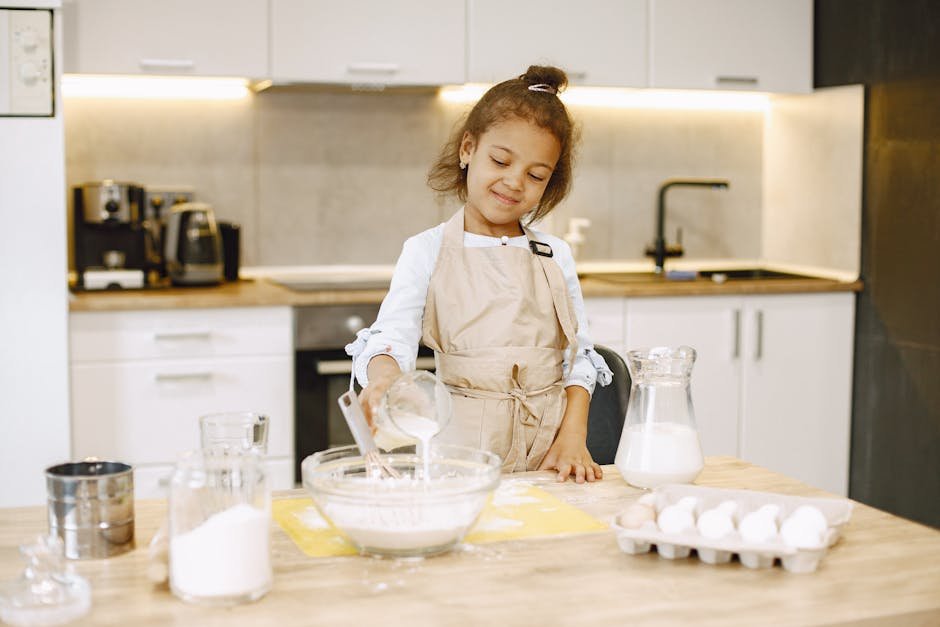
Cooking is a daily activity that offers a treasure trove of opportunities to practice multiplication tables. Whether you're a parent trying to help your child master math or a teacher looking for engaging methods, the kitchen can become an unexpected ally. With tasks like adjusting recipes, arranging food items, and measuring ingredients, you can turn ordinary cooking sessions into practical multiplication lessons. For example, when preparing to bake a batch of cookies, you might need to double a recipe, which involves multiplying each ingredient by two. This hands-on approach not only reinforces multiplication skills but also demonstrates how these mathematical concepts apply to real-world situations.
Understanding Multiplication in Everyday Cooking
Recipe Adjustments
Every recipe you encounter is a lesson in math. Consider the concept of doubling a recipe: if your pancake recipe calls for 2 eggs, doubling it requires 4 eggs. If you're making a cake that needs 3 cups of flour, doubling means using 6 cups. Doubling, halving, or scaling a recipe provides countless opportunities to discuss and understand multiplication. Similarly, if a bread recipe requires 1.5 teaspoons of yeast and you want to make three loaves instead of one, you can multiply 1.5 by 3 to find the total amount needed. These exercises help children see the direct impact of multiplication on everyday tasks.
Meal Planning for Families
When planning meals for larger gatherings, multiplication becomes essential. Imagine a recipe that serves 4 people. If you need to feed 12 guests, you must triple the recipe. This involves multiplying every ingredient by 3, offering a practical and meaningful way to delve into multiplication tables. For instance, if a casserole requires 1 cup of cheese per 4 servings, making it for 12 people means using 3 cups. These scenarios make multiplication tangible and relevant, enhancing comprehension and retention.
Food Arrangement
Consider the simple act of arranging food. Muffins lined up in a tray or cookies placed on a baking sheet are perfect examples. A muffin tray might hold 12 muffins in 3 rows of 4, while a cookie tray might have 24 cookies in 4 rows of 6. These arrangements are tangible examples of multiplication in action. You can ask your child to predict how many items will fit on a tray based on the number of rows and columns, then verify by counting. This hands-on activity reinforces the concept of arrays, a fundamental principle in multiplication.
Portioning and Dividing
Cutting a pizza into 8 slices or a cake into 12 portions gives children a visual and physical understanding of division and multiplication. These everyday tasks are excellent opportunities to reinforce how these mathematical concepts work together. For example, if you have a pizza with 8 slices and 4 people, you can discuss how many slices each person gets, linking division with multiplication. This not only solidifies their understanding but also demonstrates the practical application of math in sharing and portioning food.
Measuring Ingredients
Measuring ingredients is another area where multiplication comes into play. If a recipe calls for a quarter cup of an ingredient, you know that four of these make a full cup. Understanding that 16 tablespoons make up a cup is another way to illustrate how multiplication is used in cooking. You can involve children by asking them to measure out ingredients, counting how many times they need to use a smaller measure to reach the required amount. This hands-on practice with fractions and multiplication helps demystify these concepts and makes them more approachable.
Concrete Practice Moments in the Kitchen
- Recipe Doubles: Take a favorite family recipe and double it. Have your child rewrite the ingredient list with the new amounts, reinforcing multiplication skills. For instance, if your recipe calls for 1 cup of sugar, doubling it would require 2 cups. This exercise not only reinforces math skills but also encourages careful reading and following instructions.
- Muffin Tray Math: Use a muffin tray as a grid. Ask your child, "How many muffins fit in this tray of 3 rows by 4?" Count to verify the answer. This activity solidifies the concept of multiplication as repeated addition and provides a visual representation of mathematical arrays.
- Pizza Portioning: Before slicing a pizza, ask, "If there are 6 slices and each person eats 2, how many people can it feed?" This helps in understanding division as well. Extend this by discussing what happens if more or fewer people are sharing, introducing flexibility in mathematical thinking.
- Egg Carton Exploration: Discuss the arrangement of eggs in a carton, such as 2 rows of 6. Then, expand the conversation to talk about a dozen or two dozen eggs. This exercise connects multiplication with everyday objects, making abstract concepts more tangible and relatable.
- Measuring Cup Challenge: Use a quarter cup measure to fill a full cup. Ask how many times it takes to fill the cup, reinforcing the idea that 4 quarters equal a whole. This activity integrates fractions with multiplication, providing a comprehensive understanding of both.
- Shopping List Math: Before a cookout, say, "We need 2 packs of 8 hot dog buns. How many buns will we have?" This brings multiplication into everyday planning. Encourage your child to calculate totals for different items, enhancing their ability to use math in practical scenarios.
Tips for Different Age Groups
Grades K-2: Making Math Fun
At this age, children are just beginning to learn math concepts. Use colorful measuring cups and spoons, play counting games with ingredients, and keep explanations simple. Encourage them to count items like eggs or apple slices aloud, and make it a fun game. For instance, you might ask, "How many apple slices do you have if you cut each apple into 4 pieces and use 3 apples?" This kind of playful interaction helps solidify basic counting and multiplication concepts.
Grades 3-4: Building Confidence
Children in grades 3 and 4 are ready to tackle more complex multiplication tasks. Challenge them with doubling or tripling recipes, and involve them in meal planning. Use these opportunities to discuss the math behind each task, reinforcing their understanding. For example, if a recipe serves 4 and you want to serve 10, ask them to calculate the needed ingredient increases. This not only builds their math skills but also boosts their confidence in handling larger numbers and more complex operations.
Grades 5-6: Applying Skills Practically
Older children can handle more sophisticated math tasks. Encourage them to plan a meal for the family, calculate ingredient quantities, and even help with budgeting. Use cooking as a chance to show how multiplication is used in real-world scenarios. For example, if they're planning a dinner for 8 people and the recipe serves 2, they'll need to multiply the ingredients by 4. This practical application of math helps them see its relevance beyond the classroom and prepares them for future mathematical challenges.
Common Mistakes and How to Avoid Them
While the kitchen is a fantastic learning environment, there are pitfalls to avoid. Don't overwhelm children with too much at once; focus on one concept at a time. Avoid turning every cooking session into a math lesson, as this can lead to frustration. Instead, pick natural moments to introduce math. For example, ask a quick math question while waiting for water to boil. Lastly, steer clear of using technical math language that might confuse younger children. Use simple terms and relate math to everyday experiences for better understanding.
Actionable Tips for Parents and Teachers
- Use cooking as an opportunity to ask open-ended questions that encourage problem-solving. For example, "What happens if we double the sugar but not the flour?"
- Incorporate visual aids, like diagrams or charts, to help children understand multiplication concepts. A chart showing multiplication tables can be a handy reference on the fridge.
- Allow children to lead parts of the cooking process, boosting their confidence and independence. Let them measure ingredients or decide the portions.
- Encourage estimation and approximation, helping children develop their reasoning skills. Ask them to guess how much of an ingredient is needed before measuring it out.
- Celebrate successes, no matter how small, to keep children motivated and engaged. Praise their efforts in both cooking and math, reinforcing that learning can be fun and rewarding.
For Special Situations: Tailoring Your Approach
Handling Test Anxiety
For children with test anxiety, the kitchen provides a stress-free environment to practice math skills. Focus on building confidence through small, achievable tasks. Encourage a growth mindset by celebrating effort and progress rather than perfection. For instance, focus on the process of measuring and combining ingredients rather than getting exact results, emphasizing that mistakes are part of learning.
Supporting ADHD
Children with ADHD can benefit from the hands-on and dynamic nature of cooking. Break tasks into smaller, manageable steps, and use timers to keep them focused. Provide plenty of movement breaks to maintain engagement. You might say, "Let's measure the flour, then take a dance break before mixing it in." This approach keeps them engaged while channeling their energy productively.
Challenging Gifted Students
Gifted students may need more challenging tasks to stay engaged. Encourage them to experiment with altering recipes or creating their own. Discuss advanced concepts like ratios and proportions to stretch their understanding. Ask questions like, "How would the recipe change if we wanted to make it twice as sweet?" This intellectual challenge keeps them interested and pushes their cognitive boundaries.
Addressing Dyscalculia
For children with dyscalculia, the tactile and visual elements of cooking can aid comprehension. Use visual aids and manipulatives to represent numbers and operations. Offer plenty of encouragement and patience as they work through challenges. For example, use physical objects like beans to represent numbers, helping them visualize calculations. Celebrate their successes to build confidence in their math abilities.
Partnering with Schools for Enhanced Learning
Communication between parents and teachers is key in supporting a child's math education. Share your kitchen math experiences with your child's teacher, and ask for suggestions on reinforcing what they're learning in school. Collaborate on strategies that align with classroom teaching, ensuring a consistent learning approach. Consider scheduling regular check-ins with teachers to discuss progress and challenges, making sure that both home and school support the child's learning journey.
A Weekly Routine for Math Practice in the Kitchen
Establishing a weekly routine can make practicing math in the kitchen a regular and enjoyable part of your family's life. Here's a simple plan to get started:
- Monday: Plan the week's meals together. Use multiplication to adjust recipes as needed and create a shopping list with your child.
- Wednesday: Focus on measuring ingredients for a simple dish like pasta or salad. Discuss fractions and multiplication as you measure out portions.
- Friday: Bake a treat together, such as cookies or muffins. Let your child handle the measurements and calculations, offering guidance as needed.
- Sunday: Reflect on the week's cooking experiences. Talk about what math skills were practiced and what your child learned. Plan for any new challenges or goals for the next week.
This routine not only reinforces math skills but also fosters family bonding time and encourages a lifelong love of cooking and learning.
Long-Term Perspective on Learning Multiplication
Learning multiplication is a journey that builds over time. Cooking offers a long-term platform for reinforcing these skills in a practical and enjoyable manner. By consistently incorporating math into cooking, children will develop a deeper understanding of multiplication and its applications, preparing them for more advanced math concepts in the future. Encourage children to reflect on their progress and celebrate milestones, reinforcing that learning is a continuous process. By making math a natural part of their everyday life, you'll help them see it as an essential skill rather than a chore.
Talking to Your Child's Teacher
Engage in open conversations with your child's teacher about their math progress. Share insights from your kitchen experiences and ask for feedback on your child's strengths and areas for improvement. Discuss any concerns or challenges your child might be facing, and seek advice on how to address them. You might say, "We've been practicing multiplication in the kitchen. What additional strategies can we use to support their learning?" This collaborative approach ensures that both home and school environments are aligned in supporting your child's math education.
Parents often ask
How can I incorporate math into quick meals?
Even in quick meals, look for simple math opportunities. For instance, count or multiply items like sandwich layers or taco toppings. Use these moments as quick, informal math lessons.
What if my child finds math in cooking boring?
Keep it fun by turning math into games or challenges. Ask them to predict outcomes or race against the clock. Use rewards or incentives for successful math tasks to maintain engagement.
How do I handle mistakes during math practice?
Embrace mistakes as learning opportunities. Discuss what went wrong and how to correct it, emphasizing that errors are a natural part of the learning process.
Can cooking help with math beyond multiplication?
Yes, cooking involves a variety of math skills, including fractions, division, and ratios. As your child becomes more comfortable with multiplication, gradually introduce these other concepts.
When should I seek outside help for my child's math struggles?
If your child consistently struggles with math despite your efforts, consider consulting their teacher or a tutor. They can provide additional resources and tailored strategies to support your child's learning needs.The kitchen is much more than a place to prepare meals; it's a dynamic learning environment where math comes to life. By turning cooking into interactive math lessons, you not only help your child master multiplication but also show them how math is an essential part of everyday life. With patience, creativity, and a little guidance, you can make math both delicious and educational.
