Veerle Dielen · Elementary teacher · February 14, 2026 · Tools & Resources
Math Manipulatives Worth Buying (and the Ones to Skip)
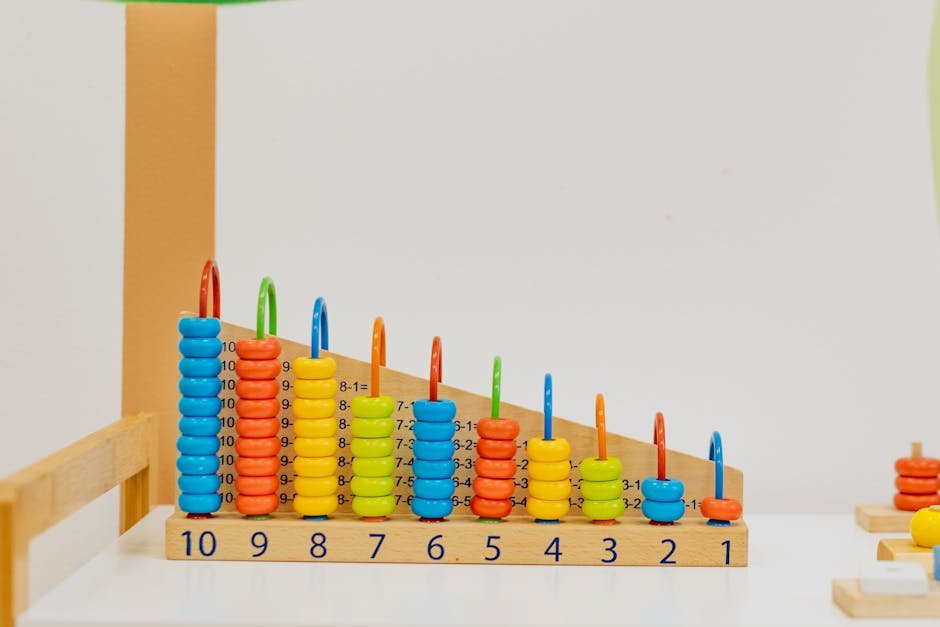
Introduction to Math Manipulatives
For parents and teachers, navigating the world of educational tools can be quite overwhelming. Walk into any teacher supply store or browse through online options, and you'll find an array of math manipulatives designed to aid in teaching elementary school children. Some of these tools are invaluable and can be used for years, while others might only capture a child's attention for a week before collecting dust. Understanding which manipulatives are worth investing in is crucial; not only because they can be expensive, but also because educational shelf space is limited.We'll delve into the six math manipulatives that deliver the most value across various grades, discuss which ones to skip, and provide practical tips and strategies for parents and educators to enhance their teaching of multiplication tables.
The Six Manipulatives Worth Buying
Counting Cubes (Unifix or Snap Cubes)
Counting cubes are small, colorful plastic cubes that can snap together. Typically available in packs of 100-500, these cubes are versatile tools that can be used across different grade levels. Children can use them to build arrays for multiplication, model number bonds, represent place value, build patterns, and demonstrate fractions.The real magic of counting cubes lies in their flexibility. For a kindergartener, they might serve as simple building blocks, which can evolve into complex mathematical models by the time the child reaches 5th grade. The tactile and visual nature of these cubes makes them appealing and effective for young learners. For instance, a first grader might use them to learn addition by visually combining different colored cubes, while a fourth grader might use them to understand the concept of volume by constructing various shapes.
Base Ten Blocks
Base ten blocks are an essential tool for visualizing place value and understanding the decimal system. This set includes unit cubes, tens-rods, hundreds-flats, and a thousand-cube. They are instrumental in demonstrating addition and subtraction with regrouping, as well as multiplication of multi-digit numbers.These blocks offer a physical representation of abstract concepts, allowing children to see the relationships between units, tens, hundreds, and thousands. This tactile experience helps cement the often misunderstood concept of place value, making it a foundational tool in elementary math education. For example, a student struggling with the concept of carrying in addition can physically stack unit cubes until they convert into a tens-rod, making the concept more intuitive and less abstract.
A Hundred Chart (Printed or Magnetic)
A hundred chart is a 10×10 grid numbered from 1 to 100. This can be a printed laminated chart or a magnetic board with movable number tiles. Children use the chart to skip-count, spot patterns, find multiples, and build an understanding of decimal place value.The structure of the hundred chart mirrors the multiplication chart and naturally reveals base-ten patterns. For example, coloring multiples of a specific number can transform into an engaging art project that visually demonstrates the spacing of numbers along the number line. A fun activity could include using the hundred chart to play bingo, where students must identify numbers based on clues about their factors or multiples.
Dice (Various Types)
Dice are simple yet powerful tools for math practice. A varied set of dice, including regular six-sided dice and some 10-sided or 12-sided dice, can create endless opportunities for learning. Children can use them to play multiplication and addition games, practice random fact drills, and generate problems spontaneously.The randomness and physical nature of dice make them appealing to children who might resist traditional worksheets. They also encourage active participation and can be adapted for different age groups, from simple addition for younger kids to complex multiplication games for older students. For example, a game of "dice multiplication" involves rolling two dice and multiplying the numbers together, with the highest score winning.
A Set of Playing Cards
Playing cards are a cost-effective and versatile tool for practicing math. A standard deck can be used to play various math games, such as the multiplication version of War, Memory, and Snap. These games can be tailored to different age and skill levels, making them a valuable resource for families with children of different ages.Playing cards provide an engaging way to practice math facts regularly. The simplicity and accessibility of flipping cards make them a highly effective tool for daily multiplication practice. For instance, using cards to play a game where each face card represents a number (Jack as 11, Queen as 12, etc.) can challenge students to multiply larger numbers without realizing they are doing math drills.
A Small Whiteboard with Markers
A handheld dry-erase board is a practical tool for math practice. Children can use it to solve problems, draw arrays and area models, and work through homework problems before committing their answers to paper. The erasable nature of the whiteboard encourages experimentation and reduces the fear of making mistakes.This low-stakes environment fosters confidence and allows children to approach math with a more open and creative mindset. The ability to quickly erase and correct mistakes makes it easier for students to learn from their errors without the pressure of permanence. A creative use of the whiteboard could be to play a game where students race to solve problems written by the teacher, then erase and write new ones for their peers.
Common Mistakes to Avoid
Over-Reliance on Manipulatives
While manipulatives are excellent tools for building understanding, they should not be used excessively. Becoming too reliant on these tools may hinder a child's ability to transition to abstract thinking. A balance between manipulative use and traditional methods is key to fostering a well-rounded math education. For example, once a student masters a concept using manipulatives, gradually transition them to solving problems without tangible aids to build their confidence in abstract thinking.
Ignoring Child's Interest
It's important to choose manipulatives that align with a child's interests and learning style. Some children may prefer visual aids, while others might benefit more from hands-on activities. Observing and adapting to a child's preferences can enhance the learning experience. If a child is fascinated by patterns, using colored counting cubes to create intricate designs can make learning math both engaging and fun.
Skipping Age-Appropriate Tools
Using manipulatives that are not age-appropriate can lead to frustration or disinterest. Ensure the tools you select match the developmental stage of the child to maintain engagement and maximize learning. For instance, while a kindergartener might be fascinated by simple counting with cubes, a fifth grader might find more value in using dice for probability experiments.
For early elementary
Young learners in kindergarten through second grade benefit greatly from exposure to math through play and exploration. At this stage, manipulatives that focus on basic counting, addition, and subtraction are essential.
Engaging Activities
- Counting Games: Use counting cubes to make towers with specific numbers, encouraging children to count as they build.
- Shape Recognition: Base ten blocks can also be used to introduce basic geometric shapes by forming squares and rectangles.
- Simple Board Games: Create a board game using a hundred chart where each roll of a dice moves the player forward, reinforcing number sequencing.
Developing Basic Skills
At this stage, developing fine motor skills alongside math skills is crucial. Manipulatives that allow children to snap, stack, and move objects are excellent for building these skills while learning math concepts. Encourage children to explain their thought process as they use manipulatives, promoting both language and cognitive development.
In third and fourth grade
In third and fourth grades, students begin to tackle more complex math concepts, including multiplication and division. Using manipulatives can help make these concepts more tangible.
Visualizing Multiplication
Introduce multiplication using a hundred chart and counting cubes. For instance, show how 3 x 4 can be visualized as three rows of four cubes each. This helps students transition from repeated addition to understanding multiplication as a concept.
Interactive Games
- Dice Challenges: Roll multiple dice to create larger numbers for challenging multiplication problems.
- Card Games: Use a deck of cards to practice quick recall of multiplication facts through competitive games with peers.
Reinforcing Concepts
Incorporate manipulatives into word problems to provide a visual and hands-on approach to solving complex problems. For instance, if a problem involves dividing 20 apples among 4 friends, use cubes to represent apples and distribute them, showing the division process physically.
For grades 5 and 6
As students progress to fifth and sixth grades, they begin engaging with more abstract math concepts, such as fractions, decimals, and multi-digit multiplication, requiring more sophisticated manipulatives.
Advanced Applications
- Place Value Understanding: Base ten blocks can aid in solving problems involving large numbers, as they provide a visual representation of each place value.
- Fraction Exploration: Use fraction tiles or circles to compare, add, and subtract fractions, making the abstract concept more concrete.
Integrating Technology
Introduce digital math apps that simulate manipulatives. These can reinforce what students learn with physical tools and introduce new ways to visualize math concepts. Apps that incorporate games and challenges can maintain engagement and offer instant feedback.
Actionable Tips for Parents and Teachers
- Store manipulatives in accessible locations so children can easily reach them and use them regularly.
- Incorporate manipulatives into specific lessons rather than using them constantly, to prevent them from losing their educational value.
- Combine manipulative use with paper exercises and digital apps to build both conceptual understanding and fluency.
- Encourage children to play with manipulatives outside of formal lessons to build intuition and familiarity.
- Replace lost or damaged manipulatives periodically to keep resources complete and effective.
- Join online educational communities to share ideas and resources on using manipulatives effectively.
A Weekly Routine for Math Success
Building a consistent routine can help reinforce learning and ensure that math manipulatives are used effectively. Here's a suggested weekly plan:
Monday: Introduction and Exploration
Introduce new concepts using manipulatives, allowing children to explore freely and ask questions. This sets the stage for the week's learning objectives.
Tuesday: Guided Practice
Engage in structured activities where students use manipulatives to solve specific problems. This is a great time for hands-on group work.
Wednesday: Mixed Media Learning
Integrate digital apps or online resources that simulate manipulatives, reinforcing what was learned with physical tools.
Thursday: Game Day
Dedicate a day to math games using dice, cards, or whiteboards. This makes learning fun and reinforces concepts through play.
Friday: Reflection and Assessment
Have students reflect on what they learned during the week. Use manipulatives to revisit difficult concepts and conduct informal assessments to gauge understanding.
Special cases
Addressing Test Anxiety
For children who experience anxiety during math tests, manipulatives can offer a sense of control and reduce stress. Practicing with familiar tools in low-pressure environments can help these students gain confidence and reduce anxiety during assessments. Encourage relaxation techniques such as deep breathing or visualization to accompany manipulative practice before tests.
Supporting ADHD Learners
Children with ADHD benefit from interactive and hands-on learning experiences. Manipulatives provide a tactile and engaging way to keep them focused and interested. Incorporating movement and physical activity with these tools can further enhance their learning experience. For example, using manipulatives in short, varied tasks can help maintain their attention and interest.
Challenges with Dyscalculia
For students with dyscalculia, traditional math methods might not be effective. Manipulatives offer an alternative approach by providing a visual and physical representation of mathematical concepts, helping these students grasp ideas that are difficult to understand through numbers alone. Tailoring activities to their pace and using consistent, repetitive exercises with manipulatives can gradually build their confidence and skills.
Engaging Gifted Students
Gifted students often seek challenges beyond the standard curriculum. Manipulatives can be used to explore advanced concepts and encourage creative problem-solving, catering to their advanced learning needs and keeping them engaged. Consider providing open-ended tasks that allow them to explore math concepts deeply and independently.
What the experts find
Research consistently supports the use of manipulatives in math education, indicating that they improve understanding and retention of mathematical concepts. Studies show that students who use manipulatives tend to perform better on assessments and exhibit greater enthusiasm for math.
Concrete to Abstract Learning
Research emphasizes the importance of transitioning from concrete to abstract thinking. Manipulatives serve as a bridge in this process, helping students visualize and internalize math concepts before moving on to abstract calculations.
Improved Problem-Solving Skills
Using manipulatives encourages students to approach problems from multiple angles, fostering critical thinking and problem-solving skills. By manipulating physical objects, students can test hypotheses and experiment with different solutions, leading to a deeper understanding of math concepts.
Talking to Your Child's Teacher
Effective communication with your child's school and teachers can enhance the learning experience. Discuss which manipulatives are being used in the classroom and how they can be reinforced at home. Understanding the school's curriculum and teaching methods allows parents to align their home activities with classroom learning, creating a cohesive educational approach.
Questions to Ask
- Which manipulatives are most effective for my child's current grade level?
- How can I support my child's math learning at home using these tools?
- Are there specific activities or games recommended to complement classroom learning?
- How does the school assess math understanding using manipulatives?
Long-Term Perspective on Math Education
Investing in quality math manipulatives offers long-term benefits for your child's education. These tools not only help with immediate learning objectives but also build a strong mathematical foundation critical for future success. By fostering a positive attitude towards math and encouraging exploration and experimentation, parents and teachers can help students develop a lifelong love for learning.
Building Mathematical Confidence
Regular use of manipulatives can boost a child's confidence in their math abilities. As they become more comfortable with math concepts, this confidence often extends to other academic areas, promoting overall academic growth.
Encouraging Lifelong Learning
By using manipulatives to make learning interactive and enjoyable, educators and parents encourage children to see math as a fun and integral part of everyday life. This positive association with math can lead to greater curiosity and a willingness to tackle challenging topics throughout their educational journey.
Closing thoughts
Choosing the right math manipulatives can have a significant impact on a child's educational journey. By investing in versatile and age-appropriate tools, parents and teachers can enhance the learning experience and support children in developing essential mathematical skills. Avoiding common pitfalls and customizing the approach to each child's unique needs ensures that learning remains engaging, effective, and enjoyable.With the right resources and strategies, even the most challenging math concepts can become accessible and exciting for young learners. By fostering curiosity and encouraging hands-on exploration, we set the stage for a lifetime of mathematical success and confidence.
Parents often ask
Are math manipulatives necessary for all students?
While not absolutely necessary for every student, manipulatives provide significant benefits for most learners by making abstract concepts tangible. They are especially helpful for visual and kinesthetic learners.
How often should manipulatives be used in the classroom?
The frequency depends on the learning goals and the students' needs. It's effective to use them for introducing new concepts, reinforcing challenging topics, and when students need a different perspective to grasp material.
Can I make my own math manipulatives at home?
Absolutely! Everyday items like buttons, coins, and craft sticks can be used as substitutes for commercial manipulatives. The key is ensuring they are used in a meaningful way to enhance understanding.
What should I do if my child loses interest in manipulatives?
Try introducing new games or challenges with the manipulatives, or combine them with digital learning tools. Sometimes a new context or application can renew interest.
When should I transition my child from manipulatives to abstract math?
Transition when your child demonstrates a strong understanding of the concepts with manipulatives and can explain their reasoning. Gradually introduce abstract problems while still occasionally using manipulatives for reinforcement.
