
Calculators and the Times Tables: When to Allow Them
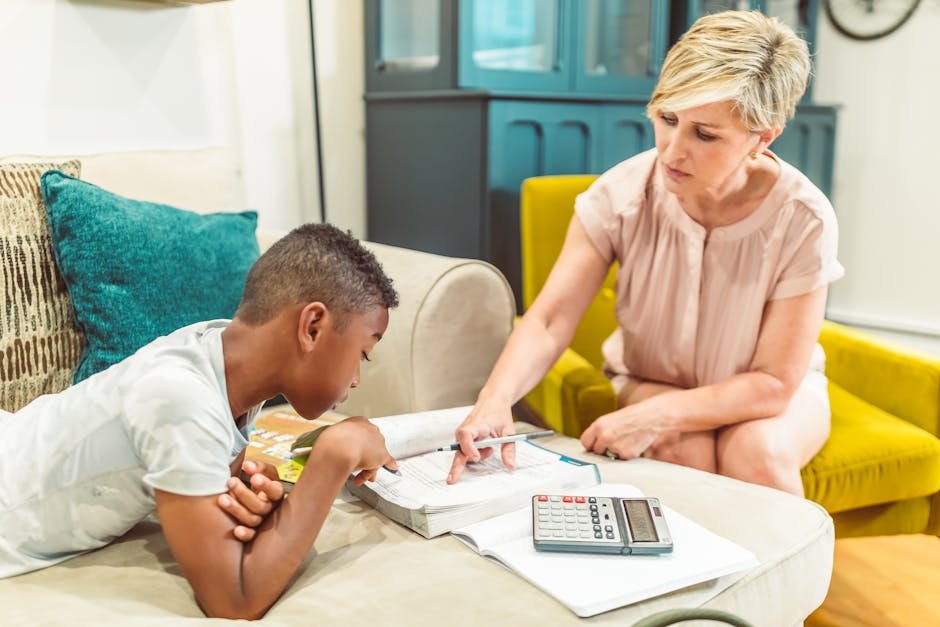
Sooner or later, a tired child at the kitchen table asks the obvious question: why can't I just use a calculator? There is one on every phone in the house, and the homework would be done in five minutes.
It is a fair question, and a flat no is not the best answer. A single rule covers almost every situation from 3rd to 5th grade, protects the facts your child is working to learn, and still lets a calculator help when it makes sense.
The Rule That Settles Most Arguments
Here it is: when the multiplication itself is what your child is practicing, the calculator stays in the drawer. When the multiplication is just a tool for something bigger, and your child already knows the facts, the calculator can come out.
So a page of 7s facts is calculator-free, because recalling 7 × 8 is the whole point of the page. A 5th grade project that adds up the cost of a class trip for 26 students might allow one, because the lesson is about planning and checking, not about the facts.
A teacher writing for Understood.org puts it in nearly the same words: a calculator should be available for support unless the operation is the objective. That is a useful sentence to keep in mind when you are not sure what a worksheet is asking for.
The rule also gives you a calm answer at homework time. Instead of "No, because I said so," you can ask: "What is this page practicing?" Most kids can answer that, and once they do, the decision usually makes itself.
What Schools Expect in Each Grade
In states that use the Common Core standards, the goal for 3rd grade is clear. By the end of the year, kids should be able to recall any product of two one-digit numbers instantly (standard 3.OA.C.7). A calculator cannot help a child reach that goal, because the goal is what is stored in their head.
In 4th and 5th grade, the facts become building blocks. Kids multiply larger numbers, divide with remainders, and work with fractions. Each of those steps uses the basic facts over and over, so a child who still counts on fingers for 6 × 7 has a much harder time with 46 × 7.
By 5th grade, Common Core expects kids to multiply multi-digit numbers fluently with the standard written method (5.NBT.B.5). A single problem like 384 × 26 uses six multiplication facts, plus the additions in between. If each of those needs a calculator, the method itself never gets practiced.
State tests reflect the same order. On the Smarter Balanced math tests used in several states, students in 3rd through 5th grade may not use a calculator. In 6th grade, a basic calculator is allowed for parts of the test, and one part is still taken without it.
Your state's tests may have different rules, and some classrooms allow calculators for certain projects even in elementary school. If you are not sure, ask the teacher. Knowing when they allow one makes it much easier to follow the same line at home.
What Research Says About Calculators
Researchers have argued about calculators in classrooms since they became cheap in the 1970s. The best-known early summary, published in 1986, pulled together 79 studies. Overall, using calculators alongside regular teaching did not hurt students' basic paper-and-pencil skills.
There was one exception, and it matters for this topic. In 4th grade, the review found that sustained calculator use appeared to damage students' basic skills. That is the year when many kids are still making the facts automatic while starting multi-digit multiplication.
A later review, published in 2003, looked at 54 studies and found that skills improved when calculators were part of both the lessons and the test. An earlier version of that analysis looked at tests taken without calculators: for average students up to 8th grade, using calculators in class neither helped nor hurt their basic operations.
In 2008, the National Mathematics Advisory Panel, a group set up by the federal government, reviewed the research again. It found little effect either way in the short studies available, but it added a warning: to the degree that calculators get in the way of instant recall of facts like multiplication, fluency in computation suffers.
Put together, the research does not say calculators are harmful in general. It says they should not replace the practice that makes the facts automatic, and that is exactly what the rule above protects.
Keep in mind that much of this research is decades old and was done with simple handheld calculators. Phones and tablets bring other distractions along. That is one more reason to keep fact practice and calculator time clearly apart.
When the Calculator Stays Away
Some kinds of work only make sense without a calculator. Being clear about them saves a lot of negotiating.
Fact practice of any kind
Flash cards, practice sites, fact worksheets, and games are all about recall. If your child uses a calculator here, the session turns into typing practice. Times Tables Trainer checks each answer right away, so a calculator has nothing to add.
Learning a new written method
When your child is learning to multiply a two-digit number by a one-digit number, the steps are the lesson. Even if the facts are solid, a calculator skips the part the teacher wants to see. Let it come back later, for checking.
Estimating and mental math
Questions like "about how much is 49 × 6?" ask your child to round and think. A calculator gives an exact answer to a question that was never about exactness, and your child misses the reasoning.
When a Calculator Can Help
Once the facts are in place, a calculator can be a sensible tool. These are the situations where many teachers allow one, and where you can too.
Checking work after it is done
A calculator makes a good second opinion. Your child solves the problems on paper first, then checks a few answers. If one is wrong, the job is to find the mistake on paper, not to copy the right answer. Used this way, the calculator adds practice instead of replacing it.
Long, real-life problems in 4th and 5th grade
Planning a trip, comparing prices, or working out a science project budget can involve big numbers and several steps. If the lesson is about choosing the right steps, a calculator lets your child focus on the thinking. Ask for an estimate first, so your child can tell whether the calculator answer makes sense.
Curiosity
Sometimes kids want to know what 12 × 12 × 12 is, or how many seconds are in a year. Exploring big numbers with a calculator can be fun and harmless, as long as it happens outside fact practice time.
Making the Rule Work at Homework Time
The rule works best when it is predictable. Explain it once, at a calm moment, and then apply it the same way every evening. Kids push back less on a rule they can predict.
It also helps to keep the calculator out of sight during fact practice. If a phone sits on the table, it is a constant temptation, and every session becomes a fresh debate. Put it in another room, and the question rarely comes up.
If your child gets stuck on a fact during homework, offer a multiplication chart instead of a calculator. Looking up 6 × 8 on a chart still means finding the row and the column and seeing the fact, which is closer to learning it than pressing buttons. Over time, the chart comes out less often.
Pay attention when homework regularly turns miserable. Needing a calculator to get through a page of 3rd grade multiplication usually means some facts are missing. That is not a reason to give in or to dig in. It is a reason to spend a few minutes a day on those facts, starting with a table your child nearly knows, such as the 4 times table.
Talk to the teacher, too, if the homework seems to require a calculator you did not expect, or if your child is spending far longer on it than the teacher intended. Teachers usually want to know, and they may adjust the work.
Calculator Questions From Parents
Is memorizing facts pointless when every phone has a calculator?
No. Quick recall frees your child's attention for the harder parts of a problem. A 5th grader working on fractions or long division uses dozens of facts per page. Stopping to type each one would make every problem slow and easy to lose track of.
Should my child use a calculator if the teacher allows it on homework?
Follow the teacher's lead for that assignment, since they know what it is meant to practice. You can still ask your child to try a few problems without it first, especially if the facts are shaky.
What if my child has an IEP or 504 plan that includes a calculator?
Then the school has made that decision with you, and it should be followed. Ask the teacher how your child can keep practicing facts in other ways, because the plan usually covers specific work, not every moment of practice.
Can my child check fact practice with a calculator?
There is rarely a need. A practice site checks each answer right away, and for paper practice, a multiplication chart or an answer key works just as well. Checking with a chart also means your child sees the fact once more, which counts as a little extra practice.
When will my child use a calculator on state tests?
That depends on your state. On the Smarter Balanced tests, calculators start in 6th grade, and only for some parts of the test. Your school can tell you what applies where you live.
My child already knows the facts. Can we relax the rule?
Yes, a little. Once the facts are fast and accurate, a calculator for checking or for long problems does no harm. Keep a few minutes of fact practice in the week anyway, because facts that are not used for a while can slip.