Veerle Dielen · Elementary teacher · April 8, 2026 · Games & Activities
Beach Day Math Activities for Kids
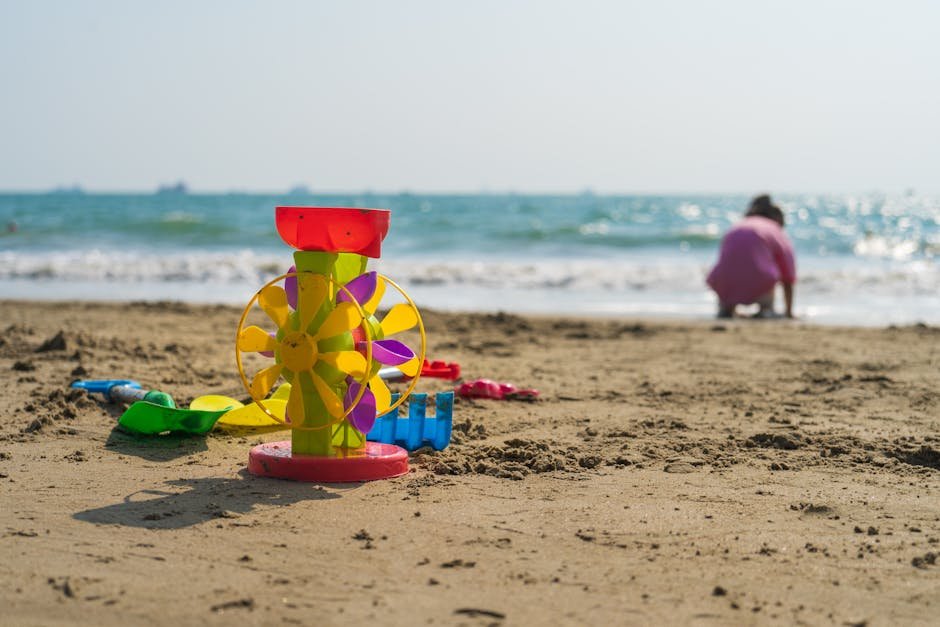
Heading to the beach isn't just about sunbathing and swimming. It's a golden opportunity to engage your kids in some fun and practical math activities. The relaxed atmosphere of a beach day transforms math into play, with sand to count, shells to sort, and distances to estimate. These activities make math feel less like a chore and more like a game. In this extended guide, we'll explore various ways to make your beach outing both educational and entertaining for elementary kids.
Why the Beach is an Ideal Math Classroom
The beach offers a unique setting where learning feels effortless. The combination of the sun, sand, and sea provides a backdrop that naturally encourages exploration and curiosity. Math concepts are easier to grasp when they are applied in real-world scenarios, and the beach is full of such opportunities. Whether it's counting waves or estimating distances, children can see the immediate application of what they are learning. This real-world context, combined with the tactile experience of handling physical objects like shells and sand, makes math more engaging.
Real-World Applications
Consider the simple act of skipping stones. Kids can practice counting how many skips each stone makes and compare it to others. Asking questions like, "How many more skips did this stone make?" introduces subtraction in a playful way. Even measuring the distance between beach markers can provide lessons in estimation and measurement.
The Shell Sorting Game
One of the most straightforward activities is shell sorting. Gather around 20-30 shells with your child and spread them out on a towel or in the sand. Encourage your child to sort these shells into groups based on various attributes, such as color, size, or shape. This activity not only helps with sorting and categorization skills but also introduces basic math operations like counting and division.
Expanding the Activity
To deepen the learning experience, ask your child questions like, "How many groups did you make?" or "If each group had the same number of shells, how many would there be?" This introduces division in a practical way. You can also ask, "What if we doubled the biggest group?" to practice multiplication. Adding variations, such as sorting by texture or the number of points on each shell, can make the activity more challenging and interesting.
For the Youngest Learners
For younger kids, simplify the activity by focusing on counting and simple sorting. Ask them to find all the shells of a certain size or color. This helps with number recognition and basic categorization skills, which are foundational for more complex math concepts.
Sculpting Sandcastle Math
Building sandcastles is a favorite beach activity that can be turned into a valuable math lesson. Decide on a pattern for your sandcastle, like building four towers, each with three levels. As you construct the castle, count the levels and the decorative elements like windows and flags. This is a hands-on way to practice multiplication, as you can calculate how many levels you have in total by multiplying the number of towers by the levels in each.
Advanced Geometry for Older Kids
If you have older kids, add a moat around your sandcastle. Ask them, "If each side of the moat is six shovels long, how many shovels will it take to go all the way around?" This brings in geometry and introduces concepts like perimeter and area in a fun, practical setting. It's a great way to show how math can be applied in real-life scenarios, making it more relatable and less abstract.
Incorporating Symmetry
Challenge your child to build a symmetrical sandcastle. Discuss what symmetry is and have them mirror one side of the castle on the other. This introduces the concept of symmetry and helps develop spatial awareness.
Footprint Counting Adventure
Footprint counting is another engaging activity that combines exercise with math practice. Walk along the wet sand near the water's edge and stop periodically to count the footprints in a designated area. Ask your child, "How many footprints would there be if we walked five times this distance?" This introduces the concept of multiplication in a dynamic environment.
Estimation Skills for Older Kids
For older children, you can incorporate estimation. For example, if there are about 30 footprints in a section, ask, "If we walked six sections, how many footprints would there be in total?" This fosters critical thinking and helps them develop a sense of estimation, which is a valuable skill in both math and everyday life.
Incorporating Measurement
Bring a tape measure to the beach and measure the length of a single footprint. Ask your child to estimate the total length of a trail of footprints. This activity not only reinforces measurement skills but also introduces the concept of adding lengths.
Wave Counting Exercise
Sit at the water's edge and engage your child in wave counting. Have them count the number of waves that hit the shore over a minute. Then, challenge them by asking, "If that pace continues, how many waves would come in 10 minutes?" This is a simple yet effective way to practice multiplication.
Scaling Up the Challenge
To make the activity more complex, ask, "How many waves would there be in an hour?" or "In a full day at the beach if we stayed for eight hours?" This introduces larger multiplication problems and helps develop their ability to work with bigger numbers. It’s also an excellent way to build estimation skills, as they can later compare their predictions to actual counts.
Introducing Patterns
Encourage your child to observe patterns in the waves, such as sequences of larger and smaller waves. Discuss how recognizing patterns is an important skill in math, helping with understanding sequences and predicting outcomes.
Real-Life Math with Beach Toys
Beach toys can also be used to teach math concepts such as division and multiplication. If you have a set of buckets and shovels, pose scenarios like, "If each kid gets two shovels and we have four kids, how many shovels do we need?" or "What if each kid gets three?" This is a practical way to apply math to real-life situations that children can easily understand.
Building Structures
Use beach toys to build structures and calculate volume. Fill a bucket with sand and estimate how many buckets are needed to build a small wall or sculpture. This introduces volume and estimation in a tangible way.
Understanding Tides and Time with Math
The changing tides offer a fantastic opportunity to discuss measurements and the passage of time. Start by marking a stick in the sand at the current water line. After 15 minutes, mark the line again to see how far the water has moved. Use this as a chance to discuss measurements.
Calculating Movement Over Time
Ask questions like, "In 15 minutes, the water moved two feet. How far would it move in an hour?" This introduces multiplication as you calculate how far the tide moves in longer periods. You can extend the challenge by predicting how far the tide will move in three hours. This activity not only teaches basic math but also introduces children to concepts like averages and patterns, as tides follow predictable cycles.
Discussing Tidal Cycles
Take this opportunity to talk about high and low tides and how they occur. Explain tidal cycles and how they affect the beach environment. This not only introduces concepts of time and cycles but also fosters environmental awareness.
Why Beach Math Works Wonders
Beach math activities are successful because they engage children in a natural and pressure-free environment. The context is relatable, the materials are physical and engaging, and there is no pressure to perform. Kids who might resist more traditional methods like worksheets often find themselves absorbed in counting waves or sorting shells. These activities foster the same mathematical understanding and number sense, but in a setting that is far more enjoyable.
Common Mistakes to Avoid
While incorporating math into beach outings can be highly beneficial, there are common pitfalls to avoid. One mistake is turning the activities into a chore. Keep it light and fun, and be careful not to push too hard. Forcing children to participate in these activities against their will can lead to resistance and negative associations with math.Another mistake is not adapting activities to the child's level. Make sure the challenges are appropriate for their age and skill level. Younger kids might get overwhelmed with complex multiplication problems, while older kids might find simple counting too easy. Tailor the activities to ensure they are both challenging and achievable.
Actionable Tips for Parents and Teachers
- Bring Tools: Pack small shovels, buckets, and items to mark distances or create patterns in the sand.
- Mix It Up: Rotate through different activities to keep things fresh and engaging.
- Encourage Exploration: Allow children to come up with their own math games or variations of the activities.
- Be Patient: Give children time to think and explore without rushing them.
- Celebrate Success: Praise their efforts and celebrate their achievements to build confidence.
Adapting Activities for Special Situations
Children with test anxiety, ADHD, or dyscalculia, as well as those who are gifted, can also benefit from these activities with a few adjustments. For children with test anxiety, the low-pressure environment of the beach is ideal. Encourage them to participate at their own pace and focus on the fun rather than the results.For children with ADHD, keep the activities dynamic and allow for movement. Frequent changes in activities can help maintain their interest. Gifted children may enjoy creating their own challenges or variations of the activities, adding complexity to keep them engaged. Those with dyscalculia might benefit from using physical objects like shells to visualize math concepts, making them more tangible and easier to understand.
Tools to Help
Consider bringing along visual aids like number lines or counters for children who might benefit from additional support. These can help make abstract concepts more concrete.
Collaborating with Schools
Parents can enhance their children's learning by collaborating with teachers. Share these beach activities with your child's teacher and ask for input on how to align them with what is being taught in school. Teachers can provide insights into specific areas where your child might need more practice, allowing you to tailor the beach activities accordingly. This collaboration ensures that the fun activities at the beach complement the structured learning happening in the classroom.
Looking at the Long-term Perspective
Incorporating math into everyday activities like a beach day can have long-term benefits for your child’s mathematical development. These experiences build a solid foundation in number sense and problem-solving skills, which are crucial for more advanced math concepts. By making math a regular part of their world, children develop a positive relationship with the subject, seeing it as an integral part of life rather than an isolated academic task.
When to Seek Outside Help
If your child consistently struggles with math, despite engaging in fun activities, it might be worthwhile to seek additional support. Consider speaking with their teacher about possible challenges or consulting a learning specialist. Early intervention can make a significant difference in helping your child overcome difficulties and develop confidence in their math abilities.
Signs to Watch For
Be mindful of signs such as frustration, avoidance of math-related activities, or a sudden drop in math performance at school. These could indicate that your child might benefit from extra help.
Talking to Your Child's Teacher
Open communication with your child's teacher can provide valuable insights into their math progress. Discuss how your child responds to math activities and whether there are specific areas needing improvement. Teachers can suggest additional resources or activities that align with classroom learning, helping to create a cohesive learning experience.
Questions to Ask
- How is my child performing in math compared to peers?
- Are there specific concepts they are struggling with?
- What resources or activities do you recommend for at-home practice?
Final Thoughts on Beach Day Math
Beach day math activities offer a unique blend of education and fun, providing children with valuable skills in a relaxed setting. By integrating math into play, you can foster a love for the subject and help your child develop critical thinking skills that will serve them well throughout their education. The key is to keep the activities engaging and adapted to your child's needs, ensuring that learning happens naturally and joyfully. Don't forget to pack your sunscreen and a sense of adventure as you head to the beach, math is waiting to be discovered in the sand and surf!
Common questions parents ask
What if my child isn't interested in math activities?
Try integrating math into activities they already enjoy. If they love building sandcastles, focus on geometry and measurement. The goal is to make math a natural part of play.
How can I adjust these activities for rainy days?
Many beach math activities can be adapted for indoor play. Use household items like coins or toys for sorting and counting, or create a mini "beach" with kinetic sand.
Are these activities suitable for groups?
Absolutely! Group activities can enhance learning through collaboration and communication. Encourage kids to work together on challenges, fostering teamwork and problem-solving skills.
Can older kids benefit from these activities?
Yes, older kids can take on more complex challenges. Encourage them to add layers of difficulty, such as calculating volumes or exploring symmetry in their sand sculptures.
