
Learning Times Tables with LEGO: Build and Multiply at the Same Time
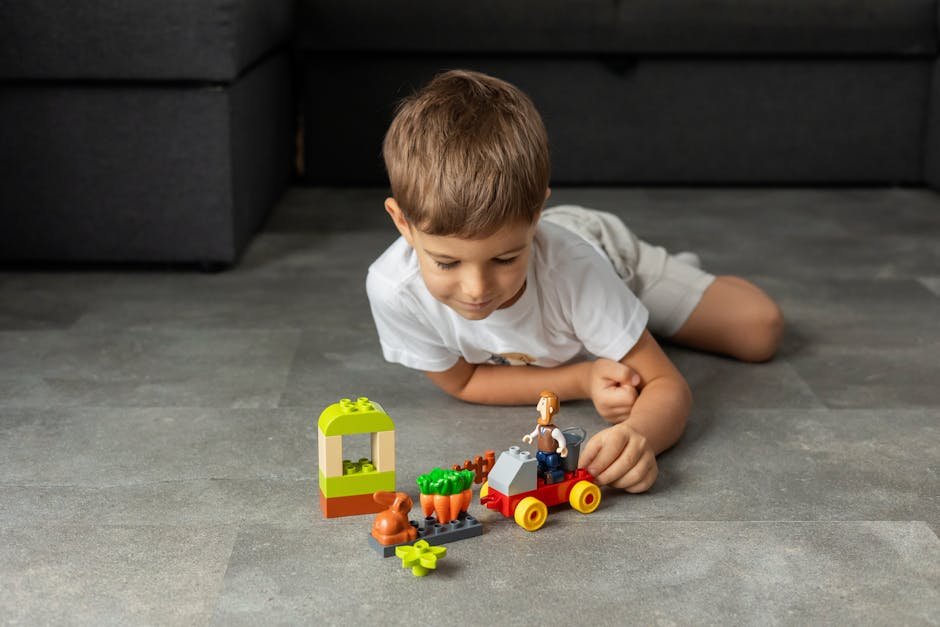
If your house already has a bin of LEGO bricks under the bed, you already own a handy hands-on math tool. Parents of kids who are just starting multiplication, and teachers looking for a center that kids will actually want to visit, can turn those bricks into equal groups, rows, and arrays in a few minutes.
The aim is not to keep building forever. Bricks work best as a first step, with drawings and written equations coming right behind them.
What Bricks Show That Flash Cards Cannot
A flash card that says 3 × 4 is just symbols. If your child has never seen what 3 × 4 means, there is nothing to picture when the card comes up. Three towers of four bricks each give the fact a shape: something you can count, take apart, and rebuild.
That matters most for kids who find math hard. A federal guide on math intervention for kindergarten through 6th grade, drawing on 28 studies, found strong support for teaching concepts with concrete objects and simple drawings. The same guide warns that objects only help when they are clearly connected to the written math.
Research on hands-on materials in general points the same way, with a caution. A review of 55 studies, from kindergarten through college, found small to moderate benefits for teaching with physical objects compared with symbols alone. The benefit was larger for remembering what was taught than for solving new kinds of problems.
So bricks are a good start, not a full method. They make the meaning of multiplication visible. Memorizing the facts still takes practice on paper and out loud.
Building bricks also have a feature that most counters lack: the studs on top come in neat rows. A standard 2 × 4 brick has two rows of four studs, which is 8. Kids see an array every time they pick one up, whether they notice it or not.
Six Builds, From Towers to Equations
Work through these in order across several sessions. Each build adds one step toward the written fact, and your child should say the equation out loud at the end of every one.
- Equal towers. Build 3 towers with 4 bricks in each. Count all the bricks together: 3 × 4 = 12. Then build 4 towers of 3 and count again. The total is still 12, but the towers look different, which is worth talking about.
- Stud rows. Hand your child three 2 × 4 bricks and ask how many studs there are. Each brick has 8, so three bricks show 3 groups of 8, and 3 × 8 = 24. Let them count by eights if they want to check, touching one brick at a time.
- A flat array. On a baseplate, place single studs or small flat pieces in 4 rows of 6. That is 4 × 6 = 24. Turn the plate a quarter turn and it becomes 6 rows of 4, still 24. Third graders meet this idea in class as an array.
- The missing number. Say "I built 5 equal towers and used 20 bricks. How tall is each tower?" Your child builds until the towers are even, then finds 4. Writing 5 × 4 = 20 next to 20 ÷ 5 = 4 shows that the same build answers both questions.
- A story build. Make up a short word problem and let your child build it: a parking garage has 3 floors with 6 cars on each floor. How many cars? The answer, 18, comes from 3 × 6, and the build makes it obvious which number is the groups and which is the size of each group.
- Build, then draw. After any build, have your child draw it on grid paper: a square for each brick or stud, in the same rows. Under the drawing, they write the equation. Next time, they skip the bricks and go straight to the drawing.
Pick facts from this week's table at school. If the class is on the 3s, build 3 equal towers, then rebuild them at a new height, or rows of 3 in a few lengths, and try the 3 times table practice once the builds feel easy.
Moving From Bricks to Paper
Teachers call this path concrete to representational to abstract: things you can hold, then pictures, then symbols on their own. The stages are laid out in more detail in this guide to the concrete-representational-abstract method. For bricks, it looks roughly like this.
In the first stage, your child builds every fact and counts the result. In the second, they draw the build or sketch a quick array instead of building it. In the third, they write and say the equation with no picture at all, and only go back to bricks or drawings when they get stuck.
Do not rush the move away from bricks. The federal guide advises fading objects out only once a child is accurate without them, and bringing them back now and then to reconnect the picture with the numbers. If your child still miscounts the studs, keep them on the table a while longer.
On the other hand, a child who answers 4 × 6 correctly every time does not need to build it again. Keep the bricks for new or shaky facts and let the familiar ones live on paper.
In a classroom, the same six builds make a good math center. Put one build card at each table with the bricks it needs, plus a sheet of grid paper. Students build, draw, and write the equation, then leave the bricks sorted for the next group. A teacher can glance at the drawings later to see who connected the build to the fact and who only counted.
When the Building Takes Over
Any parent who has tried this knows the risk. Five minutes in, the towers have become a castle and the math is gone. The federal guide lists kids who just play with the materials as a common obstacle in classrooms, and its advice is simple: explain what the objects are for before anyone touches them.
Set the rules up front. Only the bricks for today's facts come out, sorted into a small tray instead of the whole bin. The session is short and has a clear end. Free building comes after the math, as its own reward, not during it.
Giving the bricks a job helps too. "Show me 4 groups of 5" is a clearer task than "let's do multiplication with LEGO." If your child builds something creative that still shows the fact, such as 4 cars with 5 bricks each, that counts.
Finally, watch for the moment when the bricks stop helping. Some kids love them for weeks. Others are ready for drawings after two sessions. Both are fine, as long as every build ends with the equation said out loud and written down.