
Beach Day Math Activities for Kids
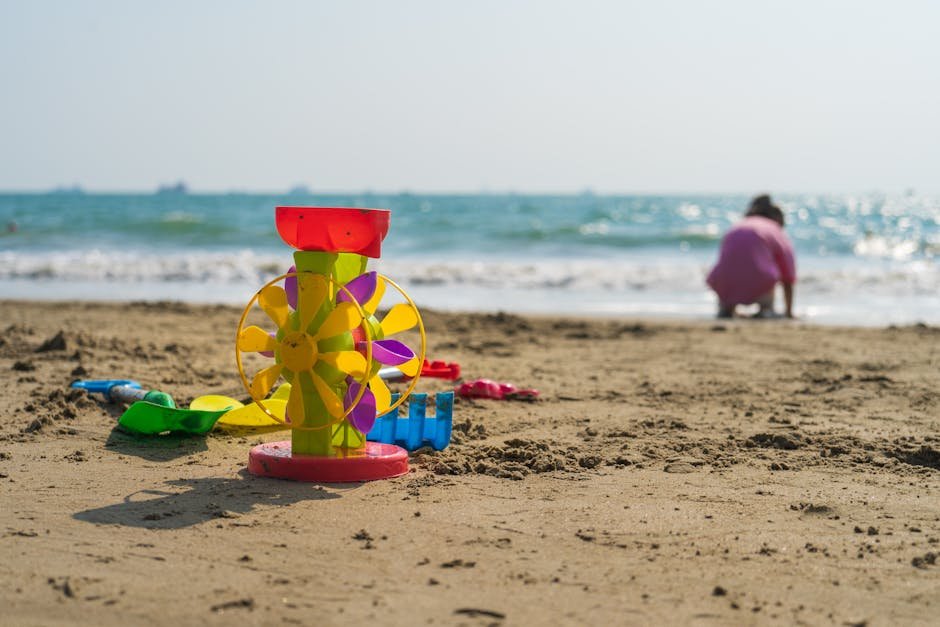
A day at the beach comes with free math supplies: endless sand, piles of shells, and a shoreline that changes by the hour. With a stick and a bucket, you can turn a few quiet minutes between swims into multiplication practice that feels nothing like school.
Six beach activities for elementary schoolers follow, grouped by where you play them, with a few tips at the end for keeping it light.
Why the Beach Works for Math
Many kids lose some math over the summer. A national analysis of test scores estimated the summer drop in math at roughly 10 to 30 percent of what students gain in a school year, with big differences from child to child, while reading scores barely moved. Not every study finds a drop, but keeping facts in use during the break is a cheap way to protect them.
The beach also solves the usual problem with summer practice: it does not feel like practice. Nobody is sitting at a table. The math is part of building, collecting, and exploring, so kids who would groan at a worksheet will happily sort shells for twenty minutes.
Keep it short and optional. One activity per beach day is plenty. If your child would rather dig a hole to China, let them dig, and save the shells for tomorrow.
Activities at the Water's Edge
1. Shell Groups
Ask your child to collect a pile of shells, then sort them into equal groups. "Can you make 4 groups of 5?" Count the total together: 4 × 5 = 20.
Then rearrange the same 20 shells into 5 groups of 4, or 2 groups of 10. Seeing one pile make several facts shows how multiplication and division fit together.
Older kids can take on a bigger pile. Count out 36 shells and look for every way to split them into equal groups with nothing left over. There are more than most kids expect: 2 groups of 18, 3 of 12, 4 of 9, and 6 of 6, plus most of those pairs flipped around, like 9 groups of 4.
2. Footstep Measuring
Pick two landmarks, like the umbrella and the lifeguard stand. Your child walks the distance and counts steps. If it takes 9 steps and each step is about 2 feet, the distance is roughly 9 × 2 = 18 feet.
Older kids can measure their step first by marking where the heel lands in wet sand.
Then turn the question around. If the snack bar is about 40 feet away and each step is about 2 feet, how many steps should it take? Make a guess, walk it, and compare. Twenty steps is the math answer; the sand usually has its own opinion.
3. Wave Watch
Sit at the edge of the water and count the waves that reach a certain spot in one minute. If 6 waves arrive in a minute, how many in 5 minutes? About 30.
Then check by counting for five minutes. Nature rarely matches the math exactly, and that is a good conversation too.
Older kids can stretch it into bigger numbers. At 6 waves a minute, how many in 10 minutes? In an hour? Sixty and 360 are big enough to feel impressive, and the second one takes a little real thinking.
Activities in the Sand
4. Sandcastle Arrays
Use a bucket to build a row of towers, then add more rows behind it. A castle with 3 rows of 4 towers has 12 towers.
Ask how many more towers you need to make it 4 rows of 4. Building is slow, so this works best with small numbers and lots of talking.
A 4th grader can plan a bigger castle before building. Five rows of 6 towers means 30 bucket loads of sand. Is there time for that before lunch, at about one tower a minute?
5. Sand Number Line
Draw a long line in the wet sand with a stick and mark it from 0 to 50. Call out a table, like the 5s, and have your child jump from mark to mark, saying each multiple: 5, 10, 15, all the way to 50.
Then try the 3s or 4s, where the landing spots are less obvious.
For a harder version, write only 0 and 70 at the two ends of the line. Your child marks where 7, 14, 21, and the rest belong, spacing them evenly by eye. Checking the spacing with footsteps afterward is half the fun.
6. The Tide Clock
On most of the East Coast, the ocean has two high tides a day, about 12 hours and 25 minutes apart, so high tide arrives roughly 50 minutes later each day. Many spots on the Gulf of Mexico have only one high tide a day, so check a tide table for your beach first.
For a 4th or 5th grader, the tide makes a good puzzle. If high tide is at 9:00 this morning, when is the next one? About 9:25 tonight. And tomorrow morning? Around 9:50. Push a stick into the sand at the waterline every hour and watch the water move toward it or away from it.
Making It Work for Your Family
Match the numbers to your child. A rising 2nd grader can count shells by 2s, 5s, and 10s. A child heading into 4th grade can handle 7 groups of 6 or a wave count over 8 minutes. If an activity feels too easy, change the numbers, not the activity.
Bring the math home in small pieces. A photo of the shell groups or the sandcastle array makes a nice prompt for a quick conversation in the car. Back at home, a few minutes on the 5 times table page or whatever table you used at the beach helps the facts stay fresh.
Pack light: a bucket, a stick or plastic shovel for writing in the sand, and maybe a small notebook in a zip-top bag for a child who likes to keep score. Sunscreen, water, and shade come first. The math happens between swims, not instead of them.
Above all, keep the beach a beach. Math is a side activity, not the point of the trip. If a game sparks interest, follow it. If it doesn't, put the shells in the bucket and go swimming.