
Five Minutes a Day of Times Tables Practice: Is It Enough?
Five minutes sounds too small to matter. Between school, sports, dinner, and bedtime, though, it may be all the time your family has for times tables on a weeknight. So is it enough?
For many kids, yes, if those minutes happen almost every day and are used well. We cover what research says about short daily practice, what one good five-minute session looks like, and the signs that your child needs a little more.
What Research Says About Short Sessions
The most useful US source on this question is a practice guide from the What Works Clearinghouse, published in 2009 by the federal Institute of Education Sciences. It recommends about 10 minutes per session on building quick recall of basic facts. Recognizing that time is short in many schools, it sets a minimum of 5 minutes per session.
That guide was written for students who need extra help in math, so its numbers are not a rule for every child. Still, it is telling that experts who looked at the studies named five minutes as the floor, not as a waste of time.
A classroom study published in 2015 shows how far a few minutes can go. Forty-eight third graders practiced addition facts for four minutes a day over 19 school days. Some did all four minutes at once. Others split them into two or four shorter rounds across the day. Both groups that spread their practice out improved faster, with no extra minutes added.
The spacing matters as much as the length. Memory research has shown many times that the same practice time sticks better when it is spread over several days. Five minutes every day fits that pattern well. One long session on the weekend does not.
One Five-Minute Session, Minute by Minute
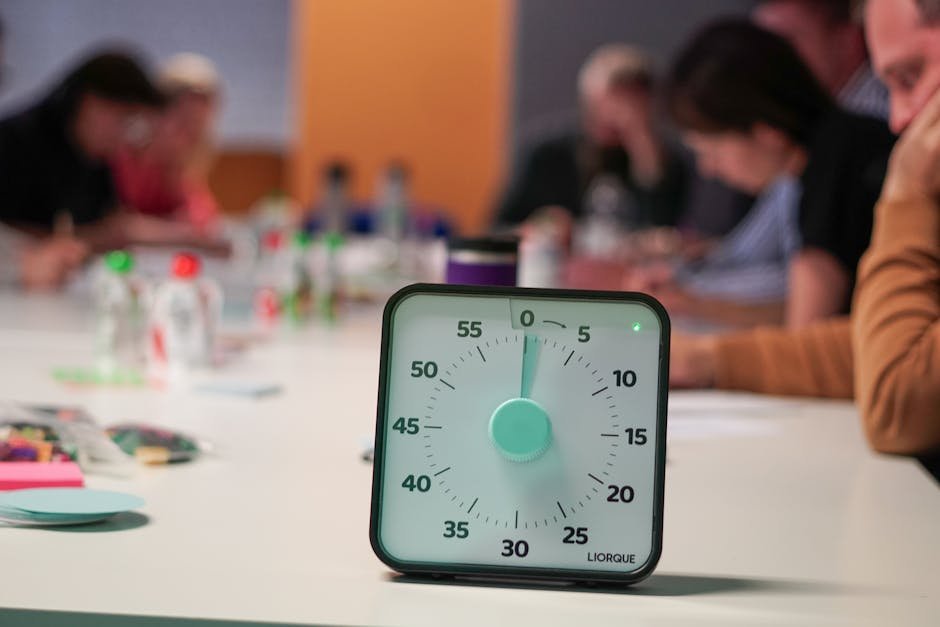
Five minutes go fast, so a little structure helps. Here is one way to spend them for a child working on the 6 times table. Set a timer and stop when it rings, even if things are going well.
Minute one: a warm-up with facts your child knows
Start with three or four easy facts, like 6 × 2, 6 × 5, and 6 × 10. They take seconds, get your child's head into multiplication, and start the session with a win. Do not skip this to save time. It makes the rest of the session go faster.
Minute two: the new facts
Now spend a minute on the two or three facts your child is learning this week, say 6 × 7 and 6 × 8. Have your child say each full fact out loud, "six times seven is forty-two," and write it once. Saying and writing together slows things down just enough to notice the numbers.
Minute three: picture one fact
Pick the fact that gave the most trouble yesterday and draw it as an array or as groups of dots. It does not need to be neat. The point is to give that fact a picture your child can call up later when the number alone does not come.
Minute four: mixed recall
Shuffle the new facts in with a few from earlier tables, and ask them in random order. This is where the real practice happens: pulling a fact out of memory without the order to lean on. A practice site works well here, since it checks each answer and mixes the facts for you.
Minute five: one word problem and a quick note
End with one short story problem: "There are 6 eggs in each row. How many in 8 rows?" Then make a quick mark next to any fact that caused a pause today. That mark tells you what to put in minute two tomorrow.
When Five Minutes Might Not Be Enough
Five minutes works best for keeping facts fresh and for adding a few new ones at a time. If your child is far behind, has a test coming, or is learning a hard table like the 7s or 8s, ten minutes may move things along faster. Two five-minute sessions, one in the morning and one in the evening, also count.
Watch for a few signals. If the same facts are still causing trouble after three or four weeks of steady practice, the dose may be too small. If your child forgets facts quickly after a weekend off, more frequent review can help.
On the other hand, if your child is getting frustrated, more minutes will make things worse. In that case, keep the five minutes, make them easier, and talk to the teacher about what else might be going on.
It also helps to look at how the minutes are used before adding more. Five minutes spent mostly on facts your child already knows, or on finding the cards and sharpening a pencil, is really two minutes of practice. Tightening the session often does more than lengthening it.
Kids who already know most of the facts need even less. Two or three minutes a few times a week can keep tables solid once they are learned, especially if each session mixes in older tables.
Making Five Minutes a Habit
The hardest part of five minutes a day is the "a day." Tie practice to something that already happens every day, like right after breakfast, while dinner is in the oven, or right before reading time at night. A fixed moment removes the daily negotiation.
Keep everything you need in one place: a timer, a few cards, a pencil, or a device with the practice site already open. If setting up takes three minutes, the five minutes rarely happen.
Track the days, not the scores. A simple calendar on the fridge with a check mark for each day practiced shows your child that the habit is growing. Kids often enjoy keeping a streak going more than they enjoy any reward.
Finally, let five minutes be five minutes. When the timer rings, stop, even if your child is on a roll. Ending while it still feels good makes tomorrow's session easier to start. If your child wants more, that is a great sign, and you can try ten minutes on the weekend.
A good table to try this on is the 6 times table, where the hard facts come up often enough to fill a week of short sessions.