
Math Manipulatives Worth Buying (and the Ones to Skip)
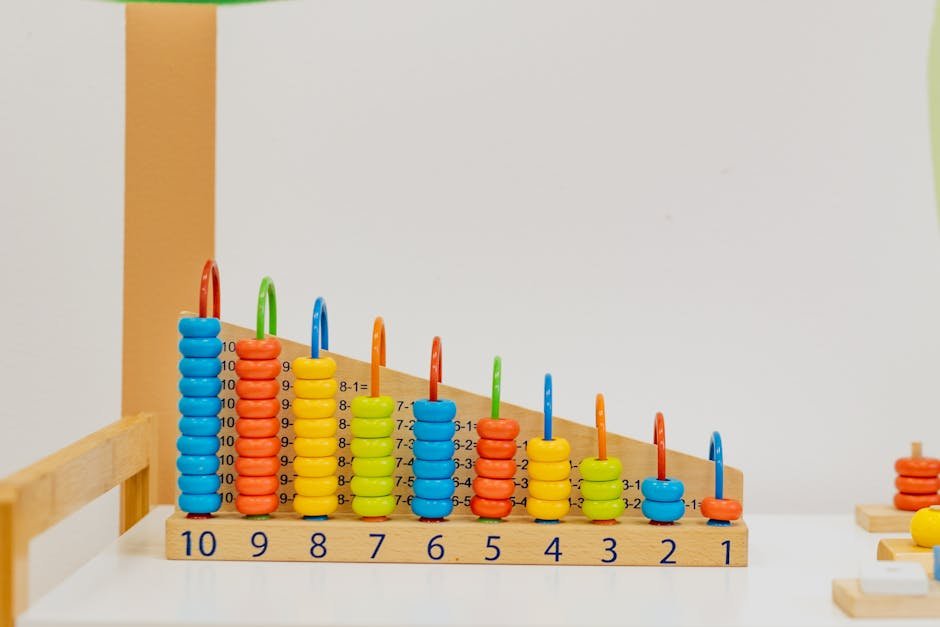
Walk through a teacher supply store or scroll an online toy shop and there are hundreds of math products for kids: bins of colorful cubes, magnetic boards, talking calculators, kits with a hundred pieces. Some of them earn their place in a home. Many end up in a closet.
Six simple ones cover most of the elementary math your child will meet from 2nd grade on. For each, you get what it is for, and then the kinds of products we would leave on the shelf.
What Hands-On Math Can and Cannot Do
Manipulatives are physical objects children move around to model math: counters, blocks, tiles, strips. Teachers use them in class, and there is research behind them, with a catch.
A meta-analysis of 55 studies, covering students from kindergarten through college, compared math taught with concrete objects to math taught with symbols alone. The objects helped, with small to moderate effects overall. The benefit was larger for remembering what was learned and smaller for problem solving and transfer to new kinds of problems.
The catch is that the results depended heavily on how the materials were used. Objects on their own do not teach. A child pushing cubes around without connecting them to a written fact is playing, which is fine, but it is not the same as learning multiplication.
A federal practice guide from 2009, written for schools helping students who struggle in math, recommended that intervention materials include work with visual representations, and rated the evidence for that as moderate. Physical objects are one step toward those pictures and diagrams, not a replacement for them.
So the test for any manipulative is simple: can you put it next to a written problem and have it show what the problem means? If yes, it is worth considering. If it only looks educational, it probably is not.
Six Manipulatives Worth Buying
Each of these is inexpensive, sturdy, and useful for more than one grade. You do not need all six at once; the starter list at the end suggests which to begin with.
1. Counters
Plain round counters, often red on one side and yellow on the other, are the most flexible thing on this list. For multiplication they model equal groups directly: put 6 counters in each of 4 cups and you have 4 × 6 = 24. For division, start with 24 counters and share them into 4 cups.
In 3rd grade, multiplication starts as groups of objects, and counters make that literal. A bag of 200 is plenty for a family.
Counters also make division with leftovers easy to see. Share 26 counters into 4 cups and two are left on the table: 26 ÷ 4 is 6 with 2 left over. That picture helps later, when remainders show up in word problems.
2. Square Tiles
One-inch square tiles are the best tool for arrays and area. Lay out 3 rows of 7 tiles and your child can count 21 tiles, see the rows, and then turn the whole thing to show 7 rows of 3.
Area comes into 3rd grade math the same way: a 6-by-8 rectangle of tiles holds 48 tiles, and 6 × 8 = 48. Tiles make that connection something your child builds with their hands.
Tiles also show why some numbers make more rectangles than others. Twelve tiles can be 1 by 12, 2 by 6, or 3 by 4. Thirteen tiles only make one long row. Children enjoy hunting for every rectangle a number can make, and it is good fact practice that feels like a puzzle.
3. Linking Cubes
Cubes that snap together in a line are good for groups you want to keep together. Make 5 towers of 4 cubes, and the towers stay put while your child counts them by fours. Break a tower of 24 into towers of 6 to show 24 ÷ 6 = 4.
Linking cubes also work for comparing, a big idea in 4th grade: a tower of 15 next to a tower of 5 shows that 15 is 3 times as many as 5.
4. Base-Ten Blocks
Small cubes for ones, rods for tens, flat squares for hundreds. These matter most once multiplication moves past single digits. To show 3 × 12, build 3 groups of one rod and two cubes, then combine them: 3 rods and 6 cubes, which is 36.
By 4th grade, base-ten blocks laid out as a rectangle become an area model for two-digit multiplication. The 4th grade standards name rectangular arrays and area models as ways for students to show how they multiplied. A starter set with a few hundred pieces is enough for home.
5. Fraction Strips or Tiles
Fractions start in earnest in 3rd grade and connect directly to multiplication by 4th grade, when students multiply a fraction by a whole number. Strips that show one whole, halves, thirds, fourths, and so on let your child see that three 1/4 pieces make 3/4 and that four of them make a whole.
Strips also help with comparing fractions before any rules come in. Lay 2/3 next to 2/4 and your child can see which is longer without calculating anything. The 3rd grade standards ask students to compare fractions like these, with the same top number, by reasoning about their size, and a strip on the table is reasoning they can point to.
They are not a multiplication tool at first, but they earn their place quickly once fractions arrive, and they are hard to replace with household items.
6. A Geared Clock
A learning clock with gears, so the hour hand moves correctly when you turn the minute hand, is the one tool on this list that is not about counting objects. Telling time to the nearest minute and solving elapsed-time problems are 3rd grade skills.
It ties back to multiplication through the 5s: the minute hand moves through 5, 10, 15 minutes as it passes each number. A child working on the 5 times table can check that the minute hand on the 8 means 8 × 5 = 40 minutes past.
Three Kinds to Skip
These are our recommendations, not findings from a study. They come from the same test as above: does the product show what a math problem means?
Large All-in-One Kits
Boxed kits with dozens of different pieces look like good value. Kits like that often hold far more kinds of pieces than a family will use. Buying the six items above one at a time, as your child needs them, usually costs less and wastes less space.
Gadgets That Give the Answer
Toys that say "forty-two" when a child presses 6 and 7 do the remembering for your child. A multiplication chart has the same weakness, but at least a chart can be put away. If a product's main feature is telling your child the answer, it does not belong in practice time.
Be wary, too, of cards or devices sold as a shortcut for one particular table. They teach the device rather than the fact, and the fact is what your child will need in class.
Anything You Already Own
Dried beans, buttons, coins, paper cups, egg cartons, muffin tins, and building bricks all work as counters and groups. Before buying counters, try a bag of beans and six cups. Buy the real thing later, if the beans get used and you want something tidier.
Getting Your Money's Worth From Any of Them
Whatever you buy, the value comes from linking the objects to written math. Build the problem, then write it down. Put 4 cups of 6 counters on the table, then write 4 × 6 = 24 underneath. Say the fact aloud while pointing at the cups.
Then move toward drawing. After a few days with real counters, ask your child to draw the cups and dots instead. After that, the written fact alone. Teachers sometimes describe this as moving from concrete to pictures to symbols, and the goal is for the objects to become unnecessary.
Set a time limit on free play at first. Children love to build towers with linking cubes and patterns with tiles, and that is worth allowing. Give it a few minutes, then turn to the problem. Ending with the objects back in their bag keeps them special.
Manipulatives are also a good way to check homework without arguing. When the homework says 7 × 4 = 21, build it: 7 cups of 4 counters. Counting to 28 settles the question, and nobody had to say "wrong."
Older children sometimes feel that blocks are for little kids. For a 4th or 5th grader, skip the bright colors and present the tiles or base-ten blocks as a tool for a hard problem, such as 23 × 14 as an area model. Used that way, they do not feel babyish.
Finally, put them where you can reach them. Manipulatives in a closet do not get used. A small box on a shelf near where homework happens will get pulled out much more often.
A Starter Kit by Grade
If you are buying for one child and want to start small, here is where we would begin:
- 2nd grade: counters and linking cubes, for adding equal groups and arrays up to 5 rows and 5 columns, which is how the 2nd grade standards prepare children for multiplication.
- 3rd grade: add square tiles for arrays and area, plus fraction strips and the geared clock.
- 4th grade: add base-ten blocks for multi-digit multiplication and area models.
- 5th grade: keep the base-ten blocks and fraction strips; most of the rest can be drawn by now.
When the facts themselves are the goal rather than the meaning, practice moves to quick recall. Building 8 × 4 once or twice to understand it, then regular short practice on the 8 times table, is a better use of time than building every fact with counters forever.