Veerle Dielen · Elementary teacher · January 17, 2026 · Games & Activities
15 Multiplication Card Games You Haven't Tried Yet
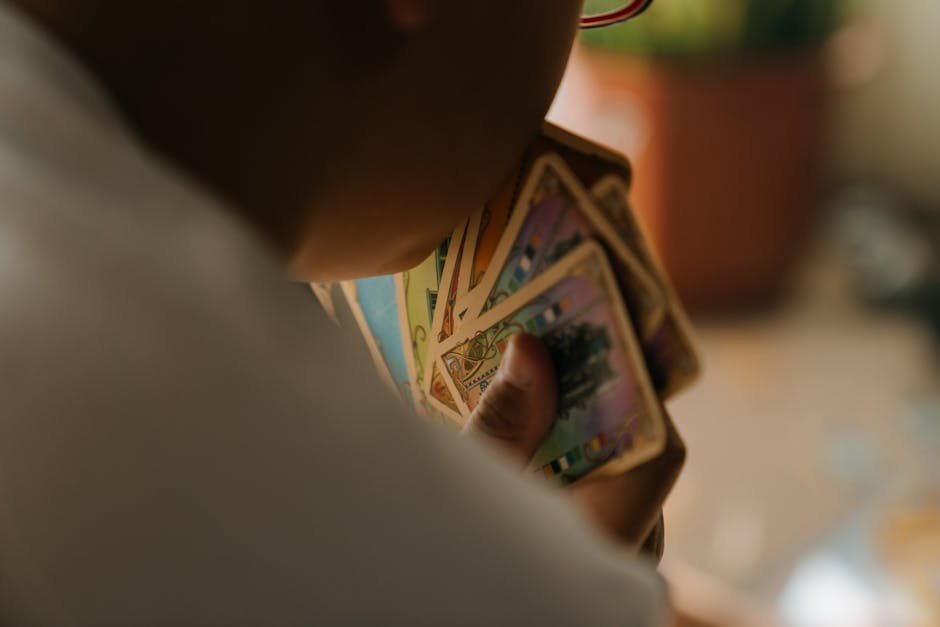
A regular deck of playing cards is one of the most affordable, versatile tools for teaching multiplication. It's a resource many parents overlook, but once you get into the myriad of games you can play, you'll see how valuable it is. Most people know the basic game: flip two cards, multiply them, and the fastest answer wins. But let's be honest, that can get old quickly. So, here are 15 inventive card games that will keep your child's multiplication skills sharp, all while having fun.
Getting Started: Setting Up Your Card Deck
Before diving into the games, it's important to know how to set up your deck. Use the number cards from Ace through 10. Typically, the Ace counts as 1. Face cards can be either removed, used as numbers 11 and 12, or assigned special roles depending on the game. A standard 52-card deck provides four of each value, which is more than enough for the games we’ll discuss.
1. Multiplication War
Multiplication War is a classic game that many kids love. Divide the deck evenly between two players. Each player flips two cards, and whoever has the higher product wins all four cards. Play continues until one player has all the cards or you decide to count and compare.
Why It Works
This game is perfect for third and fourth graders who are beginning to learn multiplication. It's fast-paced and competitive, covering many multiplication facts in a short amount of time.
2. Multiplication Snap
In Multiplication Snap, players flip cards into a central pile one at a time. When two consecutive cards multiply to a target number agreed upon at the start (like 24), the first player to slap the pile and call out the multiplication wins the pile.
Suitability
This game is excellent for kids who have quick reflexes and enjoy physical activity. It's engaging and keeps them on their toes while reinforcing multiplication skills.
3. Multiplication Memory
For a quieter approach, try Multiplication Memory. Create a small deck with multiplication facts on some cards and answers on others. Lay them face down in a grid. Players take turns flipping two cards to find fact-answer pairs (like 7×8 and 56). The player with the most pairs at the end wins.
Best For
This game is ideal for younger children who prefer quieter, more focused play. It’s similar to traditional memory games but with an educational twist.
4. Go Fish (Multiplication Edition)
Deal five cards to each player. On your turn, ask another player for a card that completes a pair with one of yours to achieve a target product (like 24). If they have it, you take it. If not, you "go fish" from the deck.
Why It’s Effective
This game is great for groups of three to four players and builds understanding of fact families. It encourages kids to think about the relationships between numbers.
5. The Highest Product
Each player receives four cards. In each round, choose two cards to multiply. The player with the highest product wins a point. Best of five rounds wins the game.
Strategic Learning
This game is effective for strategic players as it includes decision-making, which adds depth to multiplication practice.
6. Multiplication Crazy Eights
Like the traditional Crazy Eights, but to play a card, you must multiply it with the previous card to produce a multiple of 10. Players take turns, drawing cards if they can't play.
Target Audience
This game is best for older kids who are familiar with multiples of 10. It’s a puzzle within a game, requiring a bit more thought.
7. The Multiplication Tower
Build a "tower" by stacking cards. Each card added must be the product of the previous two, divided by a number on the table. The last player to add a valid card wins.
Complex Problem Solving
This game challenges fourth and fifth graders by requiring them to think several steps ahead, fostering advanced problem-solving skills.
8. Race to 100
Each turn, draw two cards and multiply them. Add the product to your running total. The first player to reach exactly 100 wins. If you overshoot, subtract a future product to get back under.
Combining Skills
This game is perfect for combining multiplication with mental addition and strategic thinking. It’s a fun way to practice multiple math skills at once.
9. Build a Bigger Number
Three players each draw two cards. The player whose multiplication produces the biggest number that is also a multiple of a specific number (like 6) wins all six cards. If no one matches the criteria, redraw.
Multiple Multiples
This game helps kids practice recognizing multiples of specific numbers, enhancing their understanding of factors and products.
10. The Speed Round
Set a 60-second timer. Players take turns flipping pairs of cards as quickly as possible, calling out products. Score one point per correct answer. The player with the most points wins.
Quick and Effective
This is pure speed practice and works great as a daily one-minute warmup. It sharpens quick recall of multiplication facts.
11. Multiplication Solitaire
Deal seven cards in a row, face up. Flip the rest into a draw pile. The goal is to pick up cards in groups whose product equals a target number (like 36). Each turn, draw three from the pile and try to form a valid group. The game ends when no more groups can be formed.
Solo Practice
This game is perfect for kids who enjoy puzzles and solo challenges, providing a quiet way to practice multiplication.
12. The Doubles Game
Use only the cards 1 through 10 (one set of each, 10 cards total). Shuffle and flip one at a time. Players must call out "double" (the card × 2) before the next card is flipped. Miss any, and the deck restarts.
Building Intuition
This game builds a strong understanding of doubling, which is foundational for the 2s, 4s, and 8s times tables.
13. Triple Trouble
Similar to the Doubles Game, but players call out "triple" (card × 3) each time. Then move on to "quadruple" (× 4). Cycle through different multipliers across rounds.
Focused Drills
This game is perfect for drilling specific times tables in a fast-paced format. It helps reinforce multiplication facts through repetition.
14. Multiplication Hearts
Like the game Hearts: in each round, players play one card. The highest product wins the trick. After 13 tricks, count points. However, if a "heart" card wins, that player loses 5 points.
Combining Luck and Skill
This game is suitable for older players who can handle longer game structures, combining elements of luck and skill.
15. The Bluff Multiplier
Each player gets five cards. On your turn, claim a multiplication fact ("I have a 7 and an 8, that's 56!"). Bluffing is allowed. Other players can call your bluff. If you're truthful, the challenger gives you two cards. If you're lying, you give them two cards. The first to run out of cards wins.
Strategic Play
This game is perfect for older kids who enjoy strategy and reading other players. It adds a layer of psychological gameplay to multiplication practice.
What Works at Home: Tips for Card Game Practice
- Rotate games: Playing the same game every day can become monotonous. Mix three to four games in a rotation to keep things fresh.
- Keep sessions short: Five to ten minutes per game is sufficient to maintain engagement without overwhelming your child.
- Boost confidence: Let your child win sometimes, especially the younger ones. Building confidence is crucial for learning.
- Combine with drills: Pair games with dedicated drill practice. Games are engaging but often slower at fact volume than apps or worksheets.
- Adjust difficulty: Use only the cards your child has mastered early on. Gradually introduce harder cards as their fluency improves.
Common Mistakes to Avoid
While using card games for multiplication practice is generally effective, some common mistakes can hinder progress. Firstly, avoid making the games too competitive, which can lead to frustration instead of learning. Secondly, ensure that the games are age-appropriate. Introducing complex rules too soon may confuse younger children. Finally, don't rely solely on games for teaching multiplication. They should complement formal learning rather than replace it.
Actionable Tips for Parents
- Set clear goals: Decide what multiplication facts to focus on during each game session.
- Use incentives: Small rewards can motivate children to engage more deeply with the games.
- Practice regularly: Consistent practice is key to mastering multiplication facts.
- Encourage teamwork: Play cooperative games where children work together to achieve a goal.
- Provide feedback: Positive reinforcement helps reinforce correct answers and encourages continued effort.
Special cases to consider
Every child is unique, and some may face challenges like ADHD, test anxiety, or dyscalculia. For children with ADHD, keep sessions short and engaging to accommodate their attention spans. For those with test anxiety, focus on stress-free, fun games to build confidence. If your child is gifted, introduce more complex problems or strategies to keep them challenged. For children with dyscalculia, games that emphasize visual learning and repetition can be beneficial.
Cooperating with Schools
Communicating with your child's teacher about these card games can create a more cohesive learning experience. Teachers may offer insights into which multiplication facts your child needs to focus on, and you can share which games your child enjoys and excels at. This cooperation can help reinforce learning both at home and in the classroom.
Long-Term Perspective: Building a Strong Foundation
While card games are a fun and effective way to practice multiplication, it's essential to maintain a long-term perspective. The goal is to build a strong foundation in mathematics that your child can rely on throughout their education. Encourage curiosity, foster a love for learning, and support your child as they progress through increasingly complex mathematical concepts.By integrating these card games into your child’s routine, you’re not just teaching them multiplication; you’re also showing them that learning can be fun and engaging. Over time, these positive experiences will cultivate a lifelong love for mathematics.Don't forget to balance play with structured learning, providing your child with a well-rounded education. A combination of engaging activities and traditional methods will provide the best results.To finish, multiplication card games offer a creative and enjoyable way for children to learn and practice multiplication facts. By varying the games, keeping sessions short, and providing positive reinforcement, parents can effectively support their child's mathematical development. These games not only enhance multiplication skills but also promote strategic thinking, memory, and teamwork. Whether your child faces learning challenges or excels in math, there's a card game that can meet their needs and make learning multiplication an enjoyable journey.
