Veerle Dielen · Elementary teacher · February 11, 2026 · Parents & Home
The Math Talk Habit: 5-Minute Conversations That Add Up
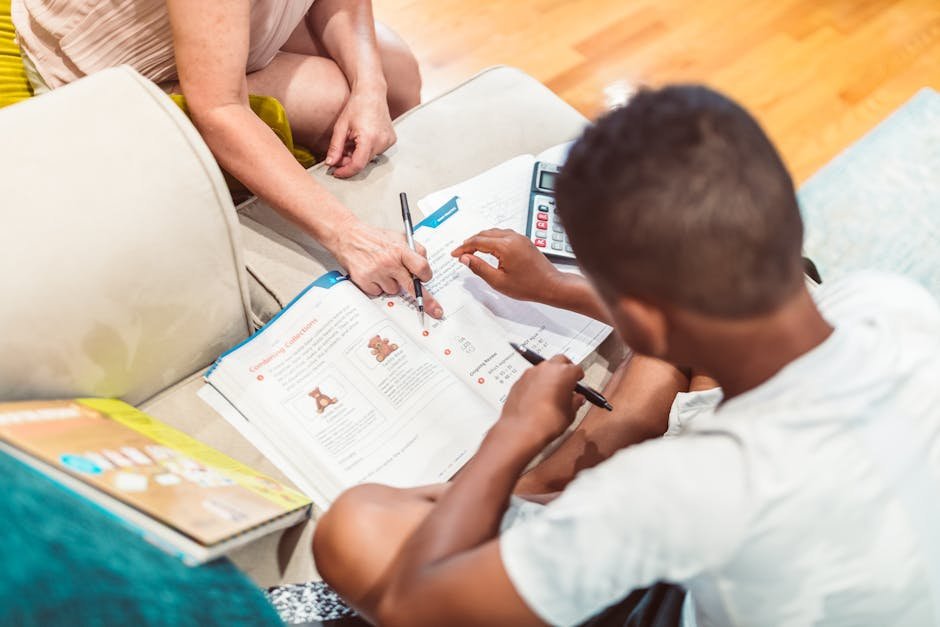
Most parents think of math practice as sit-down, schedule-it, write-on-paper kind of work. But some of the most powerful math learning happens in casual conversation, in the car, at the grocery store, during dinner, while waiting in line. We call this "math talk," and parents who do it consistently raise kids who think mathematically without ever picking up a worksheet.This guide shows how to weave math talk into your daily routine in 5-minute pockets that add up to hundreds of practice moments per year.
Understanding Math Talk
Math talk is exactly what it sounds like: conversation about numbers, patterns, calculations, or problem-solving that happens in daily life. Not lessons, not quizzes, just talk. The math gets practiced because it shows up, not because it is assigned.
Real-Life Examples of Math Talk
Consider these scenarios:
- "If we have 3 days until your birthday and you visit Grandma on each one, how many visits?"
- "Look at the carton, 12 eggs, 2 rows. How many in each row?"
- "We need 5 cookies for each of 4 friends. How many cookies should I bake?"
- "Your team has 11 players and we have 22 oranges. Can each player have 2?"
Each conversation lasts 30 seconds to 2 minutes. Across a week, dozens of these add up to meaningful practice.
The Power Behind Math Talk
Three reasons math talk is so effective.
Contextual Learning
The math has context. Numbers attached to real situations are easier to remember and apply than numbers on a worksheet. The brain stores them differently, and children begin to understand how math fits into everyday life.
Low-Pressure Environment
The practice is low-pressure. There is no grade, no time limit, no "right answer or else." Kids try without fear of failing. They take risks, reason out loud, and over time, they become more confident in their mathematical abilities.
Math as a Life Tool
It builds the habit of math as part of normal life. Kids who hear math talk daily grow up thinking of math as a tool they use, not a school subject they survive. This mindset shift can make a significant difference in their academic and personal lives.
Integrating Math Talk Into Everyday Life
In the Car: A Moving Classroom
Car rides are perfect math-talk windows. Your child is captive, slightly bored, and looking for something to do.
- "How many minutes until we get there if we are 12 miles away and driving 60 miles per hour?"
- "What's the speed limit times 2? Times 3?"
- "Count the license plates that start with even numbers."
- "If gas is $3 a gallon and we need 10 gallons, how much will the fill-up cost?"
At the Grocery Store: Practical Application
The grocery store is full of opportunities for math talk. From counting items to calculating discounts, the math here is diverse and applicable.
- "This pack has 8 yogurts. We need 24. How many packs?"
- "These are $3 each. We're buying 4. What's the total?"
- "15% off this $20 item. How much off?"
- "If 1 pound of grapes is $4, what's half a pound?"
At Dinner: Sharing and Portions
Dinner time offers a natural setting for discussing division and fractions, as well as simple arithmetic.
- "We need to share these 12 french fries equally. How many each?"
- "This pizza has 8 slices. If 4 people eat 2 each, how many slices total?"
- "Your dinner has 4 carrots. Mine has 6. How many do we have together?"
During Daily Routines: Consistent Practice
Math talk can be seamlessly integrated into daily routines, making math a consistent part of your child's life.
- While brushing teeth: "If I brush for 2 minutes twice a day, how many minutes a day?"
- While getting dressed: "How many pairs of socks do you have if you have 16 socks?"
- While watching TV: "This show is 30 minutes. If we watch 3 episodes, how long total?"
While Playing: Fun with Numbers
Playtime is a great opportunity to introduce math in a fun and engaging way.
- "How many Lego pieces in 4 rows of 6?"
- "You scored 12 points in the game. If you score 12 in each game for 5 games, how many total?"
- "This puzzle has 100 pieces in a 10x10 grid. What if it was 10x20?"
Adapting Math Talk to Your Child's Level
Math talk works best when the difficulty fits the child's current level. Tailor your questions to match their grade level.
Grades K-2: Building Foundations
Focus on counting, basic addition, and number recognition for younger children. Engage them with simple questions: "How many fingers if you hold up both hands?" or "If I have 3 apples and add 2, how many?" Keep numbers under 20 to ensure they remain manageable.
Grades 3-4: Introducing Complexity
As children progress, introduce times tables fluency, multi-step problems, and fractions. Ask questions like "What's 7 times 8?" or "If a recipe serves 4 and we need 6, how do we scale?" Encourage them to think through these problems and verbalize their reasoning.
Grades 5-6: Advanced Concepts
For older children, focus on percentages, fractions, decimals, and multi-digit operations. Pose questions such as "What's 15% of $80?" or "If gas is $3.49 and we need 12 gallons, what's the total?" Encourage them to explore these concepts and develop strategies for solving complex problems.
Common Pitfalls to Avoid
While math talk can be incredibly beneficial, there are some common mistakes parents should avoid to ensure it remains a positive and effective experience.
- Do not turn math talk into a quiz. If your child senses they are being tested, they shut down. Keep it conversational.
- Do not insist on right answers. The point is the thinking, not the answer. Wrong answers are fine; just casually note the right one and move on.
- Do not pile too many talks into one moment. One math talk per car ride is plenty. Five in a row feels like a lesson.
- Do not correct in front of others. If your child gets a math talk wrong in front of friends or grandparents, let it go. Talk privately later if needed.
- Do not make it competitive between siblings. Math talk should be a personal journey, not a contest.
Actionable Tips for Effective Math Talk
Here are some practical tips to help you get started with math talk and make it a regular part of your daily routine.
- Choose one consistent context to start (just car rides, just dinner). Once that is automatic, add another.
- Prepare a small list of go-to questions. Five or six is enough to rotate and keep things fresh.
- Notice when your child does math thinking without prompting. Celebrate it with comments like "You just figured that out without me asking, nice!"
- Be patient and persistent. It may take time for your child to adjust to math talk, but consistency will yield results.
- Incorporate math talk into family traditions or seasonal activities for added variety and excitement.
When circumstances differ
Math talk can be adapted to suit children with special needs or those facing unique challenges. Here are some considerations for different situations.
Handling Test Anxiety
If your child experiences test anxiety, math talk can be a comforting way to practice math without the pressure of exams. Focus on making math talk enjoyable and stress-free, reinforcing the idea that mistakes are part of learning.
Supporting Children with ADHD
For children with ADHD, keep math talk short and engaging. Use physical objects or hands-on activities to maintain their attention and interest. Incorporate movement when possible, such as counting steps while walking.
Engaging Gifted Learners
Gifted children may benefit from more challenging math talk. Encourage them to explore deeper mathematical concepts and solve complex problems. Provide opportunities for independent exploration and discovery.
Assisting Children with Dyscalculia
Children with dyscalculia may need additional support and patience. Use visual aids and manipulatives to help them understand mathematical concepts. Break problems into smaller, manageable steps and offer positive reinforcement.
What the experts find
Research on early math education consistently supports the idea that informal math talk is crucial for developing strong foundational skills. Studies show that children exposed to frequent math talk at home perform better in school math later on. The National Council of Teachers of Mathematics highlights that these daily interactions help children see math as relevant and applicable, fostering a positive attitude towards learning. Also, research suggests math talk helps bridge the gap for students who may not have access to formal math resources outside school.
Talking to Your Child's Teacher
Communicating with your child's teacher can enhance the effectiveness of math talk. Teachers can provide insights into your child's progress, strengths, and areas needing improvement.
Inquire About Classroom Topics
Ask teachers what math topics are currently being covered in class. This information allows you to tailor your math talk sessions to reinforce classroom learning, creating a cohesive educational experience for your child.
Share Your Math Talk Experiences
Let your child's teacher know about the math talk activities you engage in at home. They may have additional suggestions or resources that align with the school's curriculum, ensuring that your efforts at home complement the classroom learning.
Address Concerns Together
If your child struggles with certain math concepts, collaborate with the teacher to find strategies that work both at home and in school. Teachers appreciate parents who are actively involved and can provide valuable advice to support your child's learning journey.
When to Seek Outside Help
While math talk is a powerful tool, there might be times when extra help is needed. Knowing when and how to seek outside assistance is crucial for your child's success.
Recognizing the Need
Look for signs that your child is consistently struggling with math concepts despite regular math talk. Frustration, lack of progress, or persistent anxiety about math might indicate the need for additional support.
Exploring Tutoring Options
Consider hiring a math tutor who can provide personalized assistance tailored to your child's specific needs. Tutors can offer focused practice and help build confidence in areas of difficulty.
Utilizing Online Resources
There are numerous online platforms offering interactive math tutorials and exercises. Websites like Khan Academy provide comprehensive lessons that can supplement your math talk efforts and help your child grasp challenging topics.
A Weekly Routine for Math Talk
Establishing a weekly routine for math talk ensures consistency and helps integrate math into your family's daily life without feeling overwhelming.
Monday: Math in the Morning
Start the week with simple math questions during breakfast. Ask about numbers related to the day's schedule, like "What time do we need to leave if we have 30 minutes until school starts?"
Wednesday: Midweek Math in the Car
Use the midweek car rides for quick math challenges. Discuss distances, times, or play games like counting certain colored cars or license plate numbers.
Friday: Fun Math During Dinner
Incorporate math talk into Friday dinners by discussing portions or cooking-related math. Ask questions like "If we need to double this recipe, how much of each ingredient will we use?"
Weekend: Math in Play
On weekends, make math talk part of playtime. Whether it's counting blocks in a tower, measuring ingredients for a baking project, or solving a math-based puzzle, ensure it's enjoyable and engaging.
Common questions parents ask
What if my child doesn't respond to math talk?
If your child seems uninterested, try to make the questions more relevant or use topics they enjoy. Patience is key, and sometimes it helps to pause and try again later. Ensure the conversations are light and fun, avoiding any pressure.
How can I make math talk a habit?
Start small by choosing one daily activity, like car rides or dinner time, to introduce math talk. As it becomes a natural part of your routine, gradually incorporate it into other activities. Consistency is essential for forming a habit.
Can math talk help with school math performance?
Yes, regular math talk helps reinforce concepts learned in school, making them more familiar and less intimidating. It also builds a positive attitude towards math, which can enhance your child's performance in the classroom.
Should I use math talk with older children?
Absolutely. Math talk can be adapted for all age groups. With older kids, incorporate more complex math concepts and encourage discussions that require critical thinking and problem-solving skills.
What if I'm not confident in my own math skills?
You don't need to be a math expert to engage in math talk. Focus on simple, everyday math problems and learn alongside your child. Use resources like online tutorials to brush up on concepts if needed.
To finish
Incorporating math talk into your daily routine may require some effort and creativity, but the rewards are well worth it. By making math a natural and enjoyable part of everyday life, you can help your child develop a strong foundation in mathematics and a positive attitude towards learning. As math talk becomes a habit, your child will become more confident, capable, and enthusiastic about math, ready to tackle any mathematical challenge that comes their way.Remember, math talk is not about perfection; it is about progress and exploration. Embrace the journey, celebrate successes, and learn from mistakes. With your support and guidance, your child can develop a lifelong love for math and the skills they need to succeed in school and beyond.
