Veerle Dielen · Elementary teacher · January 23, 2026 · Tools & Resources
Practicing Times Tables on a Whiteboard: Interactive and Effective
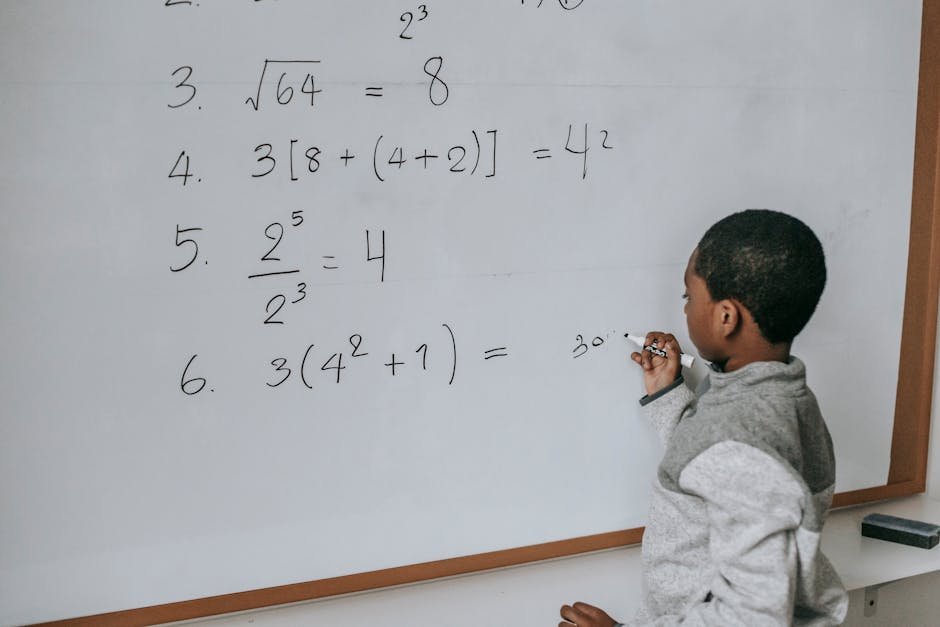
A small dry-erase whiteboard is one of the most underrated times tables tools you can have at home. It feels like a classroom prop, kids enjoy writing on it, and it makes practice easy to set up and easy to switch up. Here is why it works and how to use it effectively to help children master multiplication tables.
Why a Whiteboard Works
Using a whiteboard for practicing times tables hits several psychological sweet spots that make learning both enjoyable and effective for children.
Low-Stakes Mistakes
One of the most significant advantages of a whiteboard is that mistakes are low-stakes. Kids can easily wipe off a wrong answer, which means nothing is permanent, and they can try again without any pressure. This encourages them to engage in trial and error, which is crucial for learning. For example, if a child writes 3x4=11, they can quickly erase it and try again, internalizing the correct answer (12) in a stress-free environment.
Big, Visible Letters
Whiteboards allow for colorful, oversized writing that can make learning feel more like a game and less like homework. The visual appeal of big letters can be particularly engaging for young learners, who often find it more fun to interact with large, vibrant visuals. Drawing a giant number "5" in bright red and pairing it with a "3" in blue can make the equation 5x3=15 memorable and exciting.
Active Engagement
Standing up and writing on a whiteboard involves physical activity, which can enhance learning by engaging different parts of the brain. This kind of kinesthetic learning can be more effective than simply sitting down with a worksheet. Encourage your child to write while moving around the board, turning math practice into an active experience.
Quick Switching
With a whiteboard, you can erase and start fresh in just a few seconds. This quick switching minimizes downtime and keeps children focused and engaged, allowing for rapid transitions between different tasks or tables. Set up a routine where each session begins with a quick review of the previous day's work before moving on to new material.
Marker Variety
Using markers in different colors can make the practice visually interesting. Assigning a specific color to each multiplication table can help children differentiate and remember them better. For instance, the 3s table could be blue, while the 4s table might be green. This color-coding can aid memory by creating visual associations for each set of facts.
Ways to Use a Whiteboard for Times Tables
Here are some creative and effective ways to use a whiteboard to practice multiplication tables.
Race to Fill the Board
Set a 2-minute timer and challenge your child to write as many multiplication facts and answers as they can from a chosen table. The goal is to beat their previous count, adding a fun, competitive element to the practice. Consider keeping a chart of their best scores to motivate improvement over time.
Mystery Products
Write a product, such as 24, on the board and have your child write as many multiplication facts as they can that produce that answer, such as 3x8, 4x6, 6x4, and 8x3. This helps reinforce the concept of factors and multiple solutions. Challenge them to find the least and greatest factor pair to deepen their understanding.
Highlight a Pattern
Draw out a particular table vertically and look for patterns together. For instance, with the 9s table, the digits in each product add up to nine (e.g., 18, 27, 36). Recognizing these patterns can make learning more intuitive and less about rote memorization. Explore other patterns, like the doubling pattern in the 2s table or the halving pattern in the 5s table.
Build a Chart
Over the course of a week, fill in a 10x10 grid one row at a time, with each new table getting its own color. This visual representation can help children see the relationships between numbers and understand multiplication as a series of additions. Encourage your child to find and explain the square numbers (e.g., 4x4, 5x5) within the grid.
Speed Challenge
Call out multiplication facts and have your child write the answer as fast as they can. Time them for 60 seconds to see how many they can complete. This helps improve speed and accuracy under pressure, which is a useful skill for timed tests. Rotate the caller role to give your child the chance to quiz you, reinforcing their knowledge.
The Error Wall
When a multiplication fact is missed, write it big on the board and leave it there for a day. Encourage your child to walk past it, recall the fact, and then move on. This constant exposure helps reinforce the correct answer over time. You can also add sticky notes with related facts to create a 'fact family' wall.
Common Mistakes to Avoid
There are several common pitfalls that parents can avoid to make multiplication practice more effective.
Overloading with Information
Avoid overwhelming your child with too much information at once. Focus on one table at a time and ensure they have a solid understanding before moving on to the next. A good rule: Master one table fully before introducing a new one. Revisit previous tables regularly to keep all facts fresh.
Ignoring Mistakes
It's important not to overlook mistakes. Use them as teaching moments to clarify misconceptions and reinforce the correct information. Encouraging a growth mindset, where mistakes are seen as opportunities to learn, can be beneficial. Discuss what went wrong and how to find the correct answer together, fostering problem-solving skills.
Lack of Consistency
Inconsistency can hinder progress. Make sure to set aside regular times for practice, even if it’s just a few minutes each day. Consistent practice reinforces learning and builds confidence. Establish a routine that includes a short review session at the beginning of each practice to ensure previous learning is retained.
Age-Appropriate Tips for Learning Times Tables
Different age groups may require different strategies and levels of engagement when learning multiplication tables.
Grades K-2
For younger children, focus on the basics. Start with counting by twos, fives, and tens to build a foundation. Use songs and rhymes that incorporate multiplication facts, as music can be a powerful memory aid. Ensure that practice sessions are short and playful to maintain their interest. Incorporate storybooks that involve counting or grouping to subtly introduce multiplication concepts.
Grades 3-4
As children get older, introduce more structured practice sessions. Use the whiteboard for interactive games and challenges, and incorporate real-life examples, such as counting items in groups. Encourage them to explain their thought process to solidify their understanding. Activities like cooking or setting the table can involve multiplication, such as calculating how many plates or spoons are needed for guests.
Grades 5-6
Older children can handle more complex multiplication tables and should start working on speed and accuracy. Use the whiteboard for quick quizzes and to solve more challenging problems. Encourage them to identify patterns and shortcuts, such as using the distributive property to simplify calculations. Introduce word problems that require multiple steps to solve, enhancing their critical thinking skills.
Talking to Your Child's Teacher
Communication with your child's teacher can be invaluable in supporting their learning. Be sure to attend parent-teacher conferences and ask specific questions about your child's progress in math. Inquire about the methods used in class and how you can complement them at home. Discuss any challenges your child might be facing and collaborate on strategies to overcome them.
Understanding Classroom Techniques
Ask your child's teacher about the techniques and resources they use in class. Understanding these methods can help you align your home activities with schoolwork, creating a consistent learning environment. If a particular strategy is working well in class, integrate it into your home routine.
Supporting Classroom Goals
Find out what goals your child's teacher has set for the class regarding multiplication. Use this information to set complementary goals at home. For example, if the class is working on mastering the 6s and 7s tables, focus your home practice on these areas to reinforce and solidify learning.
Actionable Tips for Effective Practice
- Set clear goals for each practice session and track progress over time. For instance, aim to master two tables per week.
- Use a variety of methods, such as games, quizzes, and storytelling, to keep practice engaging. Rotate these methods to prevent monotony.
- Incorporate technology, like apps or online games, to supplement whiteboard activities. Consider apps that offer adaptive learning to match your child's pace and level.
- Encourage peer learning, where siblings or friends practice together, to add a social element. Organize small group sessions where kids can challenge each other and share strategies.
- Provide positive reinforcement and celebrate milestones, no matter how small. Create a reward system where your child earns small prizes or privileges for reaching goals.
When circumstances differ
Every child is unique, and some may face additional challenges when learning multiplication tables.
Test Anxiety
For children who experience test anxiety, practice under relaxed conditions and gradually introduce timed activities. Emphasize effort and improvement over scores to build confidence. Use relaxation techniques, like deep breathing or visualization, before timed tests to reduce anxiety.
ADHD
Children with ADHD may benefit from shorter, more frequent practice sessions. Incorporate movement and use brightly colored markers to maintain their attention. Break tasks into smaller, manageable steps to prevent overwhelm. Set up a quiet, distraction-free environment to enhance focus.
Gifted Learners
Gifted children may advance quickly and need more challenging material to stay engaged. Introduce more complex mathematical concepts, such as prime numbers or basic algebra, to keep them interested and stimulated. Encourage them to explore math-related puzzles and games that require higher-order thinking.
Dyscalculia
Children with dyscalculia may need more time and different strategies to grasp multiplication concepts. Use visual aids, like number lines or arrays, and focus on understanding rather than memorization. Seek professional support if necessary, such as a tutor specializing in learning differences.
What the experts find
Research on effective learning strategies for multiplication highlights the importance of varied practice and immediate feedback. Studies show that using manipulatives, such as counters or blocks, can significantly aid in understanding multiplication as repeated addition. Incorporating multiple modes of learning, such as visual, auditory, and kinesthetic activities, can cater to different learning styles and improve retention.
Importance of Feedback
Immediate feedback has been shown to help children correct mistakes and reinforce correct answers, leading to better retention. Using a whiteboard allows for instant correction, helping children learn from errors and solidify correct answers more effectively.
Role of Repetition
Repetition is crucial in learning multiplication tables. Regular practice helps transfer information from short-term to long-term memory. However, it's important to ensure that repetition doesn't become monotonous. Mixing up activities and formats keeps practice sessions fresh and engaging.
A weekly approach
Creating a structured weekly routine can help make multiplication practice a habit without overwhelming your child. Here's a suggested plan:
- Monday: Introduction to a new table using songs and games. Spend 10-15 minutes familiarizing with the new facts.
- Tuesday: Use the whiteboard for a 'Race to Fill the Board' session focusing on the new table. Incorporate color-coding for visual memory.
- Wednesday: Highlight and explore patterns within the new table. Engage in a 'Mystery Products' activity using the whiteboard.
- Thursday: Reinforcement through a speed challenge. Use a mix of calling out facts and writing answers to enhance speed and accuracy.
- Friday: Review the week's table and integrate it into the 10x10 grid. Discuss any challenges and celebrate successes.
- Weekend: Optional fun math-related activity or game to end the week on a positive note.
Reader questions
How often should my child practice times tables?
A good rule is to aim for daily practice, even if it's just 5-10 minutes. Consistent, short sessions are more effective than infrequent, longer ones.
What if my child is struggling with a particular table?
Focus on that table exclusively for a few days. Use different strategies like songs, games, and visual aids. Once confidence is built, gradually reintroduce other tables.
Should I use digital tools in addition to a whiteboard?
Yes, digital tools can be a great supplement. Interactive apps and online games can make learning fun and adaptive, providing a balanced approach alongside whiteboard practice.
How can I make practice more engaging?
Incorporate a variety of activities such as storytelling, puzzles, and real-life applications of multiplication. Use rewards and positive reinforcement to maintain motivation.
When should I seek outside help?
If your child consistently struggles despite varied approaches and regular practice, consider seeking help from a tutor or educational psychologist. Early intervention can make a significant difference.
Wrapping up
Practicing times tables on a whiteboard is an interactive and effective method that can be adapted to suit different learning styles and needs. By incorporating fun activities, consistent practice, and collaboration with schools, parents can help their children build a strong foundation in multiplication. Remember to celebrate progress and make learning an enjoyable journey.A small whiteboard, a set of markers, and just a few minutes a day can lead to significant improvements over time. Combine these techniques with other resources, like apps or educational games, to create a comprehensive learning experience that will set your child up for success in mathematics and beyond.
