Veerle Dielen · Elementary teacher · March 2, 2026 · Tools & Resources
Math Reference Cards for Quick Lookups
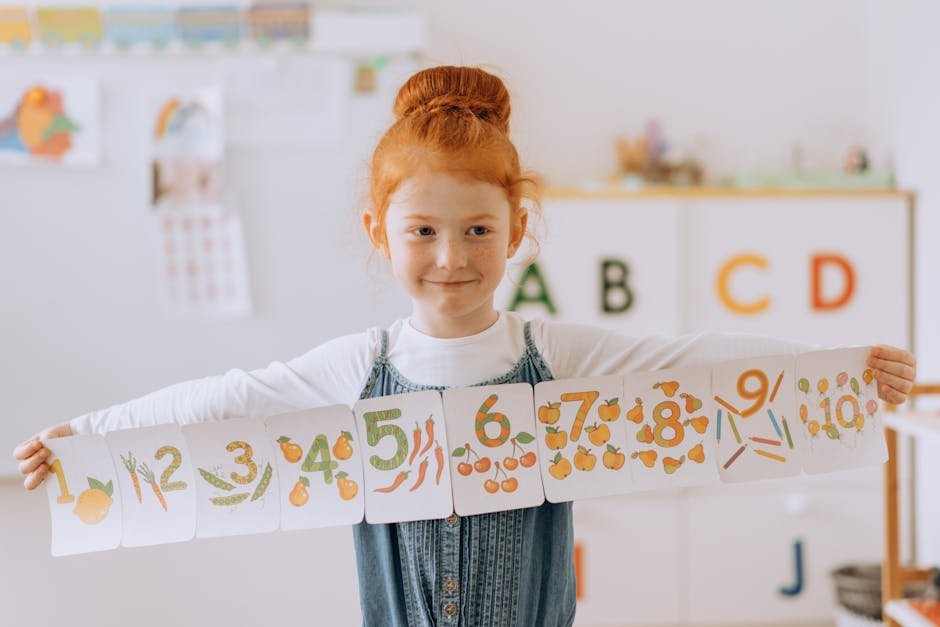
In the journey of learning mathematics, especially for elementary school children, having reliable tools that facilitate understanding is crucial. One such tool that parents and teachers often overlook is the humble reference card. A reference card is a small card that summarizes a math concept, such as a procedure, chart, or formula. When kept handy, it can significantly help kids look up necessary information without interrupting the flow of their homework. This article delves into the various aspects of using math reference cards, providing a comprehensive guide for American parents and teachers on how to effectively implement them into their children's learning routine.
Understanding the Importance of Reference Cards
The Role of Reference Cards in Learning
Reference cards serve as a bridge between initial learning and mastery. They provide a quick recap of essential information, allowing students to continue their work without losing momentum. For example, when a child is working on a math problem and forgets a multiplication fact, having a reference card handy allows them to quickly look it up without the need to guess or stop their work to find the answer elsewhere. This immediate access to information helps maintain a student's focus and confidence.
Benefits for Different Learning Styles
Children have diverse learning styles; some are visual learners, while others might be more kinesthetic or auditory. Reference cards cater to various learning preferences by offering a tangible, visual reminder of key concepts. Visual learners can benefit from colorful charts and diagrams, kinesthetic learners can enjoy the physical interaction of handling and organizing the cards, and auditory learners can read the cards aloud to reinforce the material. This versatility makes them a valuable tool in any educational setting, supporting children who might struggle with traditional learning methods.
Essential Reference Cards for Elementary Math
Creating a set of essential reference cards for your child can be a rewarding project. Here are some key types of reference cards that every elementary student can benefit from:
- Multiplication Chart (10x10): A classic tool that helps children quickly find the product of two numbers. For instance, if a child is unsure of what 7 x 8 equals, they can simply locate the numbers on the chart and find the answer (56) at their intersection.
- Fraction Equivalents: Handy for understanding and converting between different fractions, such as knowing that 1/2 is equivalent to 2/4 or 0.5. This can be particularly useful when children are learning to add or subtract fractions.
- Common Formulas: Cards that summarize formulas for perimeter and area can be particularly useful for geometry problems. For example, a card might show that the area of a rectangle is calculated by multiplying its length by its width (A = l x w).
- Place Value Reminder: A card that explains the concept of units, tens, hundreds, etc., to assist with large number comprehension. This is especially helpful when children are learning to carry over numbers in addition or borrow in subtraction.
- Math Vocabulary: A glossary card that defines terms such as factor, product, quotient, and sum. Knowing these terms can help children better understand word problems and instructions.
How to Use Reference Cards Effectively
Using Cards During Homework
Reference cards are most effective when used as a tool during homework sessions. Encourage your child to use the cards whenever they encounter a stumbling block. For instance, if they're stuck on a long division problem because they’ve forgotten a multiplication fact, a quick glance at their multiplication chart can get them back on track. This practice not only saves time but also reinforces learning as students repeatedly see and use the information.
Transitioning from Dependence to Mastery
While reference cards are beneficial, make sure students transition from relying on them to mastering the material independently. As your child becomes more fluent in their math skills, encourage them to attempt problems without the cards first, only using them as a last resort. The goal is for these cards to eventually become obsolete, signaling that your child has internalized the information. Gradually reducing their reliance on cards can help build confidence and independence in their mathematical abilities.
Case Studies: Real-Life Scenarios
Consider Sarah, a third-grade student who struggles with multiplication. Her teacher introduced multiplication reference cards as part of her daily math routine. Initially, Sarah referred to the cards often, but over time, as she practiced daily, she found herself needing them less. By the end of the semester, Sarah was solving multiplication problems confidently without any external help.Similarly, John, a fifth-grader with ADHD, found that math reference cards helped him focus by providing a structured way to access information quickly. This reduced his frustration and improved his ability to complete math assignments independently. The cards acted as a reliable anchor that kept him grounded during math tasks.
Age-Specific Tips for Using Reference Cards
Grades K-2: Laying the Foundation
For younger children in kindergarten through second grade, reference cards can introduce basic math concepts in a fun and engaging way. Use colorful cards with pictures and simple words to teach numbers, basic addition, and subtraction. Incorporate these cards into games to make learning interactive and enjoyable. For example, create a matching game where children pair number cards with the correct amount of objects, reinforcing counting skills.
Grades 3-4: Building on Basics
As children enter grades three and four, they begin to encounter more complex math topics such as multiplication, division, and fractions. Reference cards should evolve to include multiplication tables, basic division facts, and fraction equivalents. Encourage your child to create their own cards, as this process can enhance learning and retention. A fun activity might be to have your child design a "math scavenger hunt" using their reference cards to solve clues.
Grades 5-6: Mastery and Application
By grades five and six, students should be moving toward mastery of the concepts they have learned. Reference cards can now include more advanced topics such as percentages, decimals, and more complex geometry formulas. At this stage, encourage your child to use cards to check their work rather than as the first point of reference. Challenge your child to explain the concept on a reference card to a peer or family member, reinforcing their understanding.
Common Mistakes to Avoid
One common mistake parents make is allowing their child to become too reliant on reference cards, which can hinder their learning progress. It's essential to strike a balance between using cards as a helpful tool and encouraging independent problem-solving. Even better, avoid overwhelming your child with too many cards at once; focus on the most relevant concepts they are currently learning. Remember, the goal is to aid understanding, not to replace the learning process.
Actionable Tips for Parents and Teachers
- Introduce reference cards gradually, aligning them with your child's current curriculum. For example, if your child is learning about fractions, focus on fraction-related cards first.
- Encourage children to make their own cards to reinforce learning. This activity can be a great weekend project, allowing creativity and personalization.
- Regularly review and update the set of cards to match your child's evolving needs. As they master certain concepts, replace or add new cards to keep up with their curriculum.
- Use cards as a revision tool before exams or quizzes to boost confidence. Reviewing key concepts can help refresh your child's memory and reduce test anxiety.
- Incorporate reference cards into interactive math games and activities. This approach makes learning fun and helps cement concepts through play.
The research
Research on educational tools highlights the effectiveness of visual aids in enhancing learning retention and understanding. Studies suggest that students who use visual aids like reference cards tend to perform better in subjects requiring memorization and quick recall. The National Council of Teachers of Mathematics emphasizes the importance of using diverse methods to cater to different learning styles, and reference cards fit well within this framework.
For Special Situations: Tailoring to Individual Needs
Addressing Test Anxiety
For children who experience test anxiety, reference cards can serve as a confidence booster. Familiarity with these cards can provide a sense of security, making them feel more prepared for assessments. Encourage your child to use the cards during practice tests to simulate exam conditions and reduce anxiety.
Supporting Children with ADHD
Reference cards can help children with ADHD by providing a structured format for accessing information. This reduces the cognitive load and helps maintain focus during math tasks. Arrange the cards in a logical order or sequence to make it easier for the child to follow along.
Assisting Gifted Learners
Gifted learners can benefit from creating their own reference cards, which can include advanced concepts or creative math problems. This encourages deeper engagement with the material and allows them to explore topics beyond the standard curriculum. Provide opportunities for these students to present their cards to peers, fostering a collaborative learning environment.
Helping Children with Dyscalculia
For children with dyscalculia, reference cards can break down complex topics into manageable parts. Using visual aids and step-by-step instructions can make math more accessible and less intimidating. Focus on repetitive practice with these cards to reinforce understanding and build confidence.
In the Classroom vs. At Home
The use of reference cards can vary between classroom and home settings. In the classroom, teachers can incorporate reference cards into group activities or individual tasks, allowing students to collaborate and learn from each other. At home, parents can use these cards to support homework and reinforce concepts taught in school. Consistency in using reference cards across both settings can create a seamless learning experience for the child.
A Weekly Routine for Using Reference Cards
Monday: Introduction
Start the week by introducing any new reference cards related to the week's math topics. Spend time with your child reviewing the cards and discussing the concepts they cover.
Tuesday: Practice and Play
Use the cards in a fun activity or game that incorporates math concepts. This could be a matching game, a scavenger hunt, or a simple quiz based on the cards.
Wednesday: Homework Helper
Encourage your child to use the reference cards as a support tool during homework time. Observe how they use the cards and offer guidance if needed.
Thursday: Review and Reflect
Have a review session where your child explains the cards' content to you or a family member. Ask questions to deepen their understanding and identify any areas needing further clarification.
Friday: Mastery Check
Challenge your child to solve a set of problems related to the week's topics without using the cards initially. Allow them to use the cards as a check after attempting the problems independently.
When to Seek Outside Help
If you notice your child struggling consistently despite using reference cards, it may be time to seek additional support. Consult with their teacher to discuss potential learning challenges and explore options such as tutoring or special education services. Early intervention can make a significant difference in your child's academic confidence and success.
Talking to Your Child's Teacher
Open communication with your child's teacher can enhance the effectiveness of reference cards. Share what works well at home and ask for suggestions on integrating card use in the classroom. Teachers can provide insights into your child's progress and suggest specific areas where additional focus might be needed.
Long-Term Perspective: Beyond Elementary School
As children transition from elementary to middle school, the foundational skills they have honed will become increasingly important. The ability to independently access and apply mathematical concepts will benefit them throughout their academic journey. Reference cards are not just a temporary aid but a stepping stone to developing strong problem-solving skills and mathematical fluency. Encourage your child to adapt and expand their use of reference cards as they encounter more complex subjects.
Final Thoughts: Supporting Your Child's Math Journey
Reference cards are a versatile tool that can significantly enhance a child's learning experience. By understanding how to use them effectively and encouraging your child to transition from reliance to mastery, you are setting them up for long-term success in mathematics. Remember, the goal is to help your child become confident in their math abilities, equipped with the skills needed to tackle increasingly complex problems. With the support of reference cards and a proactive approach to learning, your child can develop a solid foundation in math that will serve them well throughout their education.
Questions we hear a lot
What should be the size of a reference card?
Typically, reference cards are small enough to be portable but large enough to clearly display information. A good size is around 3x5 inches, similar to an index card. This size makes them easy to handle and store.
How often should we update the reference cards?
Update the cards regularly as your child advances through different math topics. At the beginning of each new math unit or chapter, review and revise the cards to ensure they align with current material.
Can reference cards be used for subjects other than math?
Absolutely! Reference cards can be adapted for various subjects, including science (for formulas and periodic table elements), language arts (for grammar rules and vocabulary), and social studies (for historical dates and facts).
How can I make reference cards more engaging?
Incorporate colors, drawings, and even stickers to make the cards more visually appealing. Allow your child to personalize their cards, which can increase their interest and engagement with the material.
Are there digital alternatives to physical reference cards?
Yes, there are several apps and online tools that offer digital versions of reference cards. These can be customized and accessed on tablets or computers, providing an alternative for tech-savvy students.
