
The Math Talk Habit: 5-Minute Conversations That Add Up
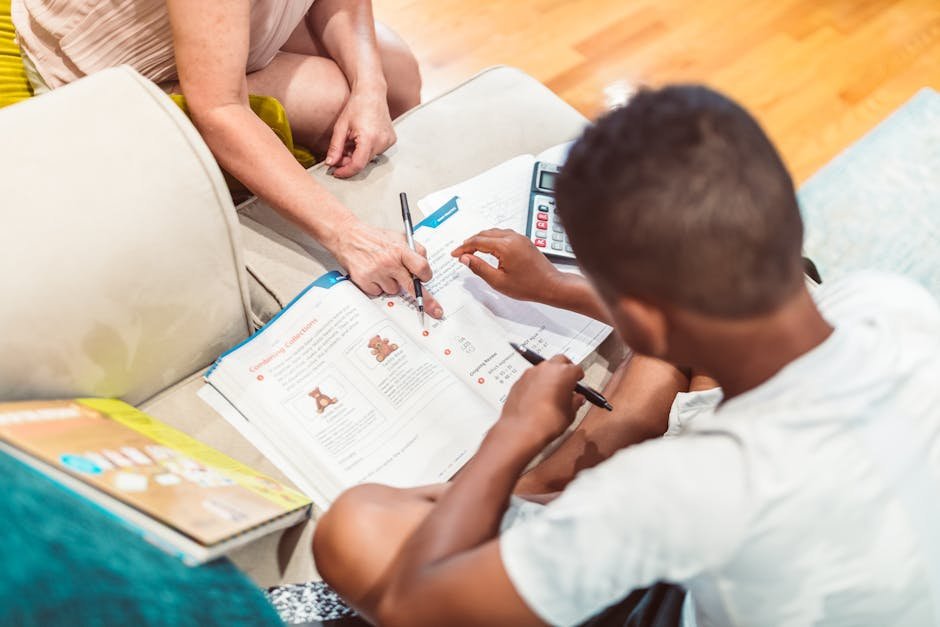
You do not need a worksheet to help with math. A few minutes of talk about numbers, at breakfast or in the car, gives your child practice that does not feel like homework at all.
What does a short math talk sound like with an elementary schooler? We answer that, share a sample week of five-minute conversations, and show how those minutes add up over a school year.
What Math Talk Sounds Like at This Age
Math talk is any back-and-forth about numbers, shapes, or amounts. With a preschooler it might be counting stairs. With a third or fourth grader it can be real multiplication: how many wheels on the six bikes outside, or whether a pack of 8 juice boxes is enough for 3 kids for 3 days.
The key word is talk. You ask, your child answers, and then you ask how they figured it out. That last question matters more than the answer. It turns a quiz into a conversation, and it lets you hear whether your child knows the fact or is counting on fingers under the table. Other good follow-ups are just as short: "How could you check that?" and "Is there another way to get there?"
There is no study of five-minute math talks with older elementary kids specifically, but a related experiment is encouraging. A 2015 experiment with 587 first graders found that families who used an app with short math stories and questions at home saw their children gain more in math over the school year than families who used a reading app, even when they used it only about once a week. The gains were largest for kids whose parents were nervous about math themselves.
A Week of Five-Minute Talks
Here is one way to spread the talks over a school week. Swap days around, skip one when life gets busy, and keep each talk short enough that your child would happily do another.
Monday: The Breakfast Count
Count something on the table in groups. "There are 4 of us and each gets 3 pancakes. How many pancakes do I need to make?" The answer, 4 × 3 = 12, comes with a reward you can eat.
Tuesday: The Car Question
On the way to school, ask one question about something you pass. "That parking lot has rows of 9 cars. If there are 5 full rows, how many cars is that?" Then let your child ask you one back. Kids love catching an adult in a wrong answer, so make an occasional mistake on purpose.
Wednesday: Which Is Better?
Pick two choices and compare them. "Would you rather have 3 bags with 6 marbles each, or 2 bags with 8 marbles each?" The first is 18 and the second is 16, so the answer is not as obvious as it looks.
Thursday: The Price Check
At the store or with a takeout menu, ask about cost. "Tacos are $2 each. How much for 7?" Money makes the facts feel useful, and $14 is a number your child will remember when they want a treat.
Friday: Your Child Asks
Let your child be the one with the questions. They pick a fact they have been practicing and turn it into a story for you. You will learn which tables are on their mind this week.
How Five Minutes Adds Up
Five minutes feels small. But five talks a week across a 36-week school year is 180 conversations, and each one might include three or four questions. That is hundreds of practice moments a year, with no flash cards and no arguments about homework.
You do not have to love math to do this. In a follow-up to the first grade study, children of math-anxious parents who had the math stories at home were doing as well in math three years later as children whose parents felt confident about it. Ready-made questions gave those parents an easy way in, without needing to feel like math experts.
The habit matters more than any single talk. Attach it to a fixed point in the day, like breakfast or the drive to school, so neither of you has to remember it. If a day goes by without one, pick it up the next morning instead of making up for it.
Math talk works best next to regular fact practice, not instead of it. When a talk shows that one table keeps tripping your child up, give that table a few minutes of focused practice, for example on the 7 times table page, and bring a 7 into tomorrow's breakfast question.