
Practicing Times Tables on a Whiteboard: Interactive and Effective
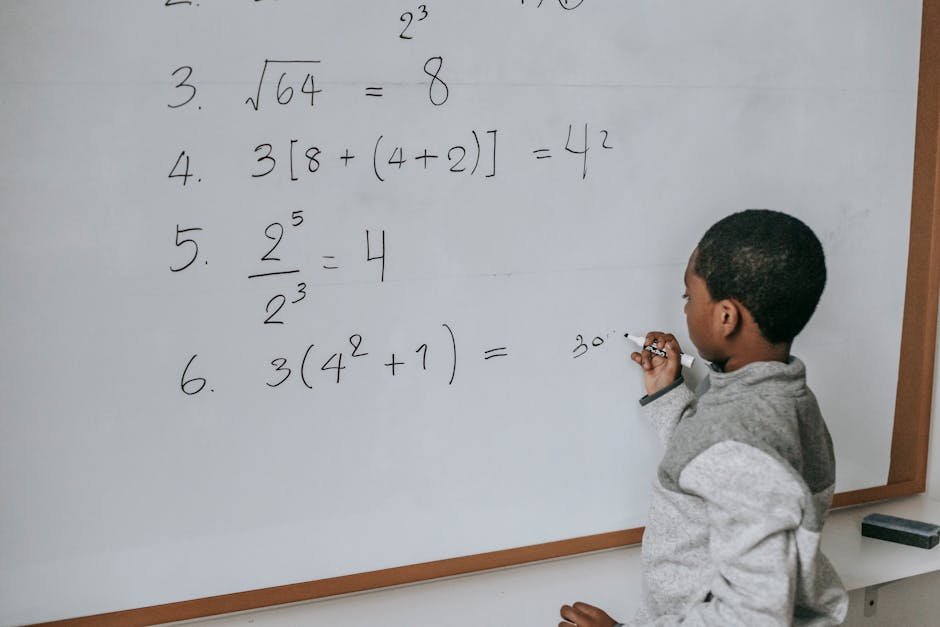
A small dry-erase board and a marker can do a surprising amount of times tables work. Mistakes vanish with a swipe, answers are big enough to see from across the room, and plenty of kids will write on a whiteboard long after they have stopped wanting to touch a worksheet.
Whether you have one board at home or a stack of them in the classroom, the six uses that follow need nothing else.
What Makes a Whiteboard Different From Paper
The main difference is how a mistake feels. On paper, a wrong answer stays there, crossed out or erased into a gray smudge. On a whiteboard it disappears completely, and the next try starts clean. For a child who hates being wrong, that small thing can make practice much easier to start.
In classrooms, boards like this have been studied as response cards: small cards or boards that every student holds up at the same moment. A 2007 review of 18 studies found that, compared with raising hands, response cards went along with better test and quiz scores, more participation, and less disruptive behavior.
The kind of card made no clear difference. A 2023 update that added 15 newer studies came to the same conclusion for students in both general and special education.
Those studies covered many subjects, not just multiplication. Writing facts down has its own support, though. In a 2025 study with 57 third graders, students spent four minutes a day covering a multiplication fact, writing it from memory, and comparing, five days a week for about ten school weeks.
They became faster and more accurate on the facts they practiced than on similar facts they had not, and writing only the answer worked as well as writing the whole fact. That study used paper, but the routine moves easily to a whiteboard.
Six Ways to Use the Board
- Write the table from memory. Your child writes as much of one table as possible without looking, then checks it against a chart and fixes any wrong facts in a different color. The facts in the second color are the ones to practice this week.
- Show me. You say a fact, your child writes the answer and holds the board up. With a group, everyone shows at the same time, so nobody can copy and every child answers every question.
- Draw it. Ask for a drawing instead of an answer: 4 × 6 as four groups of six dots, or as an array with four rows of six. Drawing helps when a fact keeps slipping, because it shows what the answer means.
- Look, cover, write, check. Write three facts that keep slipping. Your child reads them, covers them with a hand or a sheet of paper, writes them again from memory, and then uncovers them to check.
- Missing numbers. Write facts with a blank, such as 7 × __ = 56 or __ × 9 = 54, and let your child fill in the box. This turns multiplication around and gets kids ready for division.
- Fact of the day. Put one stubborn fact on the board in the morning, such as 6 × 8 = 48, and leave it where your child will pass it. Ask for it at breakfast and again at dinner, and erase it once it comes back without a pause.
Pick one or two of these per session rather than all six. Ten minutes at the board is enough, and it is easier to start again tomorrow when today ended before anyone got tired.
Where the Board Falls Short
Because writing takes time, a whiteboard is slower than saying answers out loud. That is useful when a fact is new, but it is not the best tool for building quick recall once a child already understands the table. At that stage, oral rounds and short mixed quizzes fit better.
Watch out for copying from the board itself. If the 7s are still written on one side while you ask 7 × 6, your child may read the answer instead of remembering it. Erase the board, or flip it over, before you start asking.
A practical point: cheap markers dry out fast, and a dried-out marker in the middle of a session is a real momentum killer. Keep two in the box and cap them between turns.
From Board to Practice Online
The whiteboard is a good place to understand and remember a table, and a quiz is a good place to check it. After a few days of board practice on one table, try the matching page on the site, such as the 8 times table, and let your child see how many facts come back without the board.
If a fact still slips there, it goes back on the board as tomorrow's fact of the day.