Veerle Dielen · Elementary teacher · April 3, 2026 · Games & Activities
Learning Times Tables with LEGO: Build and Multiply at the Same Time
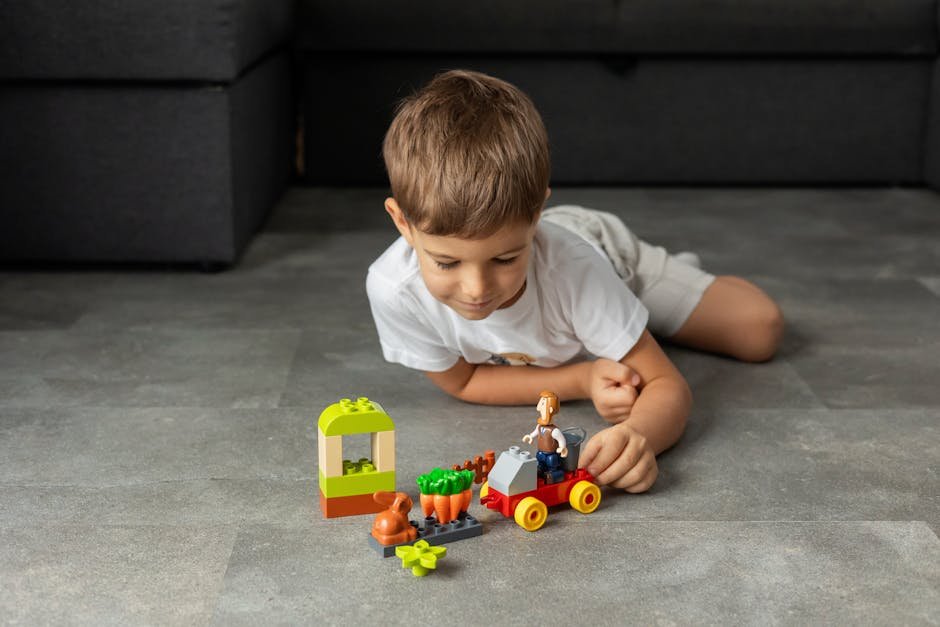
LEGO bricks are one of the best hands-on tools for teaching the times tables. The interlocking grid structure naturally models multiplication, and most kids already have a bin full of them. Here is how to use LEGO for math at home.
Understanding Multiplication with LEGO
To start using LEGO for teaching multiplication, it's crucial to first ensure your child understands the concept of multiplication. LEGO bricks provide a tangible way to grasp this concept. For instance, a 2x3 brick has 2 rows of 3 studs, which totals 6 studs. This is precisely what 2 x 3 represents. By showing your child a brick and counting the studs together, you are demonstrating multiplication in a very concrete manner.
Visualizing Multiplication Facts
Once your child understands the basic concept, you can extend this to other multiplication facts. For example, a 4 x 5 multiplication can be shown with a brick that is 4 studs wide and 5 studs long. Similarly, 3 x 6 can be visualized as three rows of six studs. This method makes the multiplication pattern visible, countable, and physical, providing a strong foundation for understanding.
Creating Multiplication Arrays
Use a large baseplate and smaller bricks to create arrays that represent different multiplication problems. For example, line up 3 rows of 4 bricks to visualize 3 x 4. Encourage your child to experiment by creating their own arrays for various multiplication facts.
Using LEGO for Daily Math Practice
Incorporating LEGO into daily math practice can make learning fun and engaging for your child. Here are some playful exercises to try at home:
Build the Answer
Call out a multiplication fact, such as "3 x 4," and ask your child to build a 3x4 rectangle with LEGO bricks. Once built, they can count the studs to verify the answer. This exercise reinforces the concept and allows for practice in a tangible way.
Equal Towers
Challenge your child to build several towers of the same height. For example, ask how many bricks are needed if you build 4 towers of 6 bricks each. They can count the total number of bricks and then calculate the multiplication fact to see if they match.
Mystery Fact
Build a rectangle in secret and then show it to your child. Ask them to determine what multiplication fact is represented by the brick configuration. This encourages them to think critically about the arrangement of studs.
Race to Build
Turn multiplication practice into a game by calling out a series of facts. Your child races to build each one with bricks before stating the answer aloud. This activity combines speed with accuracy, making it exciting and challenging.
Bigger Products
For advanced practice, use larger bricks like 2x4 (8 studs each) to build multiples of 8. Stack them to visually represent products such as 16, 24, and 32. This helps in understanding larger multiplication facts.
Transitioning from Concrete to Abstract
While hands-on tools like LEGO are invaluable in the initial stages of learning multiplication, there comes a point where your child needs to transition from concrete models to abstract thinking. This shift happens when your child can recall multiplication facts faster than they can build them.
Identifying the Right Moment
You will know it's time to move on when your child consistently provides answers without needing to count the studs. At this stage, switch to other methods such as flashcards, quizzes, or mental math exercises. The goal is to develop quick recall skills, essential for higher-level math.
Using Other Tools
Introduce number lines, multiplication charts, or math apps to help with this transition. These tools can make abstract concepts more accessible and reinforce the skills learned with LEGO.
Tips for Different Age Groups
Each age group requires a tailored approach to teaching multiplication. Here are some tips based on grade levels:
Grades K-2
- Focus on introducing the concept of grouping and repeated addition.
- Use smaller LEGO sets to demonstrate simple multiplication facts like 2 x 2 or 3 x 3.
- Incorporate songs and rhymes that reinforce multiplication concepts.
- Encourage counting games that transition into basic multiplication.
Grades 3-4
- Introduce more complex multiplication facts using larger LEGO structures.
- Encourage your child to create their own multiplication problems with LEGO bricks.
- Begin incorporating written multiplication problems alongside LEGO activities.
- Use multiplication stories to provide a narrative to the math problems.
Grades 5-6
- Focus on speed and accuracy by transitioning to mental math and quizzes.
- Introduce concepts of factors and multiples using LEGO.
- Challenge your child with multiplication of two-digit numbers using LEGO as a visual aid.
- Engage in problem-solving exercises that require multiplication.
Where parents go wrong
While LEGO can be a powerful tool for teaching multiplication, there are some common mistakes to avoid:
- Avoid relying solely on LEGO for teaching multiplication. It's essential to incorporate other methods for a well-rounded understanding.
- Do not rush the transition from concrete to abstract. Ensure your child is comfortable with the concept before moving on.
- Avoid using LEGO as a reward or punishment tool. Keep it as a fun and educational activity.
- Be cautious of overwhelming your child with too many facts at once. Gradually increase complexity.
- Make sure to balance structured activities with free play to maintain interest.
Actionable Tips for Parents
Parents play a crucial role in supporting their child's learning journey. Here are some actionable tips to ensure success in teaching multiplication with LEGO:
- Set aside regular time for LEGO math activities to build consistency.
- Engage your child by allowing them to choose the LEGO sets they want to use.
- Encourage creativity by asking your child to come up with their own multiplication challenges.
- Incorporate story-telling by creating scenarios where multiplication is needed to solve a problem.
- Celebrate successes and progress to keep your child motivated.
- Foster an environment of curiosity where questions and exploration are encouraged.
Special cases to consider
Every child is unique, and some may face challenges or excel beyond the typical learning curve. Here are some considerations for special situations:
Test Anxiety
For children with test anxiety, practicing multiplication with LEGO can reduce stress by making learning more engaging and less formal. Encourage them to focus on understanding rather than memorization.
ADHD
LEGO can be especially beneficial for children with ADHD, as the hands-on nature of building can help maintain focus. Break tasks into smaller steps to prevent overwhelming your child.
Gifted Students
Gifted children may benefit from more complex challenges, such as creating their own multiplication games with LEGO or exploring advanced multiplication concepts.
Dyscalculia
For children with dyscalculia, LEGO provides a visual and tactile way to understand multiplication. Patience and repetition are key, along with celebrating small victories to build confidence.
Findings worth noting
Research supports the use of manipulatives like LEGO in mathematics education. Studies suggest that hands-on learning aids in the development of spatial reasoning and problem-solving skills.
Cognitive Development
Using physical objects helps children build a deeper understanding of mathematical concepts. It engages multiple senses, which can enhance memory and comprehension.
Engagement and Motivation
Play-based learning, as with LEGO, increases student motivation and engagement, which are critical factors in successful learning outcomes.
Collaborating with Schools
Maintaining open communication with your child's school can enhance their learning experience. Here are some ways to collaborate:
- Discuss your child's progress and any challenges with their teacher.
- Share successful strategies or activities you've used at home.
- Ask for recommendations on additional resources that can support learning.
- Participate in school activities that focus on math and multiplication.
- Request updates on curriculum changes that may affect your child's learning.
Long-Term Perspective
Teaching multiplication is not just about memorizing facts; it's about building a strong mathematical foundation. By using LEGO, you are helping your child develop problem-solving skills, spatial awareness, and critical thinking. These skills are invaluable as they progress through their education.Encourage your child to apply multiplication in real-world situations, such as cooking, shopping, or planning a trip. This practical application reinforces their understanding and shows the relevance of math in everyday life.
Encouraging Lifelong Learning
Fostering a love for learning and curiosity will benefit your child beyond the classroom. Encourage exploration and questioning as part of their growth.
A weekly approach
Establishing a weekly routine can help reinforce multiplication skills while keeping learning fun and varied. Here's a sample plan:
- Monday: Introduce a new multiplication fact with LEGO arrays. Discuss and build together.
- Tuesday: Practice with 'Build the Answer' and 'Equal Towers' activities.
- Wednesday: Use multiplication stories or problem-solving scenarios.
- Thursday: Engage in 'Race to Build' or 'Mystery Fact' games.
- Friday: Review the week's facts with a fun quiz or LEGO building challenge.
- Weekend: Apply multiplication in real-life settings, like cooking or shopping.
Common questions parents ask
How can I keep my child engaged in learning multiplication?
Incorporate a variety of activities and games to maintain interest. Allow your child to lead some of the activities to foster ownership of their learning.
What if my child struggles with LEGO activities?
Break tasks into smaller, more manageable parts. Offer guidance and encouragement, and celebrate small victories to build confidence.
How do I know when my child is ready to move on from LEGO to more abstract math?
When they can recall multiplication facts quickly without needing to count LEGO studs, it's time to gradually introduce more abstract methods like flashcards or math apps.
Can LEGO be used to teach other math concepts?
Yes, LEGO can be used to teach addition, subtraction, division, fractions, and even geometry. The possibilities are vast with some creativity.
What if I don’t have enough LEGO bricks?
You can use other manipulatives like blocks, coins, or even drawing arrays on paper. The key is making math tangible and interactive.
Closing Thoughts
Teaching multiplication with LEGO is an innovative approach that combines play with education. By making learning fun and engaging, you are fostering a positive attitude toward math that can last a lifetime. Remember to adapt your methods to your child's unique needs and celebrate their progress along the way.With patience and creativity, you can help your child master their multiplication tables, setting them up for success in math and beyond.
